Space

RSS Feed

Orbital science, astronomy, remote sensing, and what lies beyond the atmosphere.

A beautiful capture of a distant globular star cluster set against a night sky backdrop, showcasing the cosmos

Hubble reveals a sparkling ancient star cluster with a hidden two-part past

ESA/Hubble has released a new Hubble image of NGC 6723, a glittering globular cluster in Sagittarius that sits about 27,000 light-years from Earth. The scene looks delicate, but it belongs to one of the oldest classes of objects in the Milky Way. Inside its crowded glow, astronomers see evidence that this stellar “chandelier” formed through…

More

More in Space

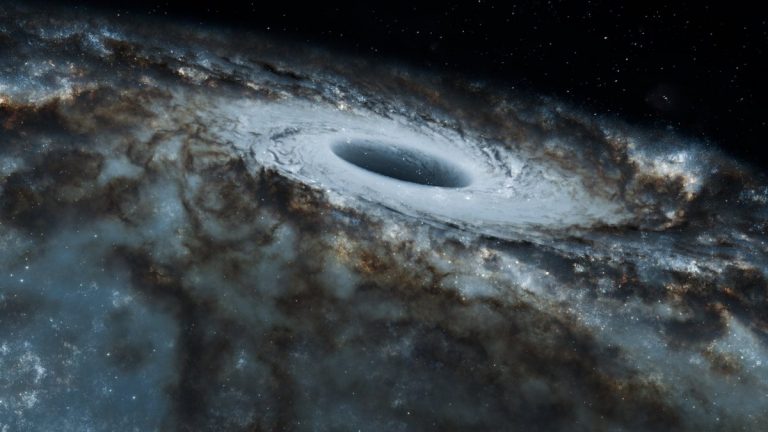
Artist's impression of the Einstein Probe satellite catching an intermediate black hole, tearing apart a white dwarf, and producing a relativistic jet

Einstein Probe may have caught a black hole shredding a white dwarf

A study in Science Bulletin reports that China’s Einstein Probe detected an extraordinary X-ray outburst called EP250702a, a fast and brilliant event that may reveal an intermediate-mass black hole tearing apart a white dwarf star. If the interpretation holds, the observation would give astronomers a rare view of a predicted but elusive kind of black…

Moon crater surface

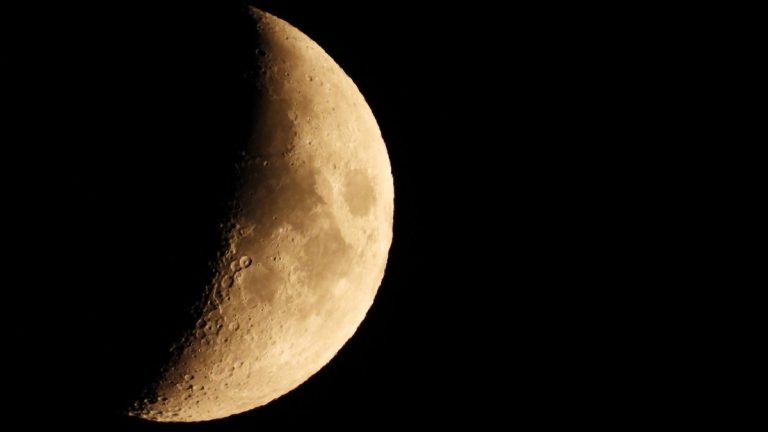
NASA trained Artemis II astronauts to read the Moon like geologists

NASA is now examining the thousands of images and spoken observations gathered during Artemis II, after the crew used months of geology training to study the Moon during their April 6, 2026, flyby. The mission gave Reid Wiseman, Victor Glover, Christina Koch and Jeremy Hansen a rare assignment. They had to look at the lunar…

Using the W.M. Keck Observatory, astronomers investigated the long-predicted relationship between mass and spin for giant planets and brown dwarfs

Alien planet spins reveal a hidden clue to how worlds are born

Researchers led by Northwestern University used Keck Observatory observations to uncover a striking pattern in the spins of distant worlds. Their study, published in The Astronomical Journal, found that giant gas planets tend to rotate faster than more massive brown dwarf companions after accounting for mass, size and age. The finding gives astronomers a new…