Researchers at Southwest Research Institute have used NASA’s New Horizons spacecraft to measure how the solar wind weakens as it travels toward the edge of the solar system. The study, published in The Astrophysical Journal, shows that the stream of charged particles flowing from the Sun is gradually slowed by material drifting in from interstellar space.
The result gives scientists a rare moving measurement from deep space. New Horizons has been traveling through the outer solar system since its 2006 launch and its Solar Wind Around Pluto instrument is still taking data far beyond the planets. By comparing measurements from New Horizons with solar wind readings closer to Earth, the team found a clear slowdown between 21 and 58 astronomical units from the Sun.
One astronomical unit, or AU, is the average distance from Earth to the Sun. At 58 AU, New Horizons was far beyond Pluto’s orbit, sampling a region where the Sun’s influence begins to give way to the surrounding interstellar environment. The spacecraft is now helping researchers probe the boundary region that separates our solar system from the space between stars.
New Horizons measures a fading solar wind
New Horizons was built for a historic flyby of Pluto, yet its journey has turned into a long-distance study of the Sun’s reach. The spacecraft carries instruments that can keep working as it crosses the Kuiper Belt and heads toward the outer heliosphere. Among them is SWAP, an instrument designed to measure the solar wind far from the Sun.
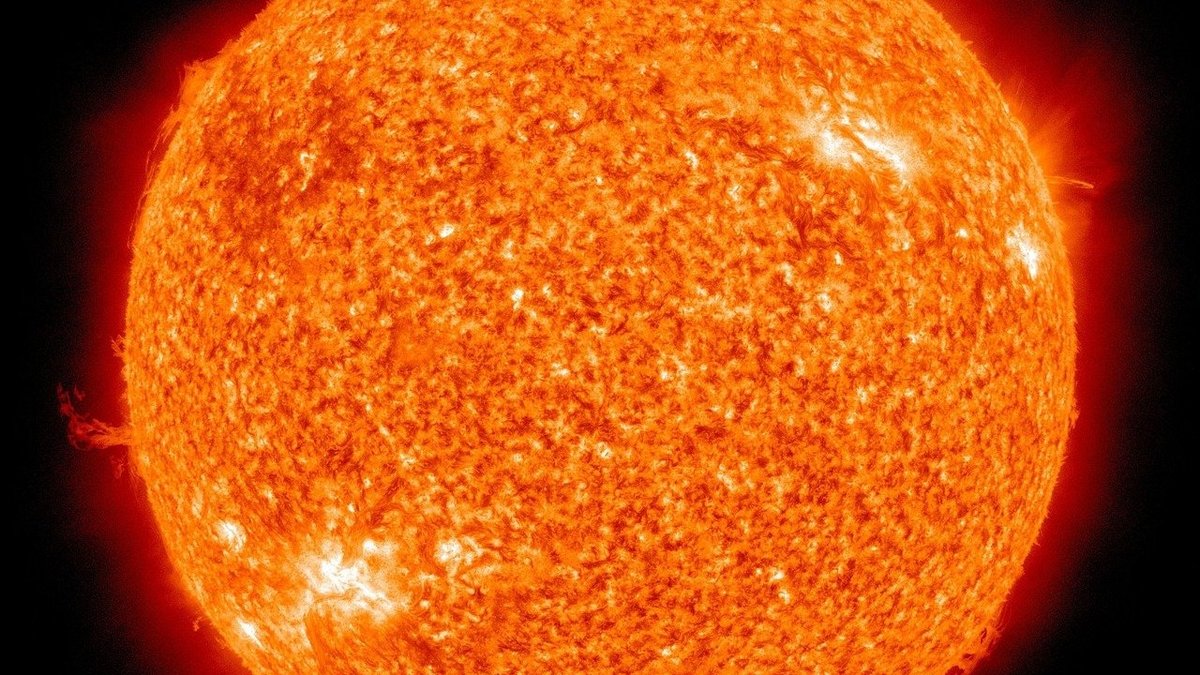
The solar wind is a continuous flow of plasma. It leaves the Sun at supersonic speeds and carries the Sun’s magnetic influence through the solar system. Near Earth, its average speed is roughly 400 kilometers per second, or about 250 miles per second. Faster streams can leave regions such as coronal holes at 500 to 800 kilometers per second.
For the new study, researchers led by Dr. Heather Elliott examined solar wind speeds measured by SWAP from 21 to 58 AU. They then compared those values with measurements taken near 1 AU, where spacecraft closer to Earth monitor the wind much nearer its source. That comparison let the team look for distance-based changes in the solar wind rather than single snapshots.
Earlier New Horizons and Voyager 2 measurements between 30 and 43 AU showed solar wind speeds about 5% to 10% lower than near Earth. The updated New Horizons data extend that trend. At 58 AU, the solar wind was about 13% to 15% slower than at 1 AU. That steady decline matches expectations for a solar wind that is gradually picking up material as it moves outward.
Interstellar atoms add drag
The slowing begins with neutral atoms that enter the heliosphere from interstellar space. These atoms carry no electric charge at first, so they can drift into the Sun’s magnetic domain. Once they interact with the solar wind, they can become ionized through charge exchange. That process changes how they behave in the moving plasma.
Elliott described the effect as “adding mass to the solar wind by picking up interstellar material that slows the solar wind down.” In simple terms, the solar wind gathers extra particles as it expands outward. The added mass acts like a drag on the flow.
This process is often called mass loading. A stream that once moved freely becomes heavier as new ions join it. The wind still flows outward, but its speed drops as it carries more material along. The result is a measurable slowdown across tens of astronomical units.
The measurements matter because they connect local physics to the larger structure of the solar system. The Sun produces a vast bubble called the heliosphere. Inside that bubble, the solar wind and the Sun’s magnetic field help shape the space environment around the planets. Beyond its outer boundary, the interstellar medium becomes the dominant influence.
A 58 AU view of the Sun’s reach
At 58 AU, New Horizons was measuring the solar wind in a region very few spacecraft have sampled directly. Voyager 1 and Voyager 2 traveled farther and the Pioneer spacecraft also reached great distances. Yet each mission carried a different set of instruments and followed its own path through space. New Horizons adds a fresh line of evidence from the outer solar system.
The study’s distance range begins just beyond Uranus’ orbit and extends into the outer Kuiper Belt. That span gives researchers a long baseline for tracing how the wind changes. A measurement at one distance can show the conditions at a particular place. Measurements across many distances reveal the trend.
The team found that the gradual slowdown seen by New Horizons lines up with previous models of how interstellar material enters the heliosphere. Those models predict that neutral atoms from interstellar space become charged and join the solar wind. The new measurements strengthen that picture by showing the slowdown continuing farther from the Sun.
Southwest Research Institute scientists and the wider New Horizons team can also compare these readings with data from other missions. Voyager 2 measured a dramatic speed drop at the termination shock, the region where the solar wind slows sharply as it approaches the heliosphere’s outer boundary. New Horizons has yet to reach that region, which makes its current measurements especially valuable.
The spacecraft’s position also gives context for the scale involved. At the time of the announcement, New Horizons was roughly 66 AU from the Sun. That places it nearly 66 times farther from the Sun than Earth, in a region where sunlight is faint and direct spacecraft measurements are rare.
Why the heliosphere matters
The heliosphere works like a vast protective bubble around the solar system. It is shaped by the outward pressure of the solar wind and the inward influence of the interstellar medium. Its size and shape change with solar activity and with the surrounding material through which the Sun moves.
“Studying the heliosphere is like solving a cosmic puzzle,” Elliott said. That puzzle includes the Sun, the solar wind, interstellar atoms, magnetic fields and energetic particles. Each spacecraft measurement adds another piece.
One important piece involves Galactic Cosmic Rays. These high-energy particles come from beyond the solar system. The heliosphere helps reduce how many of them reach the inner solar system and Earth. Its boundary regions affect how much shielding the planets receive.
That shielding has practical significance for future exploration. Astronauts on long missions beyond Earth’s protective magnetic field face radiation hazards from energetic particles. Better measurements of the heliosphere can help scientists understand how radiation levels change across space and over time.
The heliosphere also serves as a nearby example of a broader astrophysical process. Other stars produce stellar winds and those winds carve bubbles called astrospheres into their surroundings. By studying the Sun’s bubble in detail, researchers can learn how stars interact with the material between them.
What the spacecraft may see next
NASA’s New Horizons is still moving outward. As it travels deeper into the outer solar system, scientists hope it will eventually approach the termination shock. That boundary marks a major change in the solar wind, as the flow is pushed back and reshaped by incoming interstellar material.
Voyager 2 crossed the termination shock at about 84 AU and measured a sharp 46% speed drop there. The New Horizons announcement notes that the spacecraft could reach that region around 2029. If its instruments remain healthy, it could offer another direct measurement of this distant boundary.
The difference between the gradual slowdown and the termination shock is central to the story. New Horizons is now watching the solar wind lose speed steadily as it picks up interstellar material. Farther out, the spacecraft may encounter a much sharper transition, where the solar wind’s properties change more abruptly.
Future comparisons could become even more powerful when combined with missions such as IBEX, IMAP and the Voyager spacecraft. IBEX has mapped energetic neutral atoms from the boundary regions of the heliosphere. IMAP is designed to improve that view. Together with New Horizons SWAP data, those missions can help build a fuller picture of the Sun’s outer domain.
For Elliott and her colleagues, the measurements point toward a larger goal. Understanding where the Sun’s influence fades is “a critical step toward planning future interstellar travel,” she said. New Horizons is already far beyond its first destination. Its newest measurements show that it has become a probe of the space between worlds.