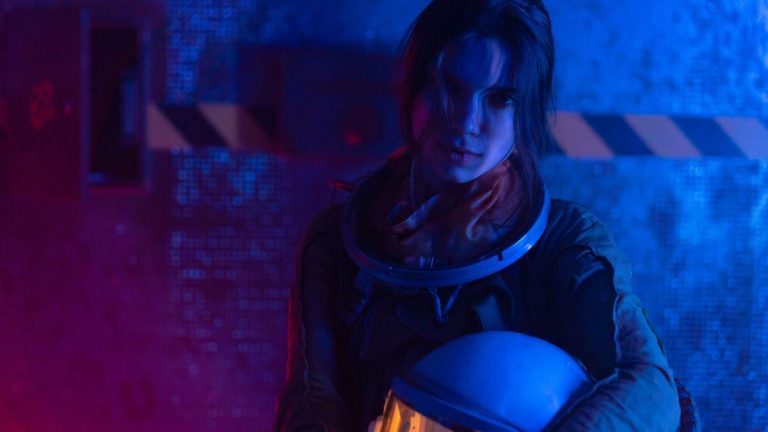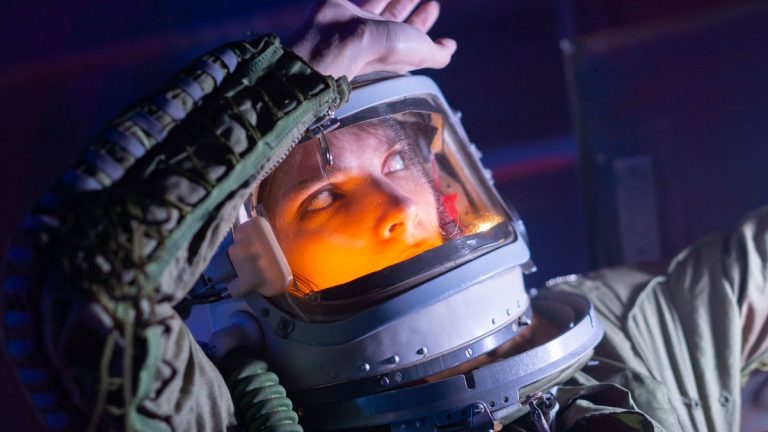
Dynamic lighting helped volunteers do better on several cognitive tasks inside a simulated space station work area, even when the same people did not say they felt more awake or happier under the changing light. The result stands out because lighting is one of the few environmental tools spacecraft designers can adjust every day without adding heavy hardware or a new crew procedure.
The study, published in Ergonomics on September 16, 2025, tested how shifting light affected performance under both fatigue and non-fatigue conditions. The paper came from researchers at Beijing Jiaotong University and the China Astronaut Research and Training Center and it focused on a practical question for long missions: can changing the spectrum and character of cabin light support thinking when crews are tired, confined and cut off from daylight?
How the space station lighting test was set up
30 participants took part in a single-blind, within-subjects design, which meant each person experienced both the static-light and dynamic-light conditions and could be compared against his or her own baseline. The experiment also split testing into fatigue and non-fatigue sessions, giving the team a way to ask whether changing light might help more when mental state had already started to slip. That is a useful spaceflight question because crews often work through uneven sleep schedules, operational stress and long periods without natural sunrise and sunset cues.
Instead of relying on a single reaction-time test, the team used a set of tasks aimed at different kinds of thinking. The practitioner summary says the clearest gains appeared in spatial memory, executive control and risk decision-making. Those are not interchangeable skills. Spatial memory supports keeping track of locations and relationships in a workspace. Executive control helps a person manage competing demands and suppress the wrong response. Risk-oriented decisions add another layer because people under fatigue can drift toward looser judgment even when simple accuracy looks stable.
The broader idea has been building for years. NASA lighting research has long treated cabin illumination as a behavioral and physiological tool, while a 2020 review of dynamic light scenarios concluded that changing light can influence human functioning but still needs tighter alignment between the light pattern, the timing and the outcome being measured. The new paper fits squarely into that problem. It does not ask whether light is pleasant in the abstract; it asks whether a moving light environment can support work in an isolated station-like setting.
Which abilities improved and which ones did not
Results from the paper point in a narrow but important direction. Exposure to the dynamic condition selectively improved cognition, yet it did not produce significant gains in subjective alertness or mood. In plain terms, participants handled some demanding tasks better under the changing light, but they did not report feeling more awake and they did not describe a brighter emotional state. That split is one reason the study is interesting. It suggests performance can move before people notice a matching shift in how they feel.
Several earlier lighting studies have reported a less uniform picture than popular summaries often imply. Work on light transitions and alertness measures found that subjective responses and objective responses can follow different timelines after lighting changes. Another experiment in a daylight-deprived environment reported benefits for some task outcomes under dynamic light, while a full-day office simulation in Building and Environment found effects that shifted with time of day and assessment type. The new space-station study lands in the same cautious territory: some functions improved, but the whole person did not move in one tidy direction.
That pattern also helps explain why mission planners should resist simple labels such as good light or bad light. A lighting program that helps a crew member hold working memory or task switching steady may still leave that person feeling sleepy, flat, or unchanged. The reverse can happen as well. A person can say the environment feels better without showing a measurable gain on a demanding cognitive task. For a spacecraft, both sides matter, because operators need dependable performance and a habitat that does not quietly wear down mood across a long mission.
Why people may think better without feeling different
One likely explanation is that light can act on several systems at once and those systems do not all respond at the same speed. Some pathways tied to visual processing, circadian signaling and attention can shift quickly when spectrum and intensity change. Self-reported feelings are slower, noisier and more vulnerable to expectation or habit. A volunteer may complete a memory task more effectively under a certain light profile yet still answer a mood or sleepiness scale in much the same way, especially during a short laboratory session when the body has not had hours to settle into a new rhythm.
Space analog work points in the same direction. During a 45-day simulated space mission with chronic variable sleep deficiency, researchers studying a dynamic lighting schedule found effects on circadian phase, self-reported sleep and cognition that did not all move together. The point is not that one measure is more real than another. The point is that cabin light touches several layers of biology and behavior, so a mission design that seeks a single universal response may miss the operational value of a narrower gain, such as steadier decision-making during a difficult shift.
Another practical factor is mental state at the start of the task. The Beijing team explicitly compared fatigue and non-fatigue conditions, which makes the paper more useful than a one-state test. A crew member nearing the end of a long work period may need a lighting profile that protects control and memory more than one that merely feels comfortable. The present study does not prove the same pattern will hold in orbit and it does not isolate the exact lighting recipe that produced each benefit, but it does show why subjective comfort surveys cannot carry the whole burden of spacecraft lighting design.
What the EEG findings add to the story
The paper did more than score task performance. It also recorded brain activity and found that lower-frequency signals, especially the theta and alpha bands, were highly sensitive to the lighting condition. The authors describe the effect mainly as suppression of those bands under dynamic light. For non-specialists, that matters because EEG can show a change in how the brain is operating even when a participant’s self-report barely shifts. In a setting where crews face confinement and mental fatigue, that extra layer helps separate a vague impression from a measurable change in neural state.
Researchers often connect theta and alpha activity to attention, mental effort, internal focus and changing levels of drowsiness, though the meaning depends on the task and the brain region being measured. The present study does not support a claim that dynamic light simply switched the brain into a better mode. It supports a narrower reading: the lighting pattern was associated with neural changes that lined up with better cognitive performance on selected tasks. That is a more disciplined conclusion and it is the one spacecraft designers can actually build on.
Looking ahead, the most valuable next step may be integration rather than a search for a miracle lamp. Lighting could be paired with schedule design, workload timing and habitat layout so the right kind of mental support appears at the right phase of a shift. The study’s funding through the Space Medical Experiment Project of the China Manned Space Program underscores that the question is operational as much as scientific. If future work shows which light pattern best protects memory during fatigue and keeps judgment steadier, cabin lighting could become a quiet countermeasure that improves cognition even when crew members do not feel any obvious lift in alertness or mood.