Twenty-five overwintering crew members at the South Pole spent the end of their mission trying 16 versions of virtual sensory stimulation and a clear pattern rose to the top. The group generally preferred virtual reality over laptop viewing, preferred nature over city scenes and preferred 10 minutes over 4. Even with those broad winners, the paper also found that personal taste stayed strong enough to complicate any uniform plan for future space crews.
The result comes from a 2025 npj Microgravity study on Amundsen-Scott South Pole Station, one of Earth’s closest analogs for the isolation and confinement expected on long missions far from home. Researchers examined how scene type, delivery method, session length and temperature cues changed the crew’s ratings of value, immersion, restoration, mood and anxiety after each session.
For space agencies, the appeal is easy to see. Long missions can narrow daily experience to the same rooms, the same people and the same horizon. A system that gives crews believable sights and sounds from elsewhere could help break monotony and offer a short mental reset, but only if the experience feels convincing and only if the content matches what an individual actually wants in that moment.
The South Pole study therefore reads less like a simple test of whether VR can help and more like a practical design brief for exploration missions. The crew’s answers point toward better content libraries, better image quality and more personal control over when a session starts and what kind of place it opens.
Why the rankings favored VR nature scenes
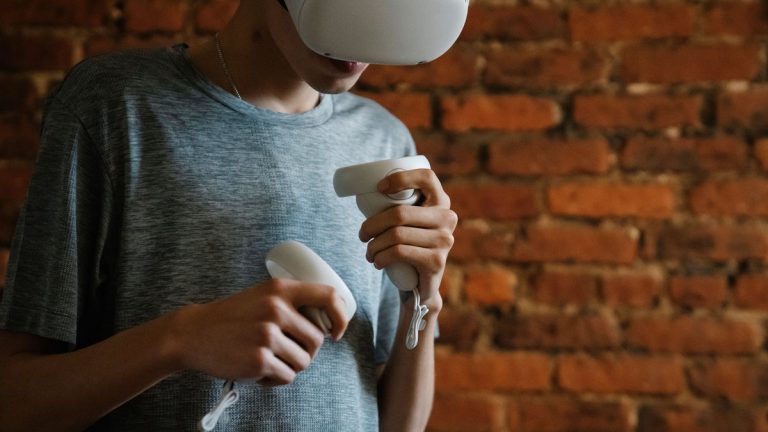
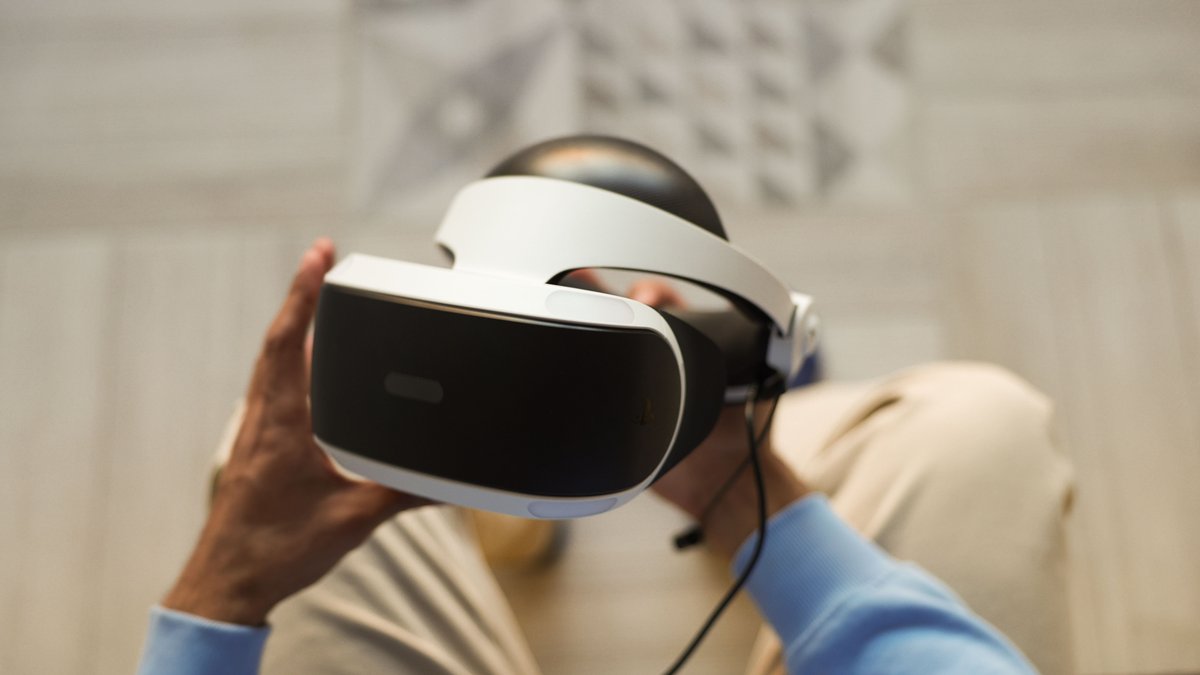
The strongest overall result was straightforward. Sessions presented through a headset scored better than watching similar material on a laptop and nature scenes scored better than urban scenes on perceived value, immersiveness and restorativeness. Across the ranking figures in the paper, longer nature sessions repeatedly sat near the top, while several urban or shorter combinations landed in the middle or lower end of the list.
Part of that result follows a familiar line in environmental psychology. The paper connects its findings to Attention Restoration Theory, which argues that natural settings can help people recover from mental fatigue because they create a feeling of being away from routine demands while still holding attention gently. In a winter-over habitat where the outside world is mostly snow, machinery and darkness for long stretches, even a simulated beach, forest, or garden may supply missing cues that feel emotionally important.
The mood findings were more mixed than the preference scores, which is an important detail. The authors reported that one mood measure, Total Mood Disturbance, did not show a statistical effect across the study as a whole, probably because scores were already low before many sessions began. Even so, when conditions were ranked against one another, VR nature scenarios still tended to sit near the favorable end of the mood results.
How the team built 16 versions of one basic idea
Researchers did not hand the crew a single headset program and ask whether it felt nice. They built a matrix of 16 conditions by changing four attributes: whether the experience appeared in VR or on a laptop, whether the content showed nature or city settings, whether the session lasted 4 or 10 minutes and whether the system added temperature-based cues through a wearable device. Every participant went through the full set by the end of the winter-over period.
Before and after each session, the crew completed questionnaires that measured perceived quality and short-term mood. After all 16 sessions, they also gave open-ended feedback about what they liked, what pulled them out of the illusion and what would make the system more useful in daily life. The combination of rating scales and qualitative remarks is a strength here, because a clean average can hide the fact that one participant feels restored while another feels bored or irritated by the same scene.
The station itself also matters to the interpretation. According to the NSF station overview, Amundsen-Scott is the southernmost year-round research station in the world, set at 90 degrees south on the Antarctic ice sheet in one of the harshest inhabited environments on Earth. The paper treats that setting as a high-fidelity spaceflight analog, because the crew lives with isolation, confinement, environmental monotony and a long separation from ordinary outdoor life.
Why personal preference kept breaking the average
Average scores favored nature, but the authors repeatedly warn readers not to stop there. Several participants enjoyed some city scenes as much as, or more than, the natural ones. The explanation offered in the paper is sensible: after months in a flat white landscape with limited novelty, a dense urban street or a familiar indoor public setting may feel less stressful to one person and more normal, social, or stimulating to another.
That conclusion lines up with an earlier Antarctic VR paper, a 2021 Translational Psychiatry study the authors cite as prior evidence that immersive sensory content can be acceptable and restorative in isolated, confined and extreme settings. The new work goes further by testing how different versions of the same basic tool land with the same crew, then showing that individual compatibility may be as important as the broad content category.
The participants’ comments make the point even sharper. Some wanted greenery, water, sunlight, or animals because those cues had vanished from daily life during the Antarctic winter. Others wanted social energy, familiar public places, or higher-arousal experiences that felt lively enough to interrupt boredom. For mission planners, that means a useful library probably needs calm options, exploratory options and familiar options, with enough variety that each crew member can find something that fits a specific need instead of settling for the least unsuitable file.
Why duration, temperature cues and picture quality mattered so much
Duration produced one of the clearest practical takeaways. Four minutes often felt too short. Participants said the shorter sessions could end just as they were starting to settle in, explore, or feel the benefit. Ten minutes worked better for most people and several still wanted more time on at least some occasions. The paper argues that timing should be treated as part of the intervention rather than a minor scheduling detail.
The temperature cue system was less convincing. More than half the crew saw some promise in it, yet many also said it did little for immersion or even reduced it when the sensation did not match the scene well enough. The lesson is simple: extra sensory input only helps when it feels coherent. A weak or mistimed thermal cue can remind the user that the illusion is artificial instead of making the place feel more real.
Image quality may have been the most operationally important complaint of all. According to the paper, 20 of the 25 participants said visual or audio quality reduced at least one experience. Some videos had lower resolution or unstable motion and some fell below recommended 4K quality. When distant objects blur, motion jitters, or pixels break the scene, the mind has less reason to accept the environment as a place worth inhabiting for a few minutes.
The study’s PubMed record preserves the central abstract claim that longer-lasting nature scenes were preferred overall, but the full paper adds a more demanding message for engineers: content alone is not enough. Image quality, believable sensory timing and enough session length to let attention shift away from the habitat all affect whether a short virtual visit feels restorative or merely distracting.
What the South Pole results mean for Moon and Mars crews
The authors are careful about scope. Their experiment took place at the end of an Antarctic winter-over, not in orbit or on a lunar surface and Antarctica still differs from space in important ways such as gravity, radiation, crew composition, mission architecture and the structure of daily work. Even so, the paper argues that South Pole findings can still guide future countermeasure design because the setting reproduces several of the psychological pressures that crews will face on long missions.
NASA-linked space life science tracking has already flagged the paper as relevant to exploration planning. In NASA’s Spaceline current awareness list, the study appears among recent space life science results and notes support connected to the NASA Human Research Program, the NSF and the U.S. Antarctic Program. That institutional trail helps explain why the paper focuses so heavily on real implementation details instead of presenting VR as a vague wellness idea.
The larger message is that future crews may benefit most from a flexible system. A useful headset library for a Moon base or a Mars transit vehicle would probably need nature, familiar everyday environments and more stimulating experiences; it would need very high-quality visuals; and it would need enough autonomy for a user to choose the right scene at the right time. The study supports VR as a promising behavioral support tool in extreme habitats, while also showing that the best version is likely to be personal, technically polished and built for choice rather than uniformity.