Twenty healthy adults showed stronger brain activation while carrying out realistic Mars rover tasks in virtual reality than while completing simpler tests aimed at the same mental skills. The result suggests that mission-like training recruits the brain more broadly, which could help researchers design exercises for astronauts traveling far from Earth.
The 2026 study, published in Frontiers in Human Neuroscience, compared a simulated rover expedition with a set of standard cognitive exercises. Researchers measured electrical brain activity and changes in blood oxygen while participants navigated terrain, controlled a robotic arm and searched for scientifically interesting rocks.
The team, led by researchers at the University of Colorado Boulder, views the experiment as an early step toward testing VR as a possible tool for long voyages to the Moon and Mars. Higher activation can come from useful engagement, greater workload, fatigue, or the richer visual scene itself, so further research must connect the brain signals with learning and lasting skill.
Why deep-space crews may need new brain countermeasures
Future long-duration exploration missions could keep astronauts away from Earth for years. During that time, crew members may need to drive a rover, operate machinery, repair equipment and complete scientific work. Each job combines judgment with precise movement, often while time is limited and help from mission control is delayed.
Long stays in microgravity have been linked with changes in brain structure and connections between brain regions. Astronauts have also described “space fog,” which can include mental tiredness, poor concentration and feelings of disorientation. Studies of measured cognitive performance have produced mixed results, with large differences among astronauts and across stages of a mission.
How the virtual Mars rover experiment worked
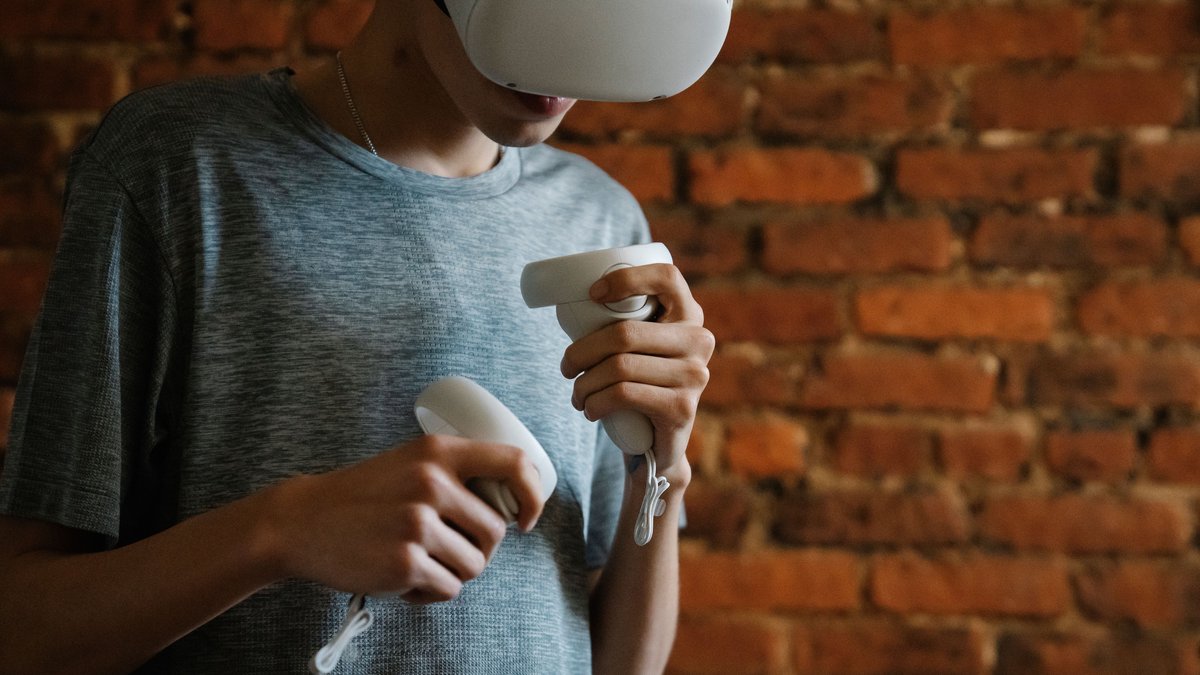
Participants trained in two VR settings. The operational environment placed them inside a rover-based activity on a simulated Martian surface. They first drove around obstacles toward a scientific target. Next, they used a multi-jointed robotic arm to reconnect an antenna cable. A final task asked them to search a rock field and mark possible scientific targets on a map.
Researchers built a simpler partner task for each rover activity. A triangle exercise tested spatial navigation. A mental rotation test required users to move a three-dimensional object until it matched a target position. A visual search exercise asked them to find a red letter T among blue T shapes and red L shapes. The complete methods and study record are also available through PubMed.
Twenty participants reached the required skill level and continued into the final experiment. The group included ten women and ten men, with an average age of about 25. Six other recruits were removed after they did not reach the set level of rover proficiency within 40 training trials, a choice that influenced who remained in the study.
Realistic tasks raised brain activation
During the second visit, each person completed eight trials in both environments, for a total of 16 evaluation trials. The researchers balanced the order, so some people began with the rover simulation while others started with the simpler exercises. Short resting measurements helped the team compare task activity with each participant’s baseline.
The realistic environment produced significantly greater activation across both brain-monitoring methods. The study abstract reports, “We find that a complex, operationally relevant VR environment elicits enhanced brain activation compared to the matching corollary tasks.” The EEG result had a probability value below 0.0005, while the fNIRS result was below 0.001, indicating that random variation was unlikely to explain the measured differences.
The stronger response appeared across the main brain regions covered by the equipment. It also appeared across the electrical frequency bands studied by the team. Such a broad result suggests that the full operational setting demanded more combined processing than the isolated laboratory exercises, even though each pair was designed around similar cognitive abilities.
What EEG and fNIRS recorded
The team used EEG, short for electroencephalography, to measure electrical patterns through sensors placed on the scalp. EEG can detect fast changes in brain activity. Researchers focused on theta, alpha and low beta frequency bands, which have been linked in earlier research with mental effort, memory demands, attention and the processing of new information.
A second method, called fNIRS, used near-infrared light to track blood oxygen changes near the brain’s surface. Active brain tissue needs energy, which affects the local flow of oxygen-rich and oxygen-poor blood. The rover tasks produced larger oxygen-related responses in the prefrontal cortex, an area involved in planning, decision-making and managing complex work.
Using the two methods together gave the researchers different views of the same activity. EEG provided rapid timing information across several cortical areas, while fNIRS added a blood-flow measure concentrated around the front of the brain. Both pointed toward broad cortical activation during the operational simulation.
Greater activation may reflect mental effort
Driving through obstacles while watching a map places several demands on the brain at once. The user must monitor position, plan a route, control the rover and respond to visual information. The robotic arm task adds fine control and spatial rotation, while rock observation requires careful searching across a more detailed scene.
The laboratory exercises separated those abilities into cleaner and more limited problems. Their simpler displays also contained less visual information. The increase measured during rover operations may therefore reflect greater mental effort, richer sensory processing, stronger attention, or wider communication among brain regions.
Higher activation alone does not establish that an exercise improves the brain. Strong signals can also appear when someone feels stressed, tired, or overloaded. Some participants reported fatigue and headaches while wearing the combined sensor cap and VR headset. Similar discomfort across both task settings reduces one concern, although the study did not collect those symptoms through a formal measurement system.
What the result could mean for astronaut training
NASA already uses virtual reality in parts of astronaut training, including ground preparation for work involving spacecraft hardware and complex procedures. A headset can present many situations without requiring a full physical copy of a rover or habitat. Software can also repeat a procedure and adjust its difficulty as a crew member improves.
During a Mars voyage, VR could give astronauts a way to rehearse skills learned before launch. A crew might practice rover control or equipment maintenance during months of travel, helping keep rarely used procedures familiar. The new findings suggest that realistic simulations engage more brain activity than small cognitive tests, although skill retention was outside the scope of this experiment.
VR could also become part of a future spaceflight countermeasure aimed at maintaining cognitive and sensorimotor function. Researchers would need to determine how often astronauts should train, how difficult the tasks should be and whether the brain response leads to better performance. Excessive workload could increase fatigue, while an easier program may provide limited stimulation.
Limits of the 20-person study
The final group was small and selected. Every participant was a healthy adult on Earth and all had demonstrated proficiency in the rover simulation before the brain-measurement session. Astronauts are highly trained, yet conditions aboard a spacecraft include microgravity, disrupted sleep, confinement, isolation and mission pressure that a laboratory cannot fully reproduce.
The researchers compared one complex operational environment with three simplified partner tasks. The rover setting included richer images and more linked decisions, so complexity itself may explain part of the activation increase. The experiment also measured activity during task completion without testing whether repeated sessions preserved a skill for weeks or months.
The study’s exploratory brain maps suggested similar regional patterns between matching tasks, but the team did not run the large number of statistical tests needed to confirm those detailed comparisons. The authors present the maps as descriptive evidence. Readers can examine the open-access paper and figures through PubMed Central.
The next tests for VR in spaceflight
Future studies can follow participants over longer training periods and compare their brain activity with accuracy, speed and later memory of the procedure. Such work could reveal whether stronger activation predicts learning, or whether it marks a task that consumes more effort without producing a lasting benefit.
Researchers also want to study functional connectivity, which describes how brain regions coordinate during an activity. A rover operation requires visual processing to work with movement planning and decision-making. Measuring those links could show whether realistic VR encourages useful coordination across the brain.
Space-based experiments would provide a stronger test. Astronauts could perform operational VR exercises before launch, during a mission and after returning to Earth. Their results could then be compared with changes in movement control and cognitive performance. The 2026 study provides an initial laboratory measurement, while the central question remains whether repeated VR training can help crews maintain complex skills during years of deep-space travel.