Once each minute, wrist-worn sensors checked whether members of an Antarctic crew were near one another. Across many months of darkness and confinement, those simple electronic encounters created a record of group contact, revealing when people gathered and when individuals increasingly spent time alone.
A study published June 8, 2026, in Frontiers in Psychology reports that the method could provide an objective measure of crew cohesion. Researchers followed two winter-over crews at Concordia station, a remote French-Italian base where conditions share important features with long missions beyond Earth.
The study included 25 participants across the 2015 and 2016 campaigns, with usable long-term data from 21 people. Contact between crew members generally decreased during the later half of each mission. The findings suggest that future flight surgeons could use wearable devices to spot gradual social withdrawal during missions to Mars, although physical closeness alone cannot reveal whether an encounter was friendly, tense, or required by work.
Antarctica as a deep-space test
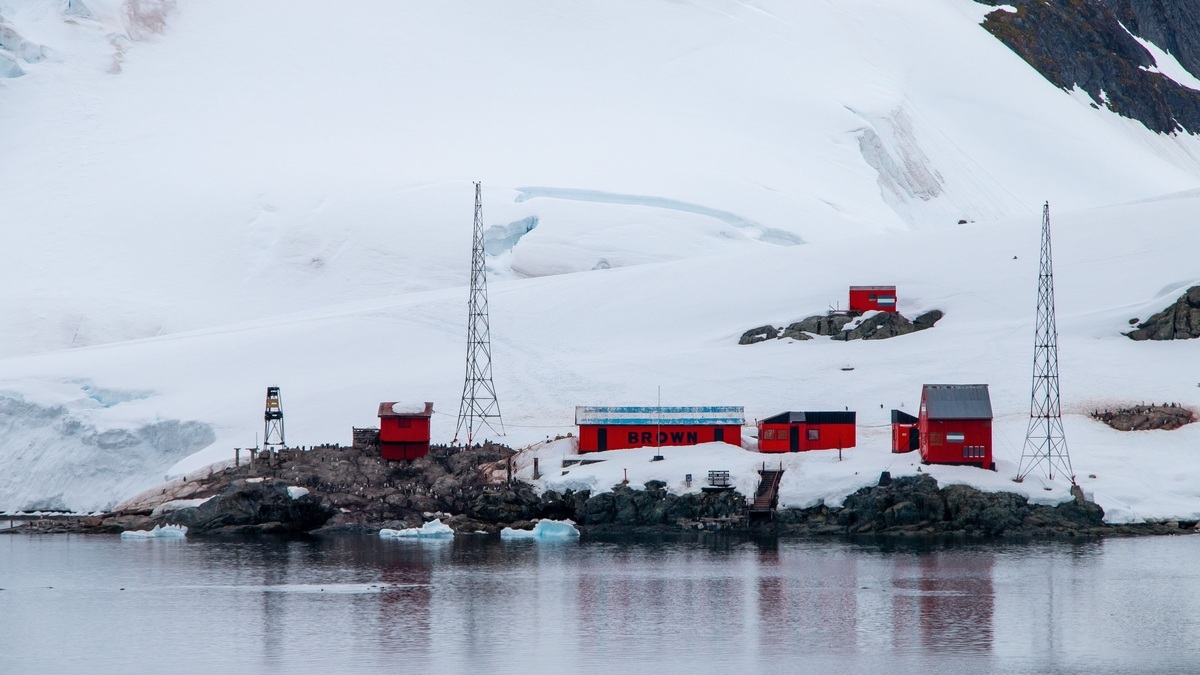
Concordia station stands on Dome C, high on the Antarctic Plateau. It is hundreds of miles from the nearest coastal bases and access becomes extremely limited during the austral winter. Average winter temperatures can fall to about minus 60 degrees Celsius, or minus 76 degrees Fahrenheit.
Crews remain at the station for roughly 10 to 14 months. For much of that period, the same small group lives and works together while facing deep cold, altered daylight and limited privacy. Outside help may be far away, so the crew must solve many problems on its own.
Space agencies use Concordia station as an Earth-based model for some parts of deep-space travel. Normal gravity remains present, while the isolation and stressful environment provide a realistic test of human behavior during prolonged confinement. An ESA research program at Concordia has examined sleep, brain changes and crew interaction in preparation for future exploration.
“The Concordia Station is an ideal location as it replicates certain aspects of a Mars mission,” ESA research coordinator Oliver Angerer explained in an agency overview of the Antarctic program.
A standard Mars mission using conventional propulsion could keep astronauts away from Earth for at least 500 days. Communication delays would also require greater independence from mission control. Under such conditions, astronaut wellbeing would depend partly on whether the crew could maintain useful working relationships while handling stress and danger.
How wrist sensors mapped crew contact
Researchers asked each participant to wear an Actigraph Link device, which resembles a light wristwatch and weighs about 14 grams. The equipment recorded body movement for sleep and activity research while also using low-energy Bluetooth signals to detect other devices nearby.
Every minute, the watch logged which other watches it could sense. The research team then calculated how often two people were detected near each other during periods when both participants were awake and their equipment was operating. Each pair of crew members was treated as a separate measurement unit.
The Bluetooth signal could travel about 10 to 20 meters indoors, depending on the walls and building materials. Because signal strength did not give the researchers a dependable estimate of exact distance, each detection was recorded as a simple encounter. The system answered whether two devices were within range, without trying to calculate how many meters separated them.
Investigators studied 55 possible crew pairs in 2015 and 45 in 2016. They also calculated how much time each person spent alone, near one other person, or near a larger part of the crew. A further measure compared actual contacts with all possible contacts, producing a togetherness score for each participant and the crew as a whole.
The approach required little effort from participants. A smartwatch could gather information throughout the day while crew members completed their regular duties. According to the study abstract, “Proximity is an unobtrusive, objective and easy to obtain surrogate measure for crew cohesion.”
Crew cohesion declined over time
Contact patterns differed greatly between individuals. During the 2015 campaign, one pair spent 37.2 percent of their available measurement time near each other, while another pair registered 7.9 percent. The highest pair value in 2016 was 36.2 percent, compared with 8.7 percent for the lowest.
Some of those differences probably reflected daily assignments. A scientist and technician working in separate parts of the station would naturally meet less often than two people sharing a task. Meals and station schedules could also bring the entire group together at regular times.
Even with those influences, the records revealed changes as the winter-over continued. In both crews, the researchers found lower overall cohesion in the second half of the mission than in the first. The crew members generally spent more time alone as the months passed.
Weekly data from the 2016 crew showed how individual relationships could weaken gradually. One pair spent relatively high amounts of time together through mission week 12, followed by a declining trend across much of the remaining campaign. Other relationships followed their own paths, producing a changing social map rather than a fixed crew structure.
Researchers also used a statistical method to identify small groups of people who often remained near one another. The analysis suggested that both crews contained social clusters, while wider group cohesion remained slightly higher in 2015. Direct comparisons between the two years require caution because the watches operated differently during each campaign.
When time alone signals withdrawal
Spending time alone can help a person manage life in a crowded habitat. Privacy allows crew members to rest, recover from stress and avoid the buildup of conflict. Antarctic accounts have described people seeking quiet spaces when constant contact and gossip became tiring.
Prolonged withdrawal can carry a different meaning, especially when one person’s routine begins to diverge sharply from the rest of the group. A steady decline in contact may accompany interpersonal conflict, low mood, exhaustion, or another developing health concern. The proximity record could alert medical staff that a closer check is appropriate.
One participant in the 2015 mission interacted near the crew average during the first three months, then spent progressively less time near others. On a Mars mission, such a change could appear on a monitoring display weeks before the person openly reported a problem.
The useful signal comes from a change in an individual’s own pattern. A crew member who regularly prefers solitude may remain healthy while spending less time with the group than colleagues. A sudden shift away from that person’s normal behavior could offer a stronger warning than a single low contact score.
Continuous social withdrawal monitoring could support an early conversation with a flight surgeon or behavioral health specialist. Any response would need to respect crew autonomy and privacy. The sensor data could identify a trend while leaving the cause for a trained person and the crew member to discuss.
What proximity data cannot reveal
Physical closeness provides only one piece of the social picture. Two people detected in the same area may be cooperating, arguing, eating quietly, or completing separate jobs. The watches recorded their presence within range and collected no information about the emotional quality of the encounter.
Work duties add another layer of uncertainty. Engineers may spend long periods near one another because they maintain the same equipment. A cook may see nearly everyone during meals. High contact can therefore reflect the station’s schedule as well as friendship or trust.
The technology also faced equipment problems. During 2015, watches had to be programmed as either transmitters or receivers and the research doctor changed those roles each week. The 2016 devices could send and receive signals at the same time, although a software or hardware fault sometimes stopped data collection. The fault caused a loss of about 2.6 percent of that year’s proximity data.
Four participants were removed from the final analysis because their wear time was too low or they stopped using the watches after four months. The remaining 21 participants wore the devices during most daytime hours, yet such a small sample limits how widely the results can be applied.
A group living survey also produced inconsistent links with the sensor measurements. One research doctor rated each crew member after each winter-over, which left the results open to memory effects and one person’s viewpoint. Future studies could combine proximity sensors with surveys completed by every crew member, along with private medical assessments and measures of team performance.
Monitoring future crews bound for Mars
Future exploration crews will live farther from immediate support than astronauts aboard the International Space Station. A radio message between Earth and Mars can take many minutes in one direction, depending on the planets’ positions. Crews will often need to recognize problems and respond before Earth-based specialists can take part.
Wearable contact records could help provide a broad view of team dynamics in space. Software might compare each astronaut’s recent behavior with the person’s earlier pattern and with the group average. A gradual drop could prompt a private check-in, while a sudden change might receive faster attention.
Privacy would remain central to any operational system. The Concordia devices measured nearby watches without recording speech or video. Such limited data may feel less intrusive than cameras or microphones, especially inside a small habitat where personal space is already scarce.
The present research remains a proof of concept. The watches used in the Antarctic campaigns were originally designed for movement and sleep research and their proximity feature has since been discontinued after technical problems. A purpose-built system would need dependable detection, clear rules for data access and testing in other isolated environments.
With further validation, wrist-worn crew sensors could complement reports from astronauts rather than replace human judgment. Mars crews may need time apart during a mission lasting well over a year. A quiet stream of contact data could help reveal when healthy solitude begins to resemble sustained withdrawal, giving the crew an earlier chance to protect both individual health and mission performance. Broader mission context is available from the U.S. Antarctic Program and NASA’s Human Research Program.