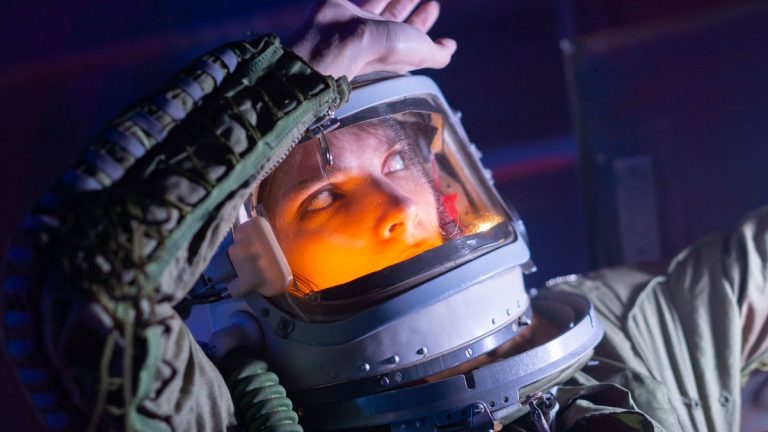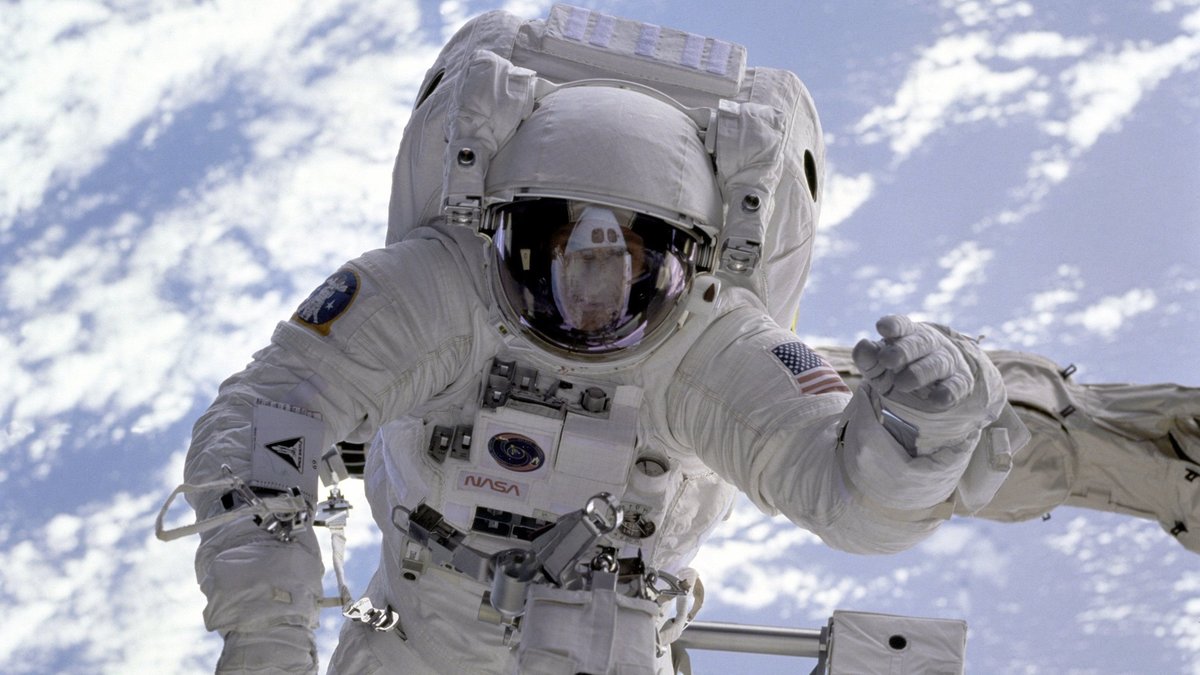
Gravity is so constant that the human brain rarely needs to question it. Every step, falling object and tilt of the head follows rules learned from birth. When astronauts enter orbit, one of the brain’s oldest expectations suddenly loses its usual sensory support.
A perspective paper published in Frontiers in Psychology on June 12, 2026, proposes that microgravity can loosen the brain’s normal control over perception. Authors Annahita Nezami and Elisa Raffaella Ferre argue that the change may affect where people feel located, how they experience their bodies and how clearly they sense the boundary between themselves and their surroundings.
The proposal draws on astronaut brain scans, research into balance disorders and studies of altered consciousness. It remains a theory built from existing evidence, rather than a direct test of consciousness during a space mission. Even so, it offers a striking idea: weightlessness may reveal how deeply Earth’s pull is woven into the human mind.
Gravity may be the brain’s deepest expectation
Human perception depends on expectations built through experience. The brain predicts what will happen next, then compares that forecast with signals arriving from the body and the outside world. A dropped cup should fall. A person leaning too far should feel unstable. When the prediction and the sensory evidence agree, the world feels steady and understandable.
Scientists call such expectations “priors.” Gravity may be an unusually powerful one because its direction and strength remain highly stable throughout life on Earth. Nezami and Ferre describe it as a 1G super-prior. In their abstract, they write, “Earth’s gravity functions as a deeply entrenched 1G super-prior within the brain’s predictive architecture.”
A review of cognition in zero gravity previously described how altered gravity can affect orientation, movement planning, attention and other forms of human behavior. The new perspective carries the idea further by asking whether gravity also helps hold conscious experience together.
How weightlessness disrupts the senses
The vestibular system inside the inner ear detects head motion and acceleration. Small organs called otoliths respond to gravity on Earth, giving the brain a dependable signal about which direction is down. Vision and touch add more information, while muscles and joints report the position of the body.
Orbit changes the balance among those signals. Astronauts still see the spacecraft around them and feel contact with handrails or seats, yet the otoliths no longer provide their familiar gravity reference. The brain receives information that fits poorly with the internal model it has used for a lifetime. Prediction errors increase as it tries to build a new model for floating, turning and reaching.
Researchers describe this general process as predictive processing. At first, confusion can contribute to motion sickness, poor coordination and spatial disorientation. The group of early symptoms is often called space adaptation syndrome. Over time, the brain gives more weight to useful visual cues and learns new links between movement and sensation.
The recalibration may reach beyond movement. Brain areas that process balance also communicate with regions involved in emotion, memory, body awareness and the sense of location. A disrupted gravity signal could therefore affect how an astronaut experiences the self as well as the spacecraft around them.
Brain networks reorganize during spaceflight
Brain scans taken before and after space missions provide physical evidence of adaptation. Studies have reported shifts in fluid around the brain, changes in the size of fluid-filled spaces and alterations in tissue shape. Some differences can remain after landing, while others gradually move toward their earlier state.
Functional imaging examines communication between brain regions. A Communications Biology study found reversible and persistent connectivity changes after prolonged microgravity. Areas involved in movement, balance and the combination of sensory signals showed altered links with the wider brain. Researchers used resting-state fMRI, which records patterns of activity while a person lies still without performing a task.
One area of interest is the posterior cingulate cortex, a major hub in the default mode network. The network is active during inward-focused thought, memory and reflection about the self. Reduced connectivity in this region after spaceflight may indicate that the brain is adjusting how it combines inner experience with incoming sensory information.
Electrical recordings offer another view. A Scientific Reports study found changes in EEG alpha power and functional connectivity during and after spaceflight. Alpha waves are linked with attention and the regulation of brain activity. Their reduction may signal weaker top-down control while neural networks adjust to an unfamiliar environment.
Why microgravity echoes psychedelic states
Nezami and Ferre compare the brain’s response to microgravity with patterns seen after psychedelic drugs. The comparison concerns information processing across large brain networks. In each state, strong high-level expectations may lose some influence, allowing sensory signals and normally separated networks to interact more freely.
A Nature study found that psilocybin temporarily reduced the usual coordination within established brain networks. Communication became less tied to the brain’s standard organization, especially in systems associated with the sense of self. Such changes have been linked with unusual perceptions and a fading boundary between the person and the surrounding world.
Microgravity begins through a different biological route. Psychedelic compounds act on chemical receptors, especially serotonin receptors in the brain. Weightlessness changes the reliability of balance signals and forces the brain to revise its model of the body in space. Both routes may reduce the strength of high-level predictions for a limited period.
The proposed overlap does not establish that astronauts enter a psychedelic state. It suggests that very different events can produce some similar changes in network organization. Microgravity may give scientists a drug-free way to examine what happens when the brain’s usual hierarchy becomes more flexible.
From disorientation to the Overview Effect
Greater flexibility can carry risks during a mission. An astronaut who feels disoriented may misjudge movement, lose track of body position, or need more time to complete a task. Sleep disruption and emotional strain can add pressure, especially when crews live in confined spacecraft far from family and familiar surroundings.
Some people with balance disorders report depersonalization, in which thoughts or the body feel distant. Others experience derealization, a dreamlike sense that the surrounding world has lost its normal solidity. Similar feelings have appeared in astronaut descriptions of being unmoored or detached, although mission reports vary widely between individuals.
Spaceflight can also produce the Overview Effect, a powerful shift in outlook reported by some astronauts who see Earth from orbit or from the Moon. A study of the Overview Effect connected the experience with awe and self-transcendence. Astronauts have described a stronger sense of human unity and concern for the planet after viewing Earth as a small world surrounded by darkness.
The view itself is likely a major cause, since continents, weather systems and the thin atmosphere become visible on a planetary scale. The new perspective proposes that microgravity could make the mind more open to such an experience by weakening familiar bodily boundaries and fixed expectations. Direct experiments will be needed to separate the influence of weightlessness from awe, danger, training and the sight of Earth.
What longer missions could reveal
Future crews may spend months near the Moon and years traveling to Mars. Researchers will need to learn whether changes in perception continue, settle into a stable pattern, or build across long-duration spaceflight. Partial gravity introduces another question because the Moon has about one-sixth of Earth’s surface gravity, while Mars has a little over one-third.
Better studies could follow astronauts before launch, during flight and for months after their return. Brain scans can reveal changes in structure and communication, while balance tests can measure sensory recalibration. Carefully designed interviews could record shifts in self-location, emotional state and the feeling of connection with the environment.
Commercial spaceflight may expand the range of people available for study. Tourists will have less training and may encounter microgravity for only a few minutes or days. Their responses could help researchers distinguish rapid sensory effects from the deeper adaptations that develop during extended missions.
The wider gravity and cognition research effort also has practical goals. Mission planners could improve training, spacecraft interiors and mental health support if they know how altered gravity affects awareness. The same work may help patients on Earth whose balance disorders disturb their sense of body and place.
Space offers an environment with no close match in human evolutionary history. By removing the dependable pull beneath our feet, it exposes mental processes that usually remain hidden. Testing the theory may show how gravity helps the brain maintain a continuous self and how human awareness adapts when that ancient reference fades.