A study in Space Weather proposes a bold planetary defense concept for one of modern civilization’s largest natural hazards. The system, called StormWall, would use spacecraft to release material near Earth before a severe solar storm arrives.
The idea comes from researchers including Brian Walsh of Boston University and collaborators at the University of Michigan. Their simulations suggest that a temporary plasma barrier could weaken the effects of an extreme geomagnetic storm before it surges through near-Earth space.
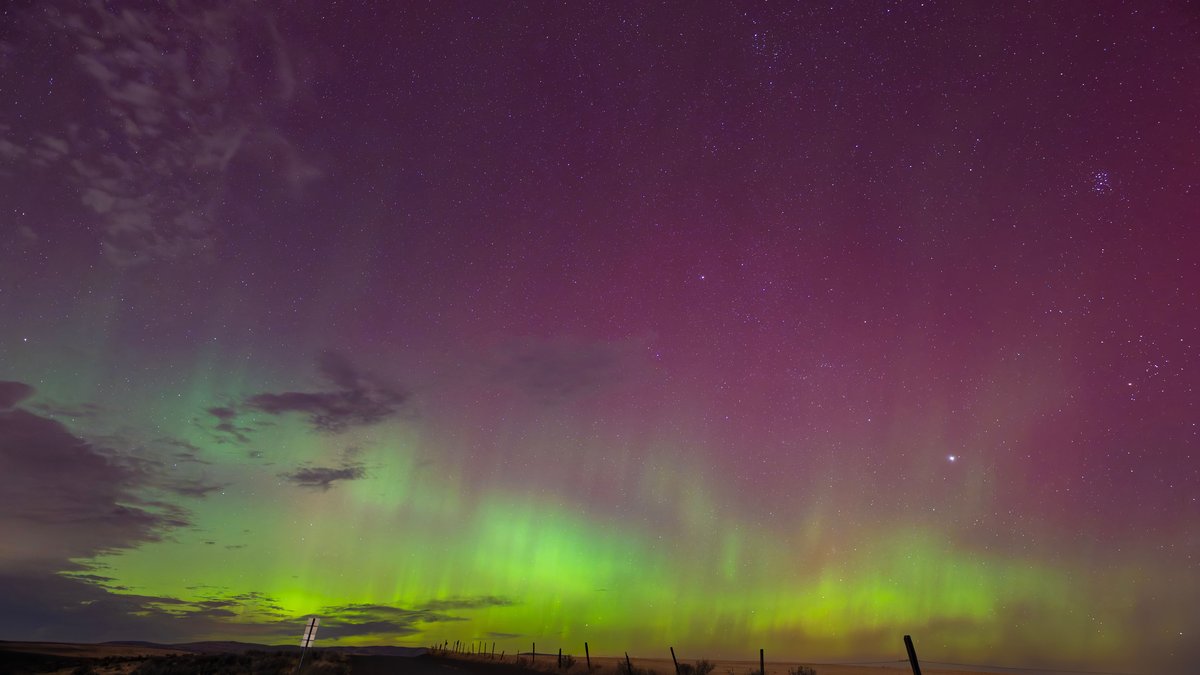
Solar storms can light up the sky with auroras. Powerful ones can also threaten satellites, astronauts, GPS, radio communication and electrical grids. StormWall aims to give Earth’s magnetic environment a short-lived boost at the moment it needs one most.
The StormWall proposal
StormWall is built around a simple question with enormous stakes. If scientists can predict that a dangerous solar storm is coming, could they also reduce its impact before it reaches Earth?
The proposed answer is a fleet of spacecraft carrying material that can be released into the outer reaches of Earth’s magnetic bubble. Once exposed to sunlight and the space environment, that material would become electrically charged plasma. The added plasma would help interrupt the flow of solar storm energy into the magnetosphere.
Walsh has compared the idea to a village preparing for floods. Forecasting tells people when the river may rise. A wall changes what happens when the water arrives. “That’s what we’re proposing here,” Walsh said.
The comparison is useful because space weather already has a warning system. Scientists monitor the Sun for eruptions, including solar flares and coronal mass ejections. When one is headed toward Earth, forecasters can often provide advance notice. StormWall would turn that warning into an active response.
The study remains a concept based on modeling. It describes a possible strategy for mitigation rather than an approved mission. Even so, the proposal stands out because it treats Earth’s space environment as something that can be temporarily engineered during a rare emergency.
Six satellites at the edge of Earth’s shield
The concept centers on six large spacecraft placed in geosynchronous orbit, roughly 22,500 miles above Earth. At that altitude, a satellite circles Earth in step with the planet’s rotation.
That location matters because it places the spacecraft far above the International Space Station and many common satellite orbits. It also puts them near a region where released material could influence the sun-facing side of Earth’s magnetic shield.
Each spacecraft would carry a large store of reactive material. The study discusses candidates such as barium, lithium, sodium, or calcium. These substances could be stored in a manageable form and released when a threatening storm is detected.
In the proposed mission scenario, the satellites would wait until space weather monitors identify a severe inbound event. Controllers would then command the spacecraft to release their payloads. The goal would be to build a protective plasma structure before the most damaging part of the storm couples into Earth’s magnetic field.
Daniel Welling, a space physicist at the University of Michigan and study co-author, described the concept with a vivid image. “It’s as if you could install an airbag in the magnetosphere,” he said.
How released gas becomes a plasma barrier
The physics starts with Earth’s natural response to solar storms. During a powerful event, energy from the Sun can disturb the magnetosphere and drive charged particles into near-Earth space.
At the same time, material from Earth’s upper atmosphere can rise into the magnetic environment. Oxygen ions can collect on the sun-facing side of the planet. That extra material can change how incoming solar wind energy interacts with Earth’s magnetic shield.
StormWall tries to amplify that protective effect on command. The released material would spread near the magnetosphere and become ionized by sunlight. Once ionized, the particles would behave as plasma, a gas of charged particles that responds to electric and magnetic fields.
The added plasma would create a temporary region of mass-loading. In plain terms, the incoming flow from the Sun would have to push through a heavier, more crowded magnetic environment. That change could reduce the efficiency with which a coronal mass ejection transfers energy into Earth’s system.
The researchers propose using only a tiny amount of material compared with the mass of a typical solar eruption. That imbalance is part of what makes the idea striking. A relatively small payload, placed at the right time and location, may produce an outsized effect in the magnetosphere.
A test against the May 2024 solar storm
To test the idea, the team modeled StormWall against the May 2024 solar storm. That event, often associated with widespread auroras, was the strongest geomagnetic disturbance since 2003.
The May 2024 event gave researchers a valuable benchmark because upstream solar wind measurements were available for the simulations. Those measurements helped the team ask how a StormWall-like intervention might have changed the way energy entered Earth’s space environment.
In the simulations, the artificial plasma wall disrupted the connection between the solar storm and the magnetosphere. The modeled result was a large reduction in storm intensity. Reports on the study describe potential reductions of more than half, with some modeled effects reaching much higher for the May 2024 case.
“When you apply some really serious physics to it, it does work,” Walsh said. His comment captures the central claim of the research. The proposal depends on real plasma behavior that can be tested with models and future mission studies.
The result should be read with the caution that applies to any early mission concept. Computer simulations can show whether the physics is plausible. Hardware design, launch planning, operational control and environmental review would all need separate work before any system could fly.
Why solar superstorms are so costly
Solar superstorms are rare, but their reach is global. A severe geomagnetic storm can induce currents in power lines, degrade satellite operations, disrupt radio signals and interfere with navigation systems.
Modern society depends on technologies that extend into space. Satellites support communications, weather forecasting, timing signals, mapping and military systems. GPS-guided equipment also plays a major role in agriculture, shipping, aviation and emergency response.
The historical benchmark is the Carrington Event of 1859. That storm struck during the telegraph era and produced dramatic effects in the technology of its time. A similar event today would meet a world filled with satellites, long-distance power grids, data networks and precision timing infrastructure.
The study researchers estimate that a Carrington-level superstorm could cause damage measured in the trillions of dollars. The May 2024 storm was far smaller than that worst-case scenario, yet it still caused real economic problems. U.S. farmers reported major losses linked to GPS equipment malfunctions during that period.
That is why Walsh frames the concept as planetary infrastructure. A severe solar storm would respect no borders. As he put it, “It would help all people on the planet.”
The launch and safety questions ahead
StormWall would require big spacecraft, large payloads and careful timing. The satellites would need enough stored material to make a meaningful plasma barrier at geosynchronous altitude.
Launching that much mass would be expensive. The spacecraft and their canisters could require heavy-lift rockets. A full cost analysis has yet to be completed and the system would likely involve a multibillion-dollar investment.
There is also the question of reuse. Once the material is released, the satellites would need refilling or replacement. That makes StormWall more like an emergency protection system with a consumable payload than a passive shield that remains in place indefinitely.
Safety will be central to any next step. The study argues that the released plasma should leave the system relatively quickly. Solar wind would carry much of it away rather than letting it settle permanently into the atmosphere. Follow-up research would still need to examine possible effects on satellites, upper-atmosphere chemistry and Earth’s magnetic environment.
For now, StormWall is a provocative model result with a practical target. The researchers are asking whether humanity can move from watching the Sun to preparing the space around Earth. If the next century-scale storm appears on the horizon, that shift could matter.