China’s Tianwen-2 mission has reached the near-Earth asteroid Kamoʻoalewa and returned the first close-up image of the tiny object, according to a July 6 announcement from the China National Space Administration reported by Xinhua. The spacecraft is now beginning the delicate work of studying a fast-spinning body that shares Earth’s orbital neighborhood and may hold clues to the Moon’s violent past.
The target, officially known as 2016 HO3 and also called Kamoʻoalewa, is often described as one of Earth’s quasi-moons. It travels around the sun in a rhythm that keeps it near our planet over long stretches of time. From Earth, that motion makes it look like a companion. For mission planners, it offers something rare, a reachable asteroid with a story that could connect planetary defense, lunar science and sample-return technology.
The first image is more than a mission milestone. It gives engineers their first close-range look at the surface that Tianwen-2 must touch, skim, or sample before sending material back toward Earth. Small asteroids can behave in surprising ways. Their gravity is weak, their surfaces can shift and their shapes can complicate a spacecraft’s approach.
If the mission succeeds, China would join Japan and the United States among the countries that have returned asteroid material to Earth. The attempt also comes with a second act. After delivering its sample capsule during a future Earth flyby, Tianwen-2 is expected to continue deeper into the solar system toward another unusual object.
A first look at Kamoʻoalewa
The image released with the CNSA announcement shows Kamoʻoalewa from close range, roughly 20 kilometers from the spacecraft according to mission reports. At that distance, a small asteroid begins to change from an astronomical point into a place with shape, texture and hazards. For Tianwen-2, every pixel matters.
Kamoʻoalewa is a compact near-Earth asteroid. Earlier estimates placed it in the tens-of-meters range, with some estimates extending toward about 100 meters across. The new close-up view suggests a small and irregular body. Its size matters because tiny asteroids have very little gravity. A spacecraft sampling operation near such a target depends on careful navigation rather than a steady landing environment.
The object’s classification as a quasi-satellite adds to the appeal. Quasi-satellite is a dynamical term for an object that orbits the sun while staying near a planet over many years. Kamoʻoalewa’s path keeps it close enough to Earth for a spacecraft mission, yet it remains an independent small body with its own history.
For scientists, close-up imaging marks the start of a new phase. Telescopes can measure brightness, color and rotation from afar. A spacecraft can inspect the object’s shape and local terrain. That transition is especially important for a mission that needs to choose where and how to collect material.
CNSA said the spacecraft will continue its survey before sample collection. The agency described the next stage as work to “acquire data on the asteroid’s morphology, material composition and internal structure.” Those measurements will help mission teams decide how to approach the surface and judge which sampling method is safest.
Why the asteroid could be hard to sample
Small asteroids can turn a simple-looking sample grab into a high-wire operation. Kamoʻoalewa is believed to spin quickly and its gravity is far weaker than anything felt on a planet or large moon. A spacecraft operating nearby has to use thrusters, sensors and timing with extraordinary precision.
The early image appears to show an uneven body with limited smooth terrain. That could make a surface contact maneuver harder. A flat area gives engineers more room for error. A lumpy surface can present boulders, steep slopes and shadows that interfere with navigation.
Mission planners have considered more than one sampling strategy for Tianwen-2. Reports before arrival described a possible anchor-and-drill method if the surface proved sturdy enough. A looser surface could favor a touch-and-go style collection, where the spacecraft briefly contacts or hovers near the asteroid and gathers regolith with a sampling device.
The challenge is tied to the asteroid’s likely structure. Many small asteroids are rubble-pile asteroids, made from fragments held together by their weak mutual gravity. On such bodies, the surface can behave like gravel, powder, or loosely packed rock. That can be useful for grabbing loose material, but it also makes anchoring or drilling riskier.
CNSA has indicated that the spacecraft will move step by step through its observation campaign. In the agency’s words, “The probe will progressively conduct more detailed scientific exploration.” That careful phrasing fits the situation. Before any sampling attempt, Tianwen-2 needs a map of hazards, lighting conditions and candidate collection sites.
The puzzle of a possible lunar fragment
Kamoʻoalewa has attracted unusual attention because some researchers have proposed that it may have come from the Moon. That idea is based on its orbit and spectral clues gathered from telescopes. Its reflected light has been studied for hints about surface minerals and space weathering.
A lunar origin would make Kamoʻoalewa a remarkable target. Instead of collecting material from a typical near-Earth asteroid, the mission could return a piece of ejecta blasted from the Moon by an ancient impact. Such a sample could connect a specific small body in space to the broader history of collisions in the Earth-Moon system.
The idea remains a scientific hypothesis. The strongest test would come from laboratory analysis of returned grains. Scientists could measure mineral composition, isotopes, exposure history and microscopic damage caused by space weathering. These signatures can reveal where a rock formed and how long it has traveled through space.
That possible connection also explains why Tianwen-2 sample return matters beyond engineering. Lunar samples from Apollo, Luna, Chang’e and other missions have already changed ideas about the Moon’s origin and evolution. Material from Kamoʻoalewa could add a different kind of lunar record, if the asteroid truly carries Moon-derived rock.
Even if its origin turns out to be more typical for a near-Earth asteroid, Kamoʻoalewa will still be scientifically valuable. Small bodies preserve ancient material from the solar system. Their surfaces also record radiation, micrometeorite impacts and thermal stress. A tiny asteroid near Earth can act as a natural archive of the processes that shape airless worlds.
How Tianwen-2 plans to bring pieces home
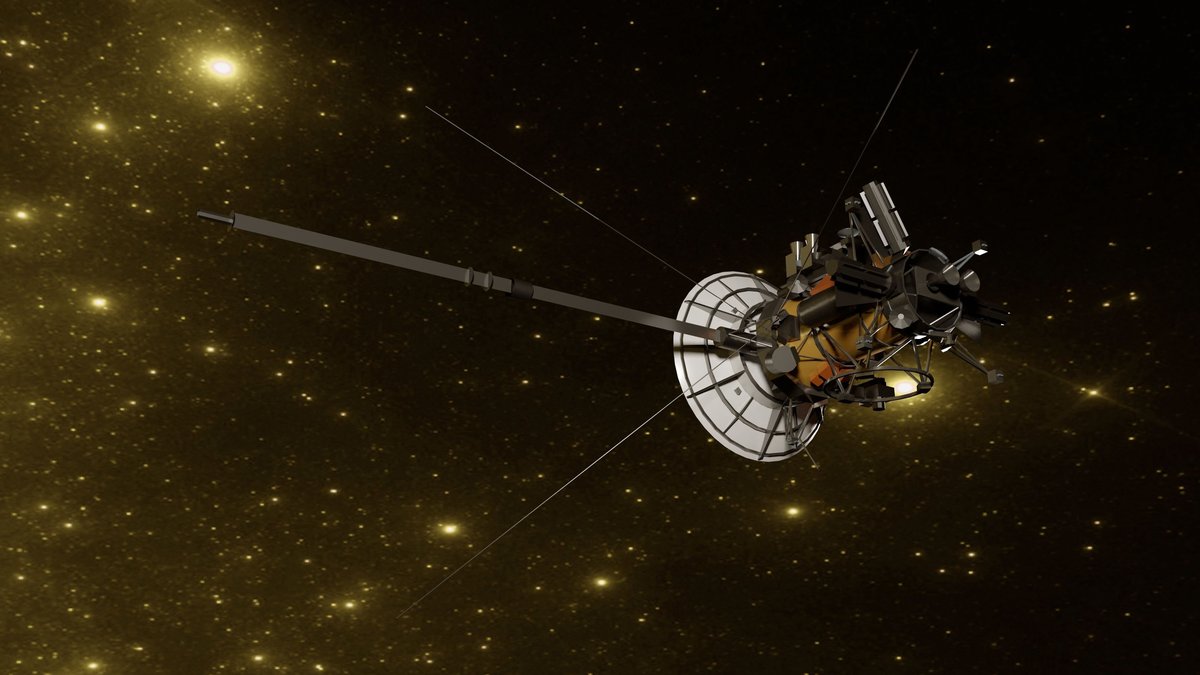
The Tianwen-2 mission is built around a demanding sequence. First, the spacecraft must rendezvous with Kamoʻoalewa. Then it must inspect the surface, select a sampling strategy, collect material and begin the trip back toward Earth. Each step depends on the one before it.
The mission launched from the Xichang Satellite Launch Center in May 2025. After a roughly 400-day journey, CNSA announced that the spacecraft had reached the asteroid and closed to a distance suitable for detailed observations. The July 6 announcement placed the mission in its close-proximity operations phase.
Sample return missions have a special scientific power. Instruments on a spacecraft can study an asteroid in place, but Earth laboratories can probe samples with far more detail. Researchers can use microscopes, mass spectrometers, clean-room chemistry and future instruments that have yet to be invented.
Japan’s Hayabusa and Hayabusa2 missions showed how much can be learned from tiny amounts of asteroid material. NASA’s OSIRIS-REx mission added another major benchmark when it returned material from Bennu in 2023. If Tianwen-2 brings home grains from Kamoʻoalewa, the sample will become part of that growing planetary science record.
The expected return plan calls for a capsule release during a future flyby of Earth. Reports have placed that event in 2027. The capsule would then plunge through the atmosphere at high speed and deliver sealed material for recovery and analysis. For scientists waiting on the ground, the most important cargo could be measured in grams.
What comes after the asteroid encounter
Tianwen-2 is designed as a mission with two destinations. After its encounter with Kamoʻoalewa and its planned sample delivery, the spacecraft is expected to use Earth’s gravity to reshape its path. That maneuver would send it toward a second target, 311P/PanSTARRS.
311P/PanSTARRS is an unusual object in the asteroid belt region. It has shown traits associated with both asteroids and comets, including activity that has drawn scientific interest. A flyby or rendezvous there could help researchers study how small bodies lose material and how activity can appear in objects that look asteroid-like.
The two-target design makes Tianwen-2 more than a single sampling mission. It links a near-Earth quasi-satellite with a more distant active object. That pairing gives the spacecraft a chance to study two very different members of the small-body population.
For China’s planetary science program, the mission also extends the Tianwen series beyond Mars. Tianwen-1 delivered an orbiter, lander and rover to Mars. Tianwen-2 moves into asteroid sample return and multi-object exploration. It is a major test of deep-space navigation, autonomous operations and sample-handling technology.
The next updates will likely focus on surface mapping, composition measurements and sampling preparations. The first close-up image has already changed Kamoʻoalewa from a remote speck into a real destination. The hardest work now begins near a small, spinning world that may carry a fragment of lunar history.