A 2026 arXiv study by Slava G. Turyshev argues that the Sun’s own gravity could become the heart of an ultra-powerful space observatory. The proposed solar gravitational lens, or SGL, could someday turn compact stars, black holes and planet-forming disks into detailed images that current telescopes can only hint at.
The idea sounds almost impossibly large. A spacecraft would have to travel hundreds of astronomical units from Earth, far beyond Pluto, then look back toward the Sun. From that remote position, the Sun’s mass would bend light from a distant object into a bright ring. With the right instruments and careful reconstruction, that ring could be translated into a high-resolution map.
Turyshev’s paper expands the usual conversation around the solar gravitational lens. Much of the SGL discussion has centered on imaging Earth-like exoplanets. This study points to a wider menu of targets, including magnetic white dwarfs, the supermassive black hole M87* and selected regions inside protoplanetary disks.
The Sun becomes the lens
Gravity bends light. That simple prediction of general relativity underlies the whole SGL concept. When light from a distant object passes near the Sun, the Sun’s gravity slightly changes the light’s path. Far beyond the outer planets, those bent rays begin to concentrate along a line that extends away from the Sun.
In the paper’s compact phrasing, “The Sun supplies the wave-optical element.” The telescope hardware would ride on a spacecraft, but the focusing power would come from the Sun itself. That makes the Sun part of the observing system.
The useful focal region begins at about 550 AU from the Sun. One AU is the average Earth-Sun distance, so this would place the observatory far outside the familiar planetary neighborhood. A spacecraft there would observe an Einstein ring around the Sun, formed from light coming from a chosen distant target.
This geometry is powerful and demanding. The target, Sun and spacecraft must line up with extraordinary precision. The spacecraft would sample light along the focal line, while instruments would block direct sunlight and account for the glow of the solar corona.
A new target list for the solar gravitational lens
Exoplanets have often been the showpiece case for the SGL. A planet similar to Earth is small, faint and far away. In principle, the Sun’s gravitational lens could give a modest spacecraft telescope access to details that ordinary telescope designs struggle to reach.
Turyshev’s new analysis looks beyond that single science goal. Bright targets offer a different advantage. White dwarfs and black hole environments produce or shape intense light, which changes the challenge from raw photon gathering to navigation, calibration, dynamic range and image reconstruction.
That matters because exoplanet imaging faces severe photon limits. A distant planet reflects a tiny amount of starlight. Even with strong gravitational amplification, the spacecraft may need long observing times to separate the planet’s signal from background noise.
By comparison, compact stellar objects can deliver more light to the system. The SGL would still have to suppress the Sun’s glare and model the corona, but the science case becomes broader. A future SGL mission could act as a target-specific observatory for several kinds of extreme astrophysics.
White dwarfs in nanoarcsecond detail
White dwarfs are the dense remains of stars like the Sun after they exhaust their fuel. They are roughly Earth-sized, yet they can be extremely bright. Their small size makes them difficult to resolve, even when they sit relatively nearby in the galaxy.
Turyshev’s paper examines a magnetic white dwarf at a distance of about 10 parsecs. A parsec is about 3.26 light-years, so the target would be part of our stellar neighborhood. Even so, its surface would appear far too tiny for conventional direct mapping.
The proposed SGL approach could push surface mapping from the microarcsecond scale toward the nanoarcsecond scale. That is a dramatic jump in angular detail. It could make fine structure visible across the face of a compact stellar remnant.
Such maps could reveal temperature differences across a white dwarf’s surface. They could also help scientists study debris near the star, including rocky material in an accretion belt. These are clues to the late stages of planetary systems, where shattered worlds can leave chemical traces on dead stars.
For astronomers, that would open a rare window into stellar remains and planetary wreckage at the same time. A white dwarf map could connect surface physics, magnetic fields and the afterlife of planets in a single observing target.
A sharper view of M87*
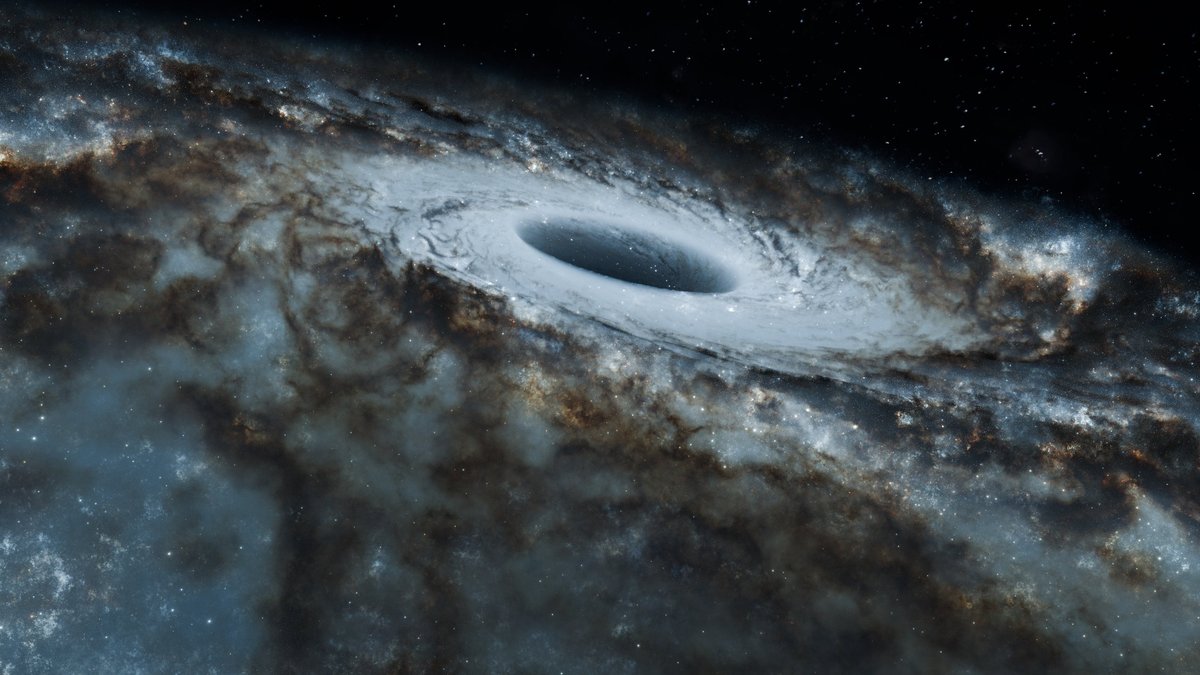
M87* became famous when the Event Horizon Telescope released the first image of a black hole’s shadow. That image showed a bright ring surrounding a dark central region in the giant galaxy Messier 87. It was a landmark for astronomy and general relativity.
The SGL study asks what a solar-gravity telescope might do with such a target. Turyshev calculates that an SGL-based observation of M87* could reach about 0.66 microarcseconds per pixel. That would represent a major gain over images with resolutions measured in tens of microarcseconds.
A sharper view could help reveal structure in the hot gas near the black hole. Scientists could examine the emission ring with finer detail, then compare those patterns with models of matter moving under extreme gravity.
The black hole case also shows the difference between resolution and practicality. The SGL provides an astonishing theoretical resolving power. The spacecraft still has to collect clean data, subtract foreground light and maintain alignment over huge distances.
Even as a proposal, the idea is striking. It treats the Sun as an optical instrument for black hole science, using our own star to examine one of the most extreme objects in the nearby universe.
Planet-forming disks one region at a time
Protoplanetary disks are dusty, gas-rich structures around young stars. Inside them, grains collide, clump and grow into the raw material of planets. Current observatories can detect rings, gaps, spirals and shadows in some of these disks.
The SGL could offer a different way to inspect selected parts of a disk. Turyshev’s analysis suggests that imaging an entire protoplanetary disk would be impractical for this mission architecture. A disk can span roughly 100 AU, which is enormous from the point of view of focal-line scanning.
A focused subfield makes more sense. A spacecraft could target a region where planet formation appears active, such as a bright clump, a gap edge, or a suspected forming planet. That smaller field would reduce the amount of motion required along the focal line.
This kind of observing would complement broader disk surveys. Large observatories can identify interesting structures, while an SGL mission could someday zoom in on the most valuable regions. The paper treats that use case as a targeted strategy.
The payoff would be unusually direct. Instead of inferring young planets only from broad disk patterns, astronomers could inspect small regions where the planet-building process is underway.
The navigation problem at 550 AU
The greatest strength of the solar gravitational lens also creates one of its hardest constraints. The spacecraft must sit on the correct focal line for the chosen object. That makes the SGL a precise alignment mission as much as a telescope mission.
At distances such as 650 AU, small angular changes in the sky translate into enormous sideways movements. Turyshev notes that shifting the view by one degree would require moving farther than the distance from Earth to Saturn. That is a huge maneuver for any spacecraft.
This is why target selection becomes central. A mission could spend years reaching the focal region, then face major costs in time and propulsion if scientists wanted to point at a different object. The SGL works best when the target is chosen carefully in advance.
The spacecraft would also need accurate metrology. It would have to know where it is along the focal line and how its motion changes the sampled image. Tiny errors could matter because the system is reconstructing an image from light wrapped around the Sun.
That requirement makes focal-line navigation one of the defining engineering problems. The SGL promises extreme angular resolution, but every image depends on controlled motion in deep space.
Why the mission remains difficult
The study is a theoretical and mission-concept analysis, so its claims describe what a future SGL observatory could achieve under demanding conditions. No spacecraft has traveled to 550 AU. Voyager 1, humanity’s most distant operating spacecraft for many years, reached interstellar space after decades of flight and remains far closer than an SGL focal mission would need to go.
Propulsion is the first challenge. A practical mission would need to reach the focal region in a useful amount of time. Concepts for fast solar-system escape exist, but the distances involved are severe.
Instrumentation is another hurdle. The spacecraft would need a telescope, an occulter or coronagraph-like system, stable pointing and detectors with the dynamic range to handle the bright solar environment. The glow of the corona would have to be modeled and removed with care.
Then comes image reconstruction. The SGL does not behave like a simple camera. Light from the target is redistributed into a ring around the Sun and the spacecraft must sample that signal. Algorithms would then rebuild the target from many measurements.
Even with those obstacles, the science case is growing. Turyshev’s paper presents the Sun’s gravity as a tool for astronomy far beyond the exoplanet problem. If future propulsion and spacecraft systems can meet the challenge, the same lens that could image distant worlds may also map dead stars, black holes and the birthplaces of planets.