Researchers at the University of Michigan have proposed a retractable, pressurized tunnel system that could change how future astronauts move around on Mars. The 2026 concept, called LATCH, would connect habitats, vehicles and landing sites so crews could cross between surface assets in minutes rather than spend much of a day preparing for a spacesuit excursion.
The proposal comes from the Bioastronautics and Life Support Systems team at the university and was submitted through NASA’s Moon to Mars eXploration Systems and Habitation Academic Innovation Challenge. The system is early-stage and conceptual, but it tackles a practical problem that will appear as soon as human explorers begin living across more than one pressurized module on the Martian surface.
Mars makes even a short walk complicated. Its atmosphere is thin and unbreathable. Temperatures swing sharply, radiation is elevated and dust can cling to equipment. A base with separate habitats, rovers, landing pads, storage areas and ascent vehicles would need a safer way to move people and cargo between them.
A pressurized pathway for Martian bases
The LATCH proposal imagines a flexible route that can extend from one pressurized asset to another, seal at both ends and provide a temporary shirt-sleeve pathway. The University of Michigan report describes it as a “lightweight pressurized tunnel system,” a phrase that captures both its goal and its engineering challenge.
In practice, the concept would act like an adjustable hallway for Mars. A crew member could select a destination through a user interface, such as a Mars Ascent Vehicle or another habitat element. The tunnel would then extend toward the target hatch and align itself for berthing.
Once connected, the tunnel would pressurize with breathing gas. Astronauts could then move through it while carrying cargo. The report envisions room for up to two crew members during transit, which could make routine base operations faster and less physically demanding.
The system is designed to retract after use. That matters because a permanent exposed tunnel network would face dust buildup, radiation exposure, thermal stress and debris hazards. A retractable design could reduce the time that delicate materials spend exposed to the Martian environment.
Why every short trip becomes a major operation
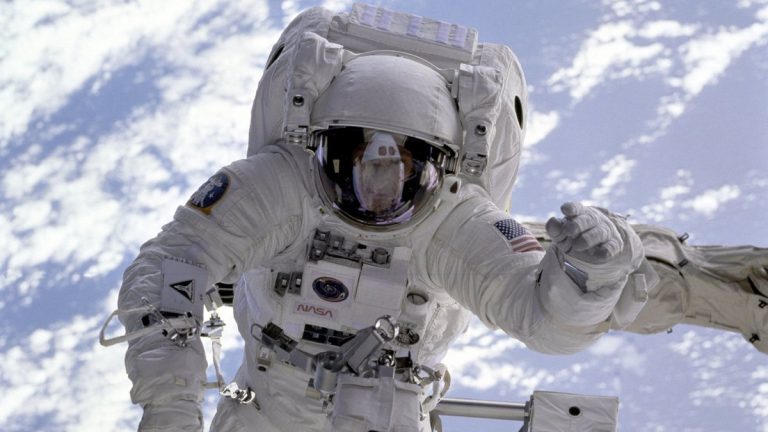
On Mars, moving between two nearby structures can become a full sequence of life-support steps. Astronauts need to prepare their bodies for low-pressure suit operations, get into the suit, pass through an airlock, work outside, return and clean up equipment that may carry dust.
That process takes time and adds risk. The report frames repeated extravehicular activity as an operational burden for long-duration surface missions. Each trip outside also increases exposure to radiation and other environmental hazards.
Spacesuits also affect vehicle design. The University of Michigan team notes that pressure suits used outside a vehicle occupy precious cabin volume and add mass. In one striking line, the report states that “each EVA suit requires 560 kilograms more propellant than an Intra-Vehicular Activity suit would require.”
The Mars Ascent Vehicle is a key part of that concern. If astronauts must wear bulky EVA suits while boarding or leaving it, the cabin may need to be larger. Extra cabin volume and extra mass can drive up propellant needs, which has consequences for the whole mission architecture.
A tunnel that lets astronauts move in lighter internal clothing could ease some of that pressure. The benefit would depend on final mission design, tunnel reliability and safety certification. Still, the basic idea is direct: reduce the number of times crews need to treat a local transfer as an outside expedition.
How LATCH would extend, seal and pressurize
The proposed tunnel has several main parts. The report describes an inflatable shell, structural rings, an extension mechanism, handrails, tracks and tread units. Together, those components would create a pathway that can stretch outward and then support crew movement once pressurized.
Motors and actuators would drive the extension system. The tunnel would begin at a habitat airlock and move toward a selected destination. Crew members and ground controllers could monitor its state through a user interface.
Fine positioning would be central to the design. Mars bases will sit on uneven terrain and their hatches may vary in height or angle. The tunnel would need enough flexibility to align with another surface element without transferring damaging forces into either structure.
After the tunnel reaches its destination, both ends would be secured. The system would then slowly pressurize with oxygen and nitrogen. Sensors would check whether the internal environment is safe before astronauts use the passage.
After transit, the tunnel would depressurize and retract. That cycle is part of the proposed value. The team’s concept supports repeated use without leaving a large fixed corridor exposed between base elements.
Sensors that watch for leaks and alignment errors
A Mars tunnel would need constant awareness of its own condition. The University of Michigan concept includes sensors that monitor leaks, contamination and system faults. Those checks would be visible to both the crew and ground controllers.
Alignment presents another challenge. A tunnel that misses its target hatch by even a small amount could become unusable for that transfer. The report describes mitigation through LiDAR and computer vision, which would help the system track position and support course correction.
Sensor fusion is the core idea. LiDAR can measure distances and shapes, while computer vision can help identify visual features. Combining the two could give the system more confidence as it approaches a hatch or adjusts across uneven ground.
During a transfer, the user interface would keep other crew members informed if a safety issue appears. The concept also includes automatic alerts. Lights, handrails and other support systems could guide astronauts if they need to move quickly through the passage.
This kind of monitoring would be essential for trust. A pressurized tunnel on Mars has to behave like life-support infrastructure. Even a short transfer requires careful control of pressure, atmosphere, structural loads and hatch connections.
Safety risks the team wants to solve
The University of Michigan team built a risk matrix to identify hazards that could affect function or crew safety. The report considers technical risks, schedule risks, cost risks and safety risks. That broad view is important for a system that would interact with several major parts of a Mars base.
One serious concern is structural yielding while astronauts are inside the tunnel. The team identified the possibility of injury or death if the structure fails during use. Proposed mitigations include additional floor beams or a roll-out floor that could handle higher loads.
Cargo movement adds another layer. Astronauts may carry equipment through the tunnel and dropped cargo could create sudden localized forces. Extra support under the walking surface could help reduce that risk.
Berthing accuracy is another critical issue. The tunnel needs to connect correctly with another hatch before it can be pressurized. The report points to multisensor feedback as a way to support cross-checking and fine-motion detection.
The team writes that risk controls are meant to “minimize disruptions and maximize the effectiveness of our tunnel system.” For a future Mars base, that phrase points to a larger goal. Everyday infrastructure must be reliable enough to fade into the rhythm of work.
What the prototype shows
The proposal includes more than a paper design. The BLiSS team prepared Computer-Assisted Design models and a prototype demonstrator of the tunnel and actuation system. The work also included control software for the system.
A prototype at this stage is a tool for learning. It can show how the actuation concept behaves, how the tunnel geometry changes during extension and how software might coordinate movement. It also helps reveal practical issues that appear when parts must move together.
The report describes the tunnel’s purpose as a way to “provide active positioning and berthing between crewed surface assets on Mars.” That line places the prototype in a specific operational setting. It has to connect real structures, through real hatches, under conditions that will be much harsher than a laboratory.
The Moon to Mars X-Hab Challenge is built around this kind of student-driven systems thinking. University teams are asked to produce concepts, prototypes and lessons learned that can inform future exploration. LATCH fits that pattern by focusing on a detailed piece of surface infrastructure.
Further testing would be needed before any version could support astronauts. A flight-ready system would need pressure qualification, material testing, dust studies, thermal cycling, puncture resistance work and human-safety review. The current value is in exploring a problem before Mars base layouts become fixed.
How this could shape future Mars habitats
Future Mars bases will likely grow as collections of connected elements. Habitats, power systems, vehicles, laboratories, landing zones and logistics modules may arrive at different times. A flexible tunnel could help planners connect those elements without designing every path as a permanent structure.
The concept also supports reusability. A tunnel that extends only when needed could serve multiple transfers over time. It could also reduce abandoned infrastructure on the surface, which aligns with the challenge’s emphasis on avoiding unnecessary buildup around base sites.
There are limits to the idea. Mars dust is abrasive and chemically reactive. Inflatable and flexible materials must survive pressure cycles, radiation, temperature changes and mechanical wear. Any crewed version would need redundancy and emergency procedures before it could become part of mission operations.
Even with those hurdles, Mars surface assets will need some form of safe connection as surface missions become longer. The LATCH proposal gives engineers a concrete way to think about that future. It treats movement across a Mars base as a habitat design problem, a life-support problem and an operations problem at the same time.
That’s why a retractable tunnel can feel surprisingly important. Long-duration exploration depends on rockets and landers, but it also depends on the pathways between them. On Mars, a few protected meters could save hours of work and reduce risk during the daily routines of living on another world.