A Nature study by MIT nuclear physicist Areg Danagoulian proposes a striking way to check whether satellites are carrying nuclear weapons. The idea uses high-energy protons already trapped around Earth to create a detectable neutron signal from hidden nuclear material.
The work focuses on a long-standing gap in space security. The 1967 Outer Space Treaty bans the placement of nuclear weapons in orbit, yet open scientific literature has offered few practical ways to verify whether a spacecraft is obeying that rule. Danagoulian’s study lays out a concept for a small inspector satellite that could fly near a suspicious object and look for the telltale signs of uranium.
The proposal is early-stage and computational. It describes a physics-based feasibility study, with calculations suggesting that a 9U CubeSat-sized detector could identify a thermonuclear weapon from about 4 kilometers away after roughly one week of observation. That makes the work less a finished space mission than a detailed argument that the physics may already be within reach.
A natural particle beam around Earth
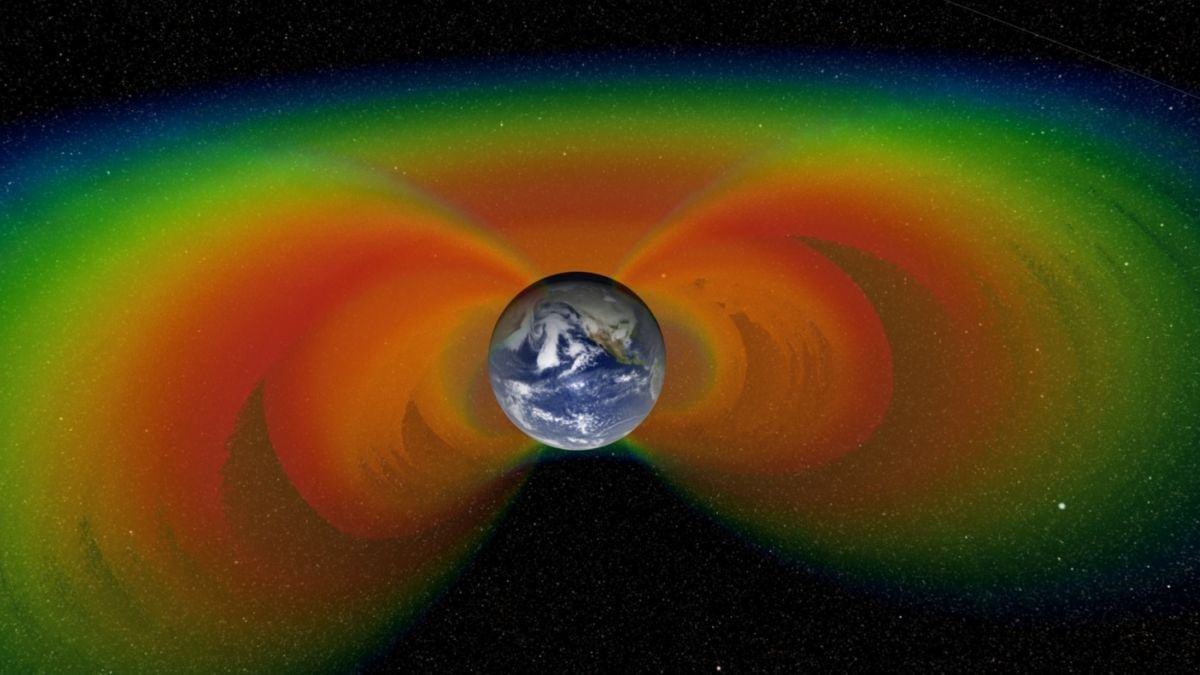
Earth is surrounded by the Van Allen radiation belts, vast doughnut-shaped regions filled with charged particles trapped by the planet’s magnetic field. These particles include energetic protons and electrons that move fast enough to threaten spacecraft electronics and astronaut safety.
Engineers usually treat the belts as a hazard. Satellites that pass through them need shielding, careful orbital planning and robust electronics. Danagoulian’s study turns that familiar problem into a possible tool for inspection.
Inside the inner belt, some protons carry energies high enough to interact with heavy atomic nuclei. In the MIT concept, those naturally occurring particles act like a spaceborne particle beam. A suspect satellite would pass through this environment as it orbited Earth.
That matters because nuclear weapons can contain large amounts of uranium. When energetic protons slam into uranium nuclei, they can knock loose neutrons. Those neutrons would stream away from the object and could be counted by a nearby detector if the instrument were close enough and sensitive enough.
How protons could reveal hidden uranium
The key process is called neutron spallation. In simple terms, a fast particle hits an atomic nucleus hard enough to chip off one or more neutrons. Scientists already use spallation at particle accelerators to produce neutron beams for research.
Danagoulian’s study asks whether Earth’s natural radiation environment can do a similar job in orbit. A satellite carrying a thermonuclear weapon would move through the inner Van Allen belt. The trapped protons there could strike uranium inside the device and produce a neutron signature.
Neutrons are useful messengers because they carry no electric charge. Magnetic fields that bend charged particles have much less influence on them. That gives a nearby inspector satellite a possible way to trace some of the signal back toward the object being examined.
The challenge is separating meaningful neutrons from background radiation. Space near Earth is already full of energetic particles, secondary radiation and signals from Earth’s atmosphere. The detector would need to reject many false signals while keeping enough true events to build statistical confidence.
The study models that problem as a measurement task. It estimates the rate at which spallation neutrons would be produced and the rate at which a compact detector could register them. The result is a scenario in which a week-long close approach could produce enough evidence to flag an object of concern.
A CubeSat-sized detector concept
The proposed instrument is built around a small satellite platform, roughly in the 9U CubeSat class. CubeSats are modular spacecraft built from standardized units and a 9U satellite is still compact enough to fit within the growing ecosystem of small-spacecraft missions.
In the Nature study, the detector platform would fly near the suspect satellite and watch for neutrons produced by proton impacts inside the target. The distance matters enormously. The signal fades as the detector moves farther away, so the concept depends on close orbital operations.
The headline estimate is specific. Danagoulian’s calculations indicate that a detector of this size could identify a thermonuclear weapon from a distance of about 4 kilometers in approximately one week. That estimate comes from modeling, so it will need experimental validation and engineering work before any operational mission could rely on it.
A thermonuclear weapon detection system in orbit would also require careful control of spacecraft position. The inspector would need to remain near the target long enough to collect data. It would also need to understand the local radiation environment as both satellites move through different regions of Earth’s magnetic field.
Even if the detector hardware is small, the mission would be complex. It would combine nuclear physics, orbital mechanics, radiation modeling, spacecraft navigation and international security policy. Each part would have to work together before the concept could become a dependable verification tool.
The 1962 blast that showed the stakes
High-altitude nuclear testing during the Cold War revealed how destructive nuclear explosions in space can be. One of the most famous examples was Starfish Prime, a 1962 U.S. nuclear test detonated about 400 kilometers above the Pacific Ocean.
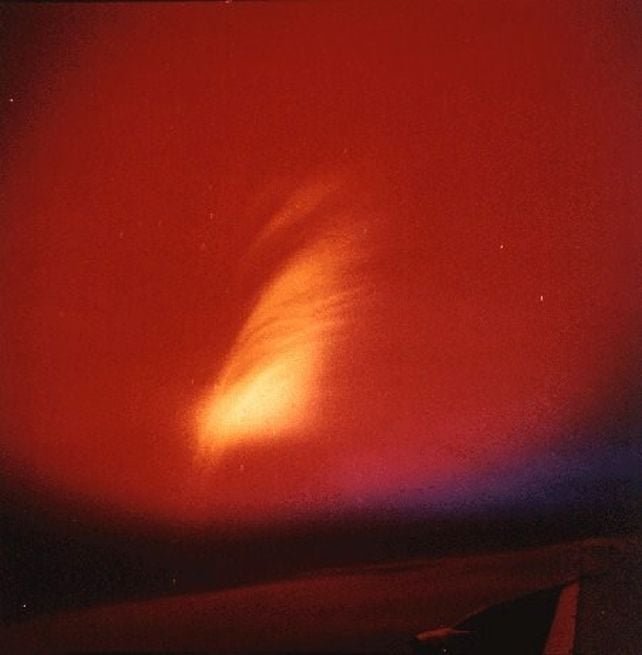
That altitude is close to the region where the International Space Station orbits today. The explosion created an artificial radiation belt and damaged satellites, showing that nuclear blasts in near-Earth space can affect objects far from the detonation point.
The Nature study emphasizes the same broad danger. A nuclear device detonated in space could inject charged particles into the radiation belts. Those particles could linger and threaten many satellites in low Earth orbit.
Modern civilization relies heavily on satellites. Communications, weather forecasting, navigation, banking, disaster response, reconnaissance and climate monitoring all depend on spacecraft. A severe radiation event in orbit could have consequences well beyond the military sphere.
That history gives Danagoulian’s proposal its urgency. A verification method would give governments and international bodies a way to assess suspected violations before a crisis escalates. It would also help make treaty commitments more measurable.
Why treaty verification matters
The Outer Space Treaty opened for signature in 1967 and became a foundation of space law. Among its major provisions, it bans placing nuclear weapons or other weapons of mass destruction in orbit around Earth.
The agreement has broad participation. The Nature abstract states that 117 countries, including China, the United States and Russia, have become parties to the treaty. The treaty’s influence is large, but verification remains a major scientific and political challenge.
The study puts the problem plainly: “This danger is compounded by the lack of a verification mechanism for the OST.” That sentence appears in the paper’s abstract and captures why a technical detection method could matter.
Verification is central to many arms-control systems. Treaties gain strength when parties can observe, inspect, or measure compliance. In orbit, those tools are harder to design because spacecraft are remote, fast-moving and often built with classified or proprietary components.
An inspector satellite would have to gather evidence without physically opening another satellite. That makes indirect signatures valuable. In Danagoulian’s concept, spallation neutrons offer one possible signature because they arise from the interaction between natural radiation and heavy nuclear material.
The engineering hurdles ahead
The study is a concept and feasibility analysis, so several hard problems remain. A working mission would need a detector that can survive the same radiation environment it uses for measurement. It would also need to separate neutrons from other particle backgrounds with high reliability.
Another challenge is direction. Detecting neutrons is only part of the task. The system would need to determine whether they came from the suspect satellite rather than Earth’s atmosphere, the spacecraft itself, or other nearby sources.
Orbit design adds another layer. The inspector would need to fly close to the target for days while both objects move through regions where proton flux changes. A measurement window that works for one orbit may be less useful for another.
There are policy questions as well. Close inspection of satellites can be politically sensitive. Any future space-based nuclear verification system would need technical transparency, diplomatic agreement and clear rules about how evidence is collected and interpreted.
Danagoulian’s study closes by framing the work as a starting point for further research. The paper says the conceptual study is meant to inform future development of verification platforms for the treaty. If that research advances, Earth’s own radiation belts could become part of a new toolkit for keeping nuclear weapons out of orbit.