Space

RSS Feed

Orbital science, astronomy, remote sensing, and what lies beyond the atmosphere.

Astronaut conducting a spacewalk with Earth in the background, showcasing outer space exploration

At 65, Peggy Whitson became the oldest woman to orbit Earth when she commanded the privately funded Axiom Mission 4, leading a four-person crew from four nations to the International Space Station for 18 days and raising her career total beyond 695 days, the longest time in space accumulated by any American astronaut or any woman in history

Axiom Space’s official profile records a spaceflight career without equal among American astronauts or women. At age 65, Peggy Whitson commanded Axiom Mission 4 to the International Space Station. The flight made her the oldest woman to reach Earth orbit and increased her cumulative time in space to 695 days, 7 hours and 4 minutes.…

More

More in Space

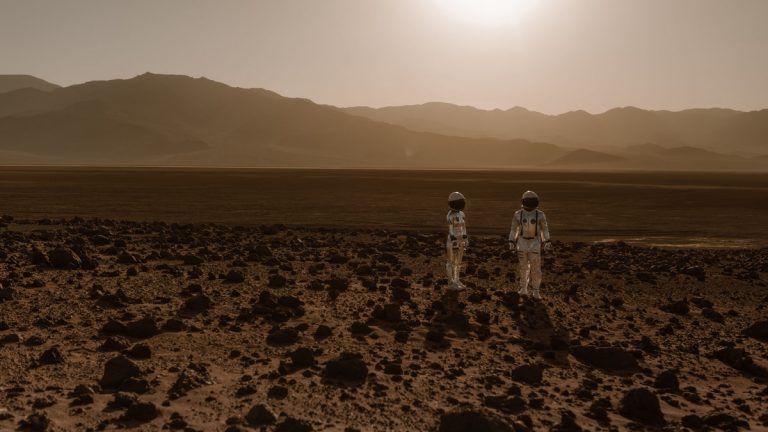
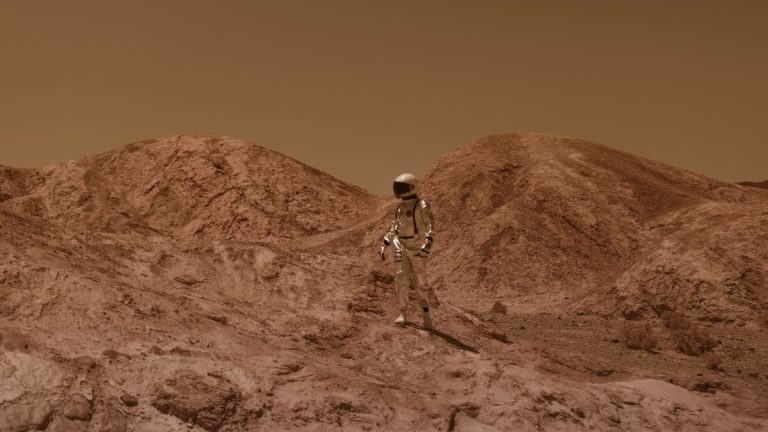
Olympus Mons volcano on Mars shown as a broad shield volcano on the red planet

Mars’ Olympus Mons is the solar system’s largest known volcano, spreading more than 600 kilometers across with slopes so gentle that a summit view would feel like a tilted plain while its vast base disappears beyond the nearby Martian horizon

NASA Science’s Olympus Mons image record reveals one of Mars’ strangest landmarks, a volcano so enormous and so gently sloped that its scale almost disappears from the ground. NASA describes it as “the largest known volcano in the Solar System,” a Martian giant whose shape rewrites the usual picture of what a mountain should look…

Satellite orbiting Earth above blue clouds

NASA’s daring rescue mission could save a falling space telescope

NASA’s Swift Boost mission is targeting a strange kind of space emergency, a working observatory that is slowly losing its grip on orbit. The agency has contracted Katalyst Space Technologies to send a robotic spacecraft after the Neil Gehrels Swift Observatory and push it higher above Earth. The plan reads like orbital surgery. A small…

Vibrant photograph of the starry night sky featuring a bright red nebula and star clusters

Earth may survive the Sun’s death, new models suggest

A study in Astronomy & Astrophysics has reopened a dramatic question about Earth’s far future. Researchers led by Mats Esseldeurs at KU Leuven used updated stellar and orbital models to show that our planet may survive the Sun’s giant phases, even as Mercury and Venus are swallowed. The result is a model-based forecast for a…