Thirty-nine respondents are the core of this story, not the full astronaut corps. In a 2006 study indexed by PubMed, researchers sent an anonymous questionnaire to 175 astronauts and cosmonauts who had flown at least one mission and received 39 completed surveys in return. Every person who replied described some positive psychological effect from spaceflight and the strongest reported change centered on seeing Earth as both beautiful and fragile.
The result is striking, but the design sets a clear boundary around what can be claimed. The paper captures what a self-selected group of flown space travelers chose to report after their missions. It does not show that all astronauts change in the same way and it does not prove that one named experience, such as the overview effect described by NASA, caused the reported shift in every case.
Even with those limits, the survey matters because space psychology often leans on memoirs and famous quotations. This study tried to measure the positive side more systematically. The authors found reported changes in both attitudes and behavior and they also found that response patterns did not vary in a meaningful way by demographics, number of missions flown, or total time in space. For a field that usually focuses on isolation, risk and fatigue, that makes the positive side of the record worth examining on its own terms.
Why a 39-response survey still matters
A response count of 39 may sound small until the population is considered. Human spaceflight is a tiny community and the study targeted people who had already completed real missions. Researchers developed a Positive Effects of Being in Space questionnaire, blended some established growth measures with space-specific items and distributed it anonymously to flown personnel. The anonymity likely made personal reflection easier, but it also meant the team had to work only with what respondents chose to disclose.
The response rate was a little above one in five, which is enough to give the paper signal and enough to leave room for selection effects. People who felt strongly about their missions, especially in a positive direction, may have been more willing to answer than people who felt neutral, guarded, or simply too busy to participate. That is why the strongest reading of the paper is about reported positive outcomes among respondents, not about a universal law of space travel.
NASA’s broader Psychology of Space Exploration volume helps explain why such a survey drew attention. Space agencies have long needed to understand stress, conflict, sleep loss and performance under confinement, yet the same literature also notes that some crews describe awe, meaning and renewed attachment to Earth. The Ihle, Ritsher and Kanas survey stands out because it tried to organize those positive reports into data instead of leaving them as isolated anecdotes.
What the astronauts said changed most
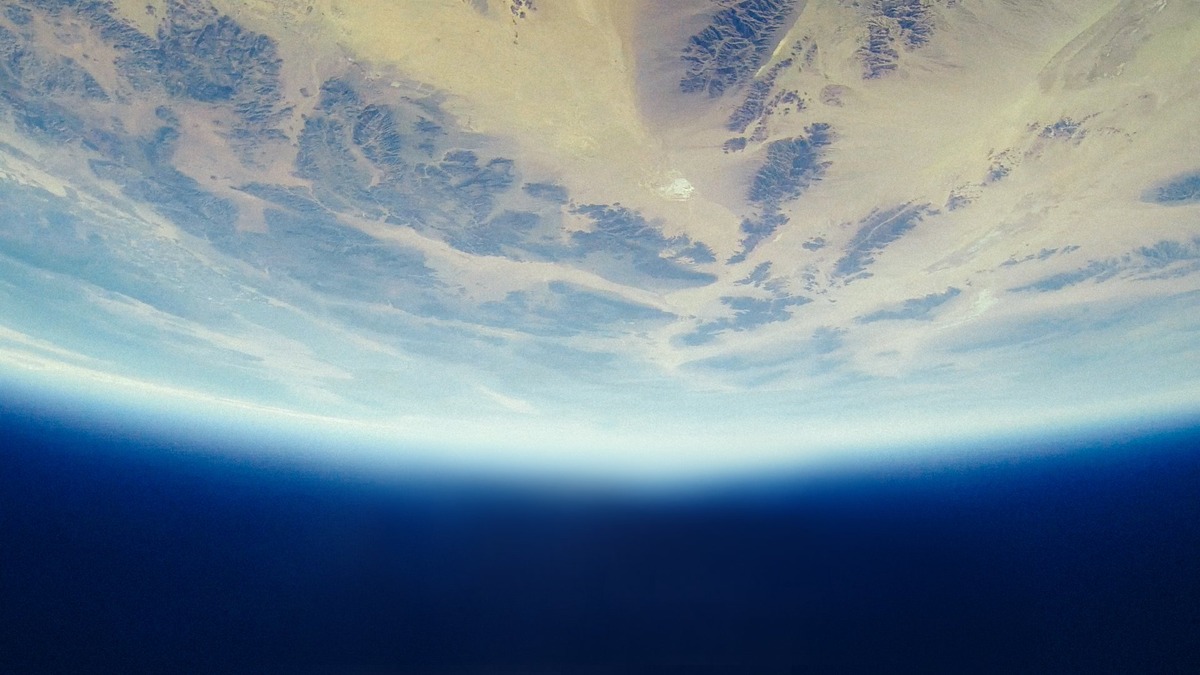
The headline result is narrow and memorable. Among the 39 people who replied, the authors wrote that Earth’s beauty and fragility stood out as the strongest positive change. That phrase deserves to stay close to the wording of the paper because it captures perception rather than a grand moral transformation. The survey did not say every respondent returned with the same environmental philosophy or the same public mission. It said the clearest shared positive reaction involved how Earth was seen and felt.
Related NASA material points in a similar direction without collapsing everything into one explanation. The agency’s Societal Impact of Spaceflight history notes that views of Earth from space have often been linked with ideas of vulnerability, unity and environmental concern. That long cultural pattern gives the survey context. It shows that the respondents were not using a random image or casual metaphor when they singled out beauty and fragility.
The same study also reported changes in attitudes and behaviors, which is important because the finding was not limited to private feeling. Even so, the paper’s abstract does not spell out a detailed checklist of how each behavior changed, how large each shift was, or how long every effect lasted. A careful summary therefore stays with the broad pattern: respondents described enduring positive impressions and the most consistent one focused on Earth itself.
The study found two intensity groups, not one shared epiphany
One of the most useful details in the paper is easy to miss. The respondents appeared to cluster into two groups based on intensity of reported change. That means the survey did not reveal a single, uniform post-space mindset. Some participants described stronger positive change than others, even though all respondents reported at least some positive reaction.
Public discussions of astronaut psychology often drift toward a single dramatic narrative, as if one look through a spacecraft window produces the same inner result every time. The survey points in a more human direction. Crews can share the same broad environment and still come away with different levels of personal change. Variation remained part of the story even inside this small, already positive-leaning sample.
NASA’s Behavioral Health and Performance evidence report reflects the same operational concern. The report cites positive or salutogenic aspects of spaceflight, including viewing Earth, as contributors to well-being, while still treating crew psychology as something that depends on many interacting conditions. That framework fits the survey better than any simplified claim that the view alone reliably transforms everyone who reaches orbit.
Why the overview effect should stay a careful label
The overview effect is a useful cultural and psychological reference point, but it can easily become too broad for the evidence at hand. NASA’s public discussion of the term describes a powerful shift in how some astronauts think about Earth and life after seeing the planet from above. The 2006 survey overlaps with that territory, yet the paper itself measured post-flight self-reports, not a direct causal chain observed during a mission.
The safest way to connect the two is to say that the survey is consistent with overview-effect style accounts, especially when respondents highlighted Earth’s beauty and fragility. The paper does not prove that every response came from a single mechanism and it does not separate the visual experience of Earth from other influential parts of spaceflight such as danger, teamwork, professional achievement, isolation, or the simple fact of leaving the planet and returning.
Research reviews also keep that caution alive for practical reasons. In the same NASA psychology volume, a chapter on Earth observation argues that if viewing Earth supports well-being for crews in low Earth orbit, future deep-space missions may need replacement experiences or countermeasures when Earth is no longer visible in the same way. That is a planning question, not proof of a one-cause theory. It treats the view of Earth as important, while leaving room for uncertainty about how the effect works and who feels it most strongly.
What this could mean for Moon and Mars crews
The study’s long-term value may lie less in romance than in mission design. If some of the healthiest parts of spaceflight come from awe, perspective and a stronger sense of connection to Earth, agencies should not think only about shielding crews from harm. They may also need to preserve the conditions that support positive adaptation. Windows, camera use, protected time for observation and thoughtful mission routines could matter more than they appear to on a technical checklist.
The same logic becomes more important when crews travel farther away. A Moon mission still offers dramatic views of Earth, even if the setting changes. A Mars mission will not. The survey cannot tell engineers exactly what to build, but it does suggest that the loss of Earth’s immediate presence may remove one of spaceflight’s most meaningful psychological rewards. That possibility is one reason later NASA discussions keep returning to crew support, Earth observation and the balance between stress and meaning.
What remains after the caveats is still substantial. A small but real group of astronauts and cosmonauts answered an anonymous survey, every respondent reported some positive impact and the clearest shared change focused on the planet below them. For the future of exploration, that is a serious result: space psychology is not only about strain, conflict and exhaustion. It also includes the rare conditions that can leave highly trained crews feeling more attached to Earth than before they launched.