Space

RSS Feed

Orbital science, astronomy, remote sensing, and what lies beyond the atmosphere.

A "slice" of the cosmic web, as reconstructed through COSMOS-Web data. The vertex at left represents the present day, while the opposite edge reaches back to when the universe was less than 1 billion years old. Brighter, yellower regions represent dense areas containing galaxies, while dark regions show empty regions of space called voids. (Image

James Webb’s largest survey reveals the universe’s hidden cosmic web

Researchers at the University of California, Riverside have used NASA’s James Webb Space Telescope to produce the most detailed map yet of the cosmic web, the vast structure that organizes galaxies across the universe. The work uses data from COSMOS-Web, the largest JWST survey conducted so far, to trace galaxy environments back toward the universe’s…

More

More in Space

Colorful cosmic explosion and star cloud in deep space

Einstein Probe caught a cosmic explosion that refuses to fit the known playbook

A study in Monthly Notices reports that China’s Einstein Probe detected a strange double X-ray flash from a cosmic source called EP240305a. The event behaved in ways that resemble some of the universe’s most powerful explosions, yet its full identity remains uncertain. The signal appeared on March 5, 2024, as two short X-ray flares separated…

The International Space Station orbiting above Earth

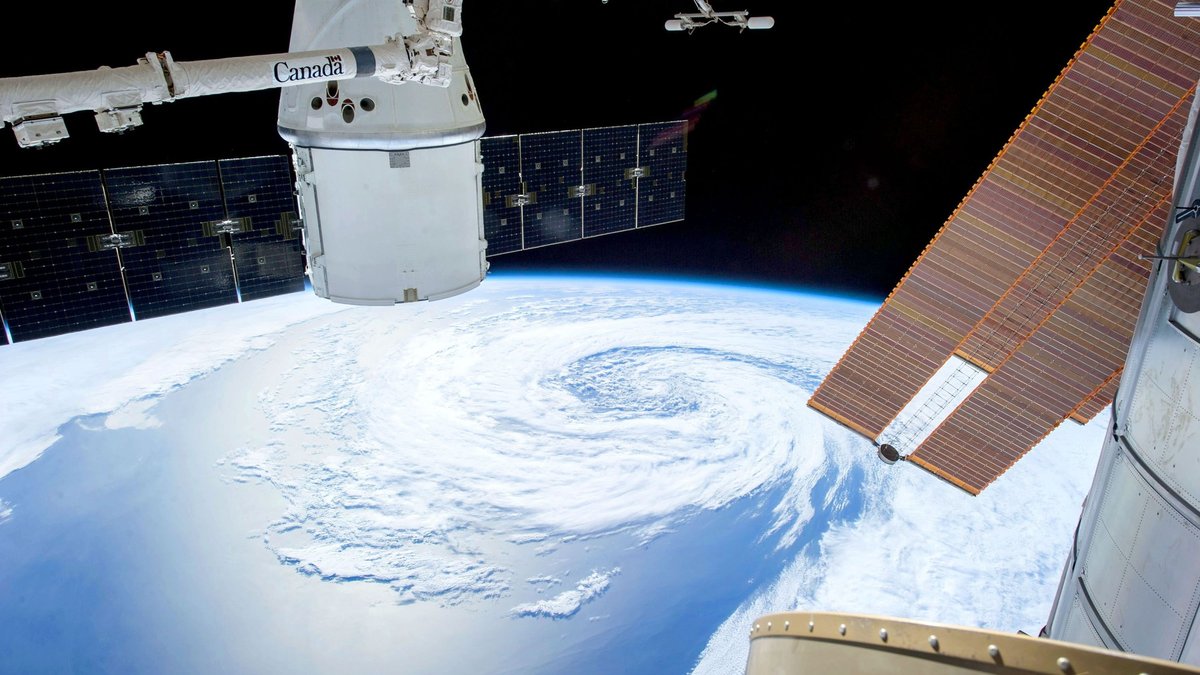
Humans have lived continuously aboard the International Space Station since November 2, 2000, extending an unbroken off-world presence beyond 25 years, keeping at least one person in orbit every day and creating the longest sustained period that members of our species have lived away from Earth

NASA Johnson Space Center has marked more than 25 years of continuous human life aboard the International Space Station. The unbroken period began when the Expedition 1 crew entered the orbiting laboratory on November 2, 2000. Every day since then, at least one person has been living beyond Earth’s atmosphere. The milestone represents roughly 9,000…

Illustration of an Earth-like exoplanet against a star field

Kepler ended decades of uncertainty over whether Earth-like worlds were cosmic accidents by revealing that small planets are common and suggesting at least 300 million potentially habitable worlds may orbit Milky Way stars, while TESS maps nearby candidates and the enduring silence leaves astronomers asking why a galaxy that may teem with planets still seems so quiet

A study led by researchers at NASA Ames used Kepler’s final planet census to estimate how often rocky worlds occupy temperate orbits around Sun-like stars. The analysis, published in The Astronomical Journal, suggested that the Milky Way could contain at least 300 million potentially habitable planets. The result marks a profound change in astronomy. A…