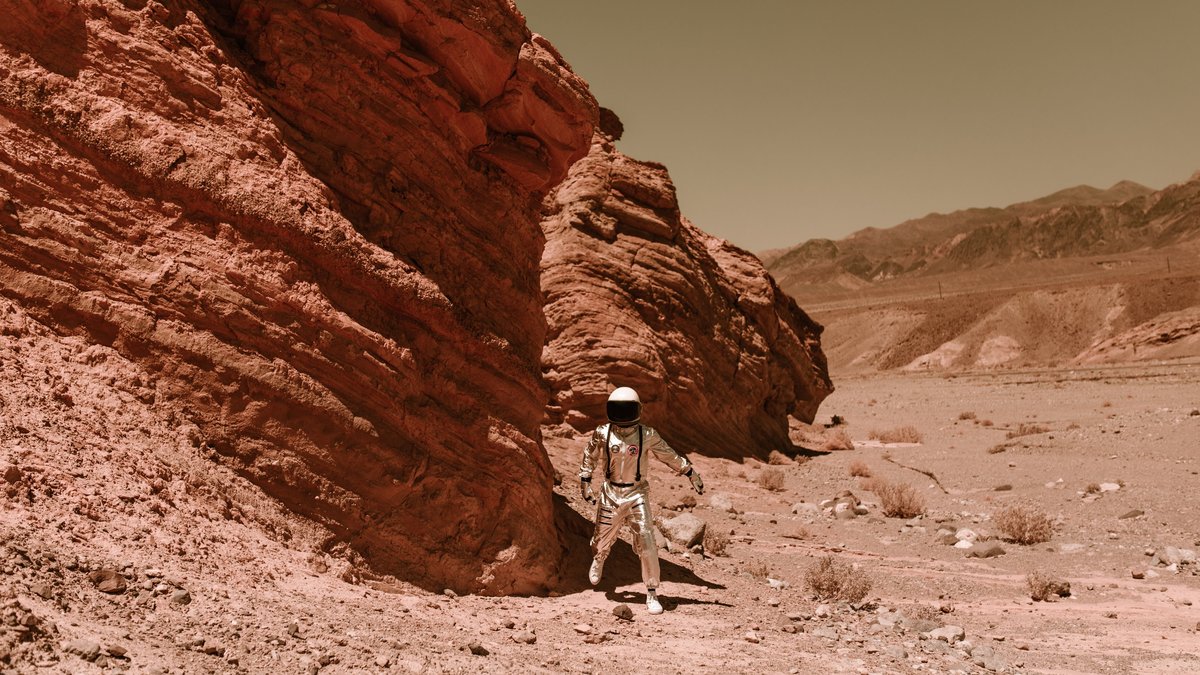
Fifteen astronauts who spent about six months in orbit returned with clear problems in balance, mobility and fine hand coordination, according to a Frontiers in Neural Circuits study. The same paper found that the tested cognitive measures stayed broadly stable, which narrows the main short-term concern after landing to movement control rather than a sweeping loss of mental performance.
The result matters because crews on future Moon and Mars missions may need to work soon after arrival. If long missions leave astronauts slower on obstacle-style walking tasks and less steady when they stand or move their heads, those changes could affect how quickly a crew can unload equipment, navigate uneven ground, or respond to an emergency in partial gravity.
Researchers followed the crew before launch, during flight in a smaller set of tasks and across six months after return. The average mission length was 188 days, with some astronauts staying in space for close to a year. That repeated testing gave the team a rare chance to compare immediate post-flight problems with the pace of recovery over the following weeks and months.
Balance and mobility showed the clearest decline
The largest post-flight losses appeared in whole-body movement. Astronauts were slower on the Functional Mobility Test, a short obstacle-course task that captures how well someone can walk, turn and stay stable. They also performed worse on two standing balance tasks, including a harder version that required head movement while maintaining posture.
The paper’s pattern fits years of earlier post-flight mobility work, including prior studies of astronaut obstacle-course performance that also found slower movement after space missions. The basic idea is straightforward: the nervous system adapts to weightlessness, then has to readjust when gravity suddenly returns.
In orbit, the inner ear no longer supplies the same constant information about head position relative to gravity that it does on Earth. The brain compensates by leaning more on vision and on signals from muscles and joints. That adjustment helps in microgravity, but after landing it can leave a crew member briefly unsteady because the old Earth-based balance rules have not fully switched back on yet.
Two-hand coordination also became slower
The study did not stop at walking and standing. It also measured fine motor control with the Purdue Pegboard, a task that requires both hands to place small pegs quickly and accurately. After long missions, astronauts took longer to finish, which points to a temporary drop in bimanual speed and coordination rather than a problem limited only to the legs.
The authors noted that the average slowdown of 3.25 seconds was roughly equal to the age effect their control model would expect across about 25 years. That comparison does not mean spaceflight aged the astronauts, but it does show that the short-term change was large enough to matter in a practical task that depends on coordinated hand work.
That kind of slowdown has operational weight. Space crews use both hands constantly for maintenance, sampling, equipment setup and medical procedures. A temporary loss in bimanual coordination could complicate early post-landing work, especially when a crew is tired, wearing gear, or working in a setting where immediate backup is limited.
The broader concern also matches NASA’s technical guidance on cognition and fine motor test batteries, which treats precise manual performance as a measurable operational issue rather than a minor lab detail. In deep-space missions, a few lost seconds and a less steady hand may matter more than they do in a clinic.
Cognition stayed steadier than the movement tests
One of the most useful findings in the paper was negative in the best sense: the tested cognitive measures did not show the same broad pre-flight to post-flight decline seen in the sensorimotor tasks. Across measures that covered processing speed, spatial working memory, mental rotation and dual-task performance, the authors found no significant overall evidence that long-duration flight had dragged cognition down in parallel with balance and mobility.
The main exception was a faster response time on a cube rotation task, which the authors said was most likely a practice effect rather than a true microgravity benefit. That caution matters, because it keeps the article grounded in what the paper actually supports. The study did not show that astronauts came back mentally sharper. It showed that their tested cognitive scores were largely stable while their movement control was temporarily worse.
That distinction helps frame the result for mission planning. A crew can preserve much of its measured task thinking and still face serious trouble with standing, walking and using both hands quickly. Other spaceflight studies, including research on cognitive and sensorimotor performance in astronauts, also treat those domains as related but not identical, which is why mixed outcomes deserve careful reading instead of a single blanket label.
Recovery was substantial, but not all on one timeline
The encouraging part of the paper is that the biggest changes were temporary. Balance, mobility and pegboard performance generally moved back toward baseline within about 30 days post-flight. That suggests the most difficult operational window is likely to fall in the first days and weeks after landing rather than persist for many months at the same intensity.
Some recovery may happen even faster. The authors wrote that postural control returned to baseline within roughly 4 days post-flight, although their schedule also limited how precisely they could track that early stretch. The first post-flight session happened between day 1 and day 7 and there was then a gap before the day-30 session, so the study could see broad improvement without fully mapping every step of the rebound.
The shape of the recovery therefore looks mixed: one phase seems fast and another looks slower. That picture fits the idea that the nervous system first regains basic stability, then continues fine-tuning more automatic patterns over the next weeks. It also fits related evidence from astronaut brain-change studies showing that some structural and functional effects of long missions can outlast the most obvious behavioral symptoms.
What the findings mean for longer missions
The astronauts in this dataset usually spent about six months in space, with an overall range of roughly four to eleven months. The authors did not find strong evidence that longer missions caused a broad extra drop across the full battery, though they did see an uncorrected hint that longer duration might be linked to worse pegboard performance. That is useful, but it is not the same as proof that mission length stops mattering after a half-year stay.
The paper itself points readers toward the larger picture. Other research has tied longer missions to bigger shifts in brain fluids, cortical thickness and other measures of brain structure, while studies on in-flight exercise countermeasures show that daily exercise helps but does not fully prevent post-flight sensorimotor problems. In other words, crews already work hard to protect muscle, bone and movement, yet the return to gravity still exposes a vulnerable period.
NASA’s broader human-systems standards also treat balance, memory, motor control and behavioral health as part of one mission-readiness problem rather than separate academic topics. NASA-STD-3001 reflects that operational view and this study gives it a concrete example: astronauts may step off a spacecraft with mostly steady testable cognition, yet still need time before their bodies can move with full terrestrial confidence again.
The limits of the paper are real. Only four of the fifteen participants were women, which left the team without enough statistical power to test sex differences well. Even so, the study provides a grounded message for future exploration. Long-duration spaceflight appears to hit sensorimotor control faster and more clearly than the tested cognitive measures and that makes post-landing stabilization one of the most important health windows to plan around.