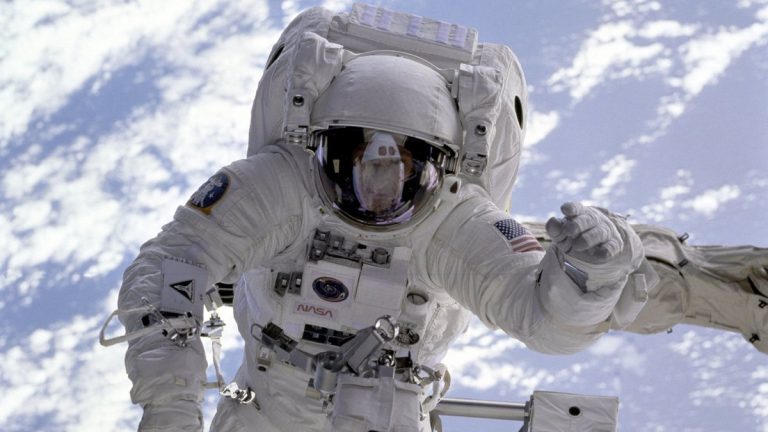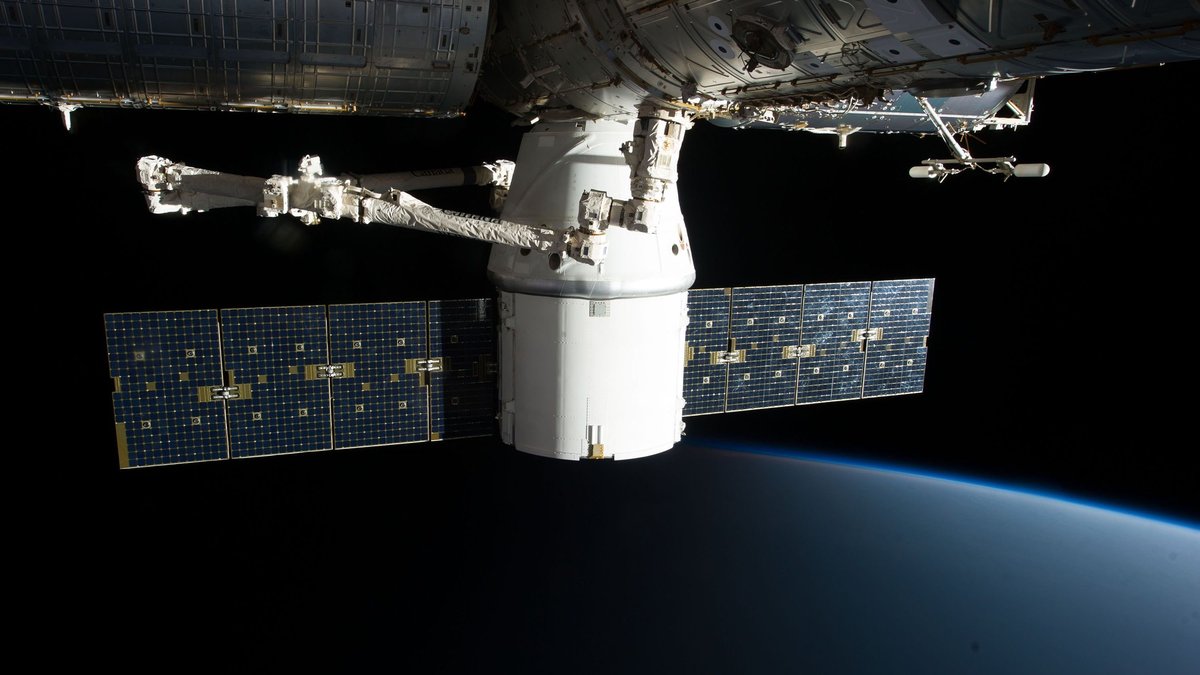
Seven astronauts who lived aboard the International Space Station for an average of 168 days came home with a changed sense of which way was up. The biggest shift did not look like a simple loss of balance. Their judgments of vertical became less certain right after landing and a deeper change in how they weighted visual information versus body signals lasted for months after gravity returned.
The work, published in npj Microgravity, tracked the astronauts before flight, during flight and after flight, then compared them with 14 ground-based controls tested across a similar span. The researchers found that the control group stayed stable through the year-long schedule, while the astronaut group showed two different recovery clocks: a short one for immediate uncertainty and a much longer one for how the brain balanced competing cues about orientation.
For people on Earth, finding upright seems automatic because gravity cues, the body’s own axis and what the eyes see usually point in roughly the same direction. Space breaks that long partnership. Once the pull of gravity stops giving the inner ear its usual reference, the brain has to lean more heavily on the signals that remain and this study suggests that the new weighting pattern can linger well beyond touchdown.
Why upright is a brain decision, not a simple reflex
Everyday orientation depends on several systems working together. The inner ear senses acceleration and gravity-related force, the body provides pressure and posture signals and vision supplies a frame from the room, the horizon, or the walls around a person. On Earth those signals often agree closely enough that people rarely notice the calculation taking place.
Laurence R. Harris and colleagues at York University studied that calculation directly by separating the cues instead of letting them line up naturally. They measured the subjective visual vertical, which asks where gravity seems to point and the perceptual upright, which asks how an object must be rotated before it looks upright enough to recognize most easily. Those two tasks let the team compare judgments that depend strongly on gravity with judgments that depend more evenly on vision, the body and gravity.
For life in orbit, the distinction has practical weight because astronauts still need fast, dependable orientation judgments when reading displays, moving through modules, or responding to an emergency. A switch panel can be physically fixed to a wall, yet the crew member deciding how to interpret it is doing so with a sensory system that has been recalibrated by months in microgravity. The paper points to that human factor as a practical safety issue rather than an abstract curiosity.
What the ISS missions changed first
The study followed seven astronauts across missions on the ISS and compared them with 14 people on the ground. The astronauts completed baseline sessions before launch, early and late in flight sessions in orbit and postflight sessions after return. The controls repeated similar measurements over roughly the same calendar span so the researchers could separate real spaceflight effects from simple practice.
One result appeared as soon as the astronauts were back on Earth. In the vertical-judgment task without visual orientation cues, their responses became much more variable immediately after landing. The paper reports average variance rising from 8.6 square degrees before flight to 31.8 square degrees soon after return. By the later postflight session that extra uncertainty had eased, which suggests that the immediate wobble in judging vertical was substantial but temporary.
A different pattern appeared in the task that estimates the brain’s preferred upright. The astronauts did not simply become more visually driven when gravity disappeared. Their visual weighting relative to body cues dropped on entering orbit, which means visual backgrounds had less pull on their sense of upright than expected if preflight cue weights had stayed constant.
Why the slow recovery may matter more than the quick one
The most surprising result arrived long after the dramatic part of the mission was over. When the astronauts were tested again an average of 130 days after return, with a range from 68 to 285 days, their reliance on visual cues relative to body cues was still lower than it had been before launch. The paper says that reduction was comparable to what the researchers saw when the crew first went into space.
That finding changes the usual picture of recovery. A returning astronaut may look outwardly steady again while the underlying balance among sensory cues is still different. For a mission planner, a physician, or a designer of spacecraft interiors, that is a more consequential message than a short-lived sense of dizziness, because it suggests a long tail of adaptation in how the brain resolves conflicting information.
The result also lines up with earlier concerns about how astronauts perceive motion and orientation after spaceflight. A related postflight motion study found ambiguity in how returning crew members interpreted self-motion and another paper on distance and size perception showed that some visual judgments can shift during long missions as well. Taken together, the studies suggest that readaptation is not one event. It unfolds across several perceptual systems that do not all reset on the same timetable.
The present paper does not claim that reduced visual weighting automatically caused any operational mistake and it does not show that every astronaut will recover on the same schedule. What it does show is that the sensory strategy used to define upright remained altered months later in this small group, which is a strong reason to treat postflight orientation as a continuing human-performance issue instead of a brief landing-day problem.
How the researchers tested the cue balance
The team used a statistical model that treated vision, body and gravity as separate directional inputs whose weights could be estimated from behavior. On Earth, all three cues can contribute. In orbit, gravity no longer supplies the same reference, so the comparison between vision and body becomes especially important. The model let the researchers ask whether the observed judgments matched what would be expected if cue reliability and cue weighting stayed linked.
Results from that modeling supported a simple idea: the brain adjusts toward the cues it can trust most in the moment. Earlier work on enhancing visual cues to orientation argued that clearer environmental frames may help both astronauts and older adults. The new study adds a reason for that proposal. If visual information is being used less strongly, then spacecraft layouts, display orientation and local visual references may need to work harder to stabilize performance during and after long missions.
The researchers also checked whether the measured variances were consistent with the weights predicted by the model and they found that the relationship broadly fit maximum-likelihood cue integration. In plain terms, the astronauts did not behave randomly. Their brains appeared to be rebalancing the available information in an orderly way, even when that new balance was less suited to Earth’s restored gravity.
What the study can and cannot tell mission planners
The paper is valuable because it captured astronauts before, during and after long-duration flight, yet it also has clear limits. Seven astronauts is a small sample, even by space medicine standards and the team could not test the crew in the first few days after landing. That gap matters because the paper itself says some fast changes could have happened during that early window and then faded before later measurements.
The authors also examined possible explanations for the long-lived reduction in visual weighting without treating any of them as settled. They note that vision problems have been reported during and after spaceflight, including ocular changes discussed in an Ophthalmology report, yet the pattern in this study did not match a simple loss of visual precision. They also raised the possibility of a flashback-like effect linked to familiar equipment, then stated clearly that their data could not test that hypothesis directly.
Another hint in the paper is that younger astronauts in this small sample tended to show a larger reduction in visual weighting, although the authors treated that pattern cautiously. The age range ran from 41 to 56 years, one astronaut already had 193 days of prior space experience and individual variability was large. Those details keep the result in perspective while still making it useful as a prompt for future work on experience, age and countermeasures.
Human missions to the Moon and Mars will depend on crews who can switch between gravity environments, read displays quickly and move safely after landing. Studies like this one suggest that recovery plans should account for multisensory orientation over weeks and months, not only the first hours after return. The key lesson is behavioral and practical: after long exposure to microgravity, the brain may keep using a space-tuned recipe for upright long after the astronaut is back under Earth’s gravity.