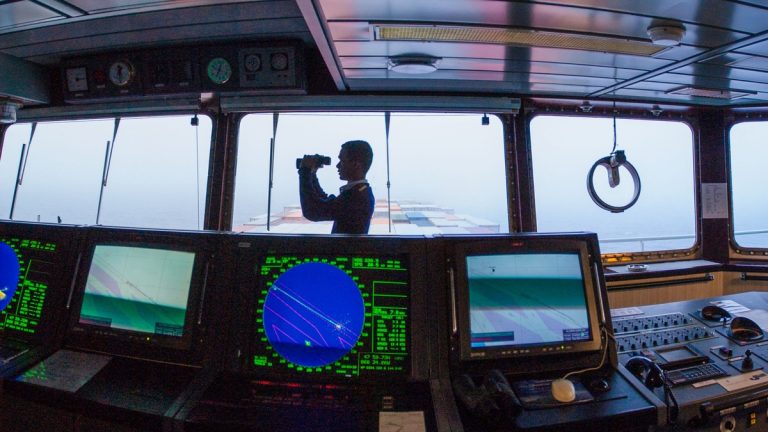
Schmidt Ocean Institute announced 31 previously undescribed marine species from a two-week expedition off Brazil, a rapid burst of discovery from one of Earth’s least familiar habitats. The findings came from an official announcement describing work aboard the research vessel R/V Falkor (too), where an international team explored the ocean’s dim midwater with robotic vehicles and new imaging tools.
The expedition focused on the tropical South Atlantic, hundreds to thousands of feet below the surface. There, animals drift through a vast water column between sunlight and the seafloor. Many are soft, transparent and easily damaged, which makes them difficult to study with older sampling methods.
“The largest habitat on Earth, the midwater, is filled with incredible animals we are only just starting to understand,” said Karen Osborn, the expedition’s chief scientist. Her team’s results show how much life remains hidden in open water, even far from reefs, coasts and the seafloor landscapes that usually draw attention.
A hidden ocean zone came alive
The ocean’s midwater is a giant living space. It begins below the sunlit surface and extends down toward the deep sea, forming a dark realm where animals feed, hide, migrate and reproduce. For scientists, it is also a difficult place to sample. Nets can tear fragile bodies, lights can change animal behavior and many species collapse after collection.
During the expedition, researchers used robotic exploration to observe animals where they live. That mattered because many midwater creatures have gelatinous bodies, delicate fins, or nearly invisible tissues. Their shapes and colors can vanish quickly once they leave the pressure, darkness and temperature of the deep ocean.
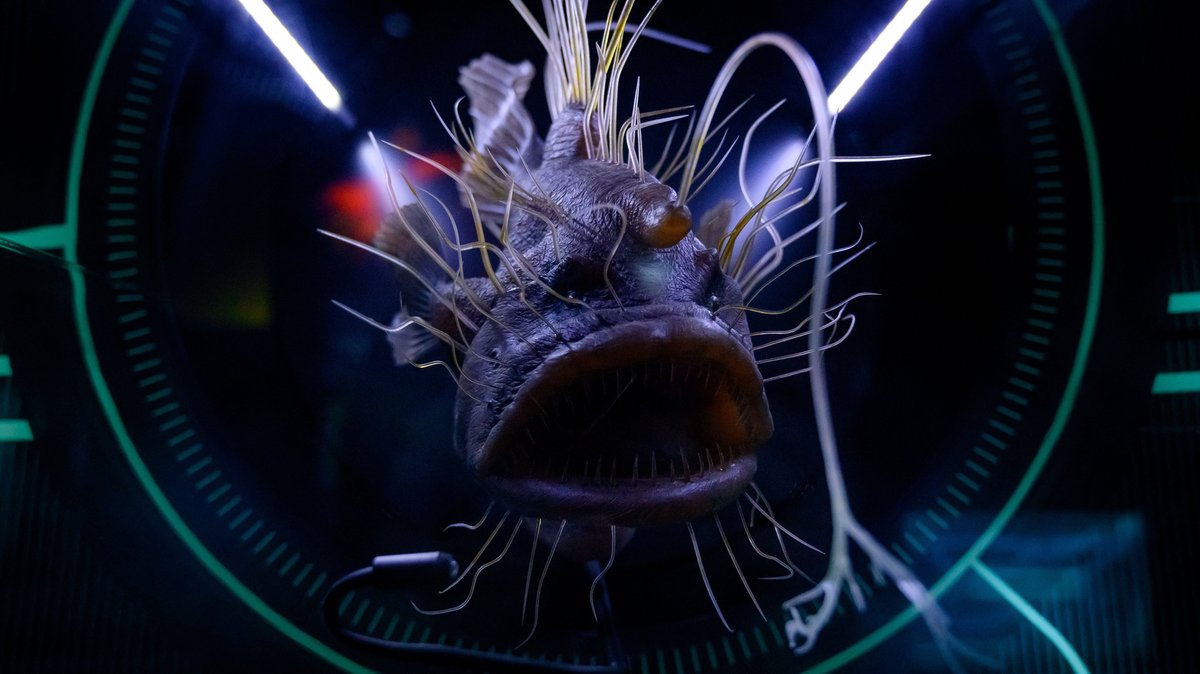
The team documented a wide cast of organisms, including a juvenile glass squid, larval fish, lobed comb jellies, siphonophores and a drifting worm. Some finds were rare observations of known animals. Others appear to represent life forms science has yet to formally describe.
One reason the results stand out is the speed of the work. In just two weeks, the science team found 31 species that had never been described before. That pace reflects both the richness of the habitat and the power of new tools designed to study animals gently.
Robots reached fragile animals in the dark
At the center of the expedition was ROV SuBastian, Schmidt Ocean Institute’s remotely operated vehicle. The robot carried cameras and scientific instruments into the water column while operators controlled it from the ship. This allowed researchers to watch animals in place before deciding whether to collect them.
Deep-sea robots have changed ocean biology because they let scientists slow down. A net may bring back a jumble of damaged specimens. A robot can pause beside a drifting animal, film its movement, record its posture and collect it with far more care.
The mission also tested a group of technologies built for the special challenges of midwater research. One key system was Deep Particle Image Velocimetry, or DeepPIV. The method uses lasers and optics to create detailed three-dimensional views of transparent animals in the water.
For a fragile creature, that can make the difference between a blurred record and a useful biological snapshot. Transparent bodies often hide internal structures from ordinary cameras. With improved imaging, researchers can see how an animal is shaped, how it moves and how water flows around it.
The expedition’s technology suite also helped the team gather information while still at sea. That can preserve evidence that disappears after preservation, including color, body position, tissue form and living movement. For animals that change within minutes or hours, timing is part of the science.
A worm, a squid and a possible new family
Among the newly documented animals was a new Tomopteris gossamer worm, a delicate animal that spends its whole life drifting in the water column. These worms can look almost unreal on camera, with thin bodies and winglike structures that help them move through open water.
The team also recorded a juvenile glass squid. Young squids in the deep ocean can look very different from adults, which makes identification challenging. Careful imaging gives taxonomists a better chance of connecting young stages to their adult forms.
One siphonophore drew special attention. Based on images and measurements collected during the mission, Dhugal Lindsay of the Japan Agency for Marine-Earth Science and Technology believes the animal belongs to an undescribed genus. It may even represent a new family of physonect siphonophores.
Siphonophores are among the strangest animals in the sea. A single individual is made of specialized units that work together, almost like organs arranged along a living chain. Some catch prey with long tentacles. Others use gas-filled floats or swimming bells to move through the water.
The expedition also captured an unusual feeding scene. Researchers observed a female Haliphron atlanticus octopus eating a jellyfish at about 800 meters deep. Females of this species can grow up to four meters long and weigh as much as 75 kilograms, while males are far smaller.
New cameras captured bodies before they changed
Back on the ship, researchers used a prototype multiview macro camera system to photograph several species soon after collection. The system captured animals from three angles, which helped preserve details that can fade or deform once a specimen is removed from the sea.
That approach is especially useful for soft-bodied marine life. A preserved specimen can still provide crucial information, including anatomy and genetic material. Yet a living animal often shows the shape, posture and color patterns that reveal how it actually functions.
The mission also included a gravity machine for studying microbes and a spinning-wheel confocal microscope nicknamed “the Squid.” According to the Schmidt Ocean Institute announcement, this microscope allowed scientists to image living cellular structures inside organisms for the first time during the expedition.
Manu Prakash, a Stanford University bioengineer involved in the work, said the new tools connect body-scale biology with cellular detail. “This opens a new door for researching deep-sea physiology, linking cellular architectures to organism function,” he said.
That link matters because deep-sea animals face extreme conditions. They live under pressure, in darkness and often in water where food appears unpredictably. Seeing living structures inside these organisms can help scientists ask how tissues and cells support survival in such demanding habitats.
The expedition points to the future of marine biology
The Brazil expedition shows how marine discovery is becoming faster and more detailed. Scientists still need formal taxonomic work to name and describe new species. Even so, the combination of live imaging, careful collection and genetic analysis can give researchers a richer record from the start.
That record matters for conservation as well as biology. The midwater helps connect surface ecosystems with the deep sea. Many animals migrate vertically each day, carrying carbon and nutrients through the ocean. Learning which species live there can improve our picture of how ocean systems work.
The work also highlights a shift in how scientists study delicate life. Instead of relying mainly on specimens that arrive at the surface already altered, researchers can now capture behavior, three-dimensional structure and live cellular activity during the same expedition. That gives future taxonomists and ecologists more evidence to compare.
Jyotika Virmani, executive director of Schmidt Ocean Institute, described the toolset as a preview of where the field is going. “The novel suite of technologies on this cruise is a glimpse into the future of marine biological science,” she said.
Future expeditions may extend these methods to other deep-water regions, where many species remain undescribed. For now, the two-week voyage off Brazil has revealed a vivid truth about the open ocean. A huge living world is moving through the dark and scientists are finally getting better at seeing it before it slips away.