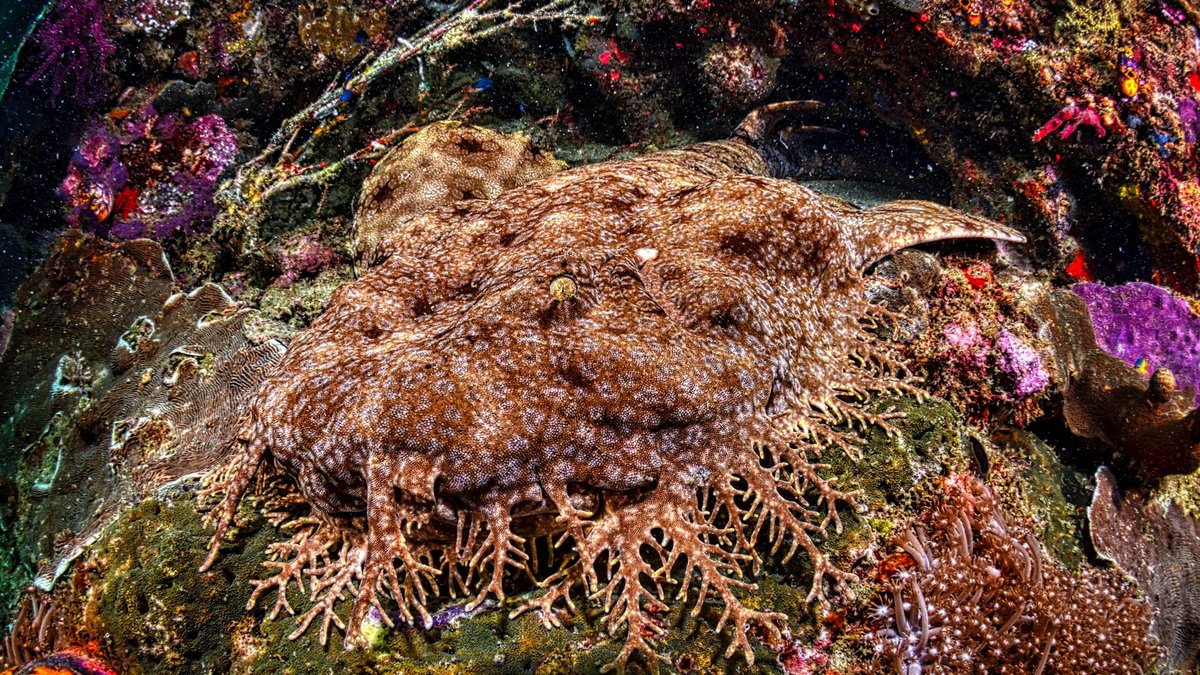
Researchers led by the University of the Sunshine Coast have identified a new species of walking shark from shallow reefs in southeastern Papua New Guinea, according to a study published in the Journal of the Ocean Science Foundation. The shark, named Hemiscyllium dudgeonae, adds a tenth known species to a rare group of small reef sharks famous for using their paired fins to move across seafloor and reef flats.
The discovery began during night surveys in waters around Papua New Guinea, where researchers were studying epaulette sharks that live close to coral reefs. A small, brown-spotted shark turned up with a pattern the team didn’t recognize. That chance encounter led to genetic testing, additional surveys and the formal description of a species now called Dudgeon’s walking shark.
For marine biologists, the find is striking because new sharks are often associated with deeper or less accessible habitats. This animal was found in very shallow reef water, within an ecosystem visited by divers and local fishers. Its discovery suggests that familiar-looking reef edges can still hold species that science has yet to name.
A surprise catch in Papua New Guinea
The team was surveying reefs in and around Milne Bay when the first unusual shark appeared. The researchers had been looking for Michael’s walking shark, another member of the genus Hemiscyllium. Instead, they found a shark with a different pattern of markings across its body.
Dr. Christine Dudgeon, a senior research fellow at the University of the Sunshine Coast, was part of the field team. She later described the moment as a rare thrill for shark science. “New shark species don’t come along that often,” Dudgeon said.
After the shark was brought back to the boat, doctoral student Jess Blakeway noticed that its body pattern stood apart from the species the team had been seeking. Dudgeon recalled Blakeway calling out, “Chris, it’s different.” That observation pushed the team to look more closely at nearby reefs.
Within two days, the researchers had recorded 11 more individuals across three sites. The additional sharks included males and females, along with juveniles and adults. Each showed the same distinctive pattern, giving the researchers a stronger reason to suspect they had found an undescribed species.
What makes Dudgeon’s walking shark different
Dudgeon’s walking shark belongs to Hemiscyllium, a genus of small carpet sharks that live around Australia and New Guinea. These sharks are similar in overall body shape, so scientists often rely on color pattern, location and DNA to tell species apart.
The new species has small white dashes and brown dots across its body. That pattern differs from Michael’s walking shark, which Dudgeon described as having leopard-like markings. In walking sharks, these markings matter. They can serve as visible fingerprints that help scientists separate one species from another.
To confirm the discovery, Blakeway and Dudgeon compared genetic data from the newly found sharks with samples from the other known walking shark species. The genetic results supported what the field team had seen in the water. The Papua New Guinea sharks represented a distinct species.
The scientific name Hemiscyllium dudgeonae honors Christine Dudgeon for her long-running work on the genus. The naming also reflects the collaborative nature of the research, which involved scientists and institutions connected to Australia, Papua New Guinea, conservation science and museum collections.
The study describes the new animal while also reviewing walking shark distributions in Papua New Guinea. That broader view matters because these sharks often occupy small, regionally specific ranges. A map of where each species lives can help researchers understand how isolation, sea-level change and reef history shaped their evolution.
How walking sharks move across reefs
Walking sharks get their common name from the way they use their fins. Their pectoral and pelvic fins help them push and wriggle over reef surfaces, especially in shallow areas where swimming space can be limited.
This movement is useful on tropical reef flats. At low tide, water can become shallow, warm and patchy. Some parts of the reef may be cut off from deeper channels for short periods. A shark that can move over uneven surfaces can keep hunting small prey while staying close to shelter.
The word “walking” can sound strange when applied to a shark, but the behavior is easy to picture. The animal’s body stays low while its paired fins help it crawl over coral rubble, rocks and tide pools. It moves slowly compared with open-water sharks, yet that slow movement fits the reef-flat world it inhabits.
Walking sharks are also known for tolerating challenging conditions on shallow reefs. Some related species can survive for hours in low-oxygen environments. Scientists have linked that ability to the demands of reef flats, where oxygen levels can shift as tides rise and fall.
Walking shark movement shows how evolution can reshape familiar animals for unusual habitats. These sharks remain predators, with the anatomy and senses of their relatives. Their lifestyle is tailored to cramped, shifting reef edges where agility matters more than speed.
Why a tiny range raises conservation concerns
So far, Hemiscyllium dudgeonae has been documented at only three locations in southeastern Papua New Guinea. That narrow known range could make the species vulnerable if future work confirms that it lives in a small area.
Small ranges can raise the stakes for reef animals. Damage to a few local habitats may affect a large share of the population. Coral degradation, coastal disturbance, warming seas and fishing pressure can all become more serious when a species has limited places to go.
The study also notes that walking sharks tend to have restricted distributions. Many appear closely tied to the reefs where they live. That kind of local attachment can help species become distinct over time, but it can also limit recovery after habitat loss.
For conservation scientists, the discovery creates a familiar challenge. A species has just been named, yet its population size, full range and long-term risks remain uncertain. Researchers will need more field surveys before they can make a clearer assessment of its status.
The find also highlights a broader point about Papua New Guinea reefs. These waters sit within a region of remarkable shark and ray diversity. Even shallow sites can hold overlooked species, especially when fieldwork is limited by distance, logistics and the difficulty of surveying reefs at night.
What researchers will look for next
The team plans to keep surveying Papua New Guinea reefs to learn where the new shark lives and how common it is. More records will help clarify whether its known range reflects genuine rarity or the limits of current sampling.
Future work may also examine behavior in the field. Scientists will want to know how reef-flat sharks use tide pools, how far they move and which habitats support juveniles and adults. Those details can shape conservation decisions.
Genetics will remain important as well. Comparing populations across islands and reef systems can reveal how walking sharks became separated into different species. In a region shaped by tectonic movement and changing sea levels, geography may have played a powerful role in splitting lineages apart.
The discovery also adds to public awareness of shark diversity. Many people picture sharks as large, fast animals of open water. Walking sharks show another side of the group, small, patterned, nocturnal and tightly linked to coral reef habitats.
Dudgeon has emphasized that sharks and their relatives include a wide range of forms and lifestyles. “They continue to surprise and fascinate us,” she said. With marine biodiversity still being documented in shallow reefs, Dudgeon’s walking shark may become a reminder that new species can be hiding in places scientists can reach, once they know where to look.