A study in Science reports that tiny 300-million-year-old hatchlings from Mazon Creek preserve a rare glimpse of how some early relatives of land animals began life. The fossils point to direct development, a life cycle in which young animals grow as small versions of their adult form, giving paleontologists a new window into the deep history of the first vertebrates that moved onto land.
The research centers on stem tetrapods, the ancient branch of vertebrates close to the origin of animals with limbs. These creatures lived around the time when fish-like bodies were giving rise to animals that could support themselves in shallow water, swamps and eventually terrestrial habitats. For more than a century, that transition has often been pictured through the lens of modern amphibians, with larval stages and dramatic metamorphosis shaping how scientists imagined early development.
The new fossils add something the field has rarely had, a look at the beginning of life for animals close to that evolutionary turning point. Study co-author Jason Pardo, affiliated with Vilnius University and the Field Museum, described the material as “intimate details of the first moments of these animals’ lives.”
Tiny Fossils From Mazon Creek
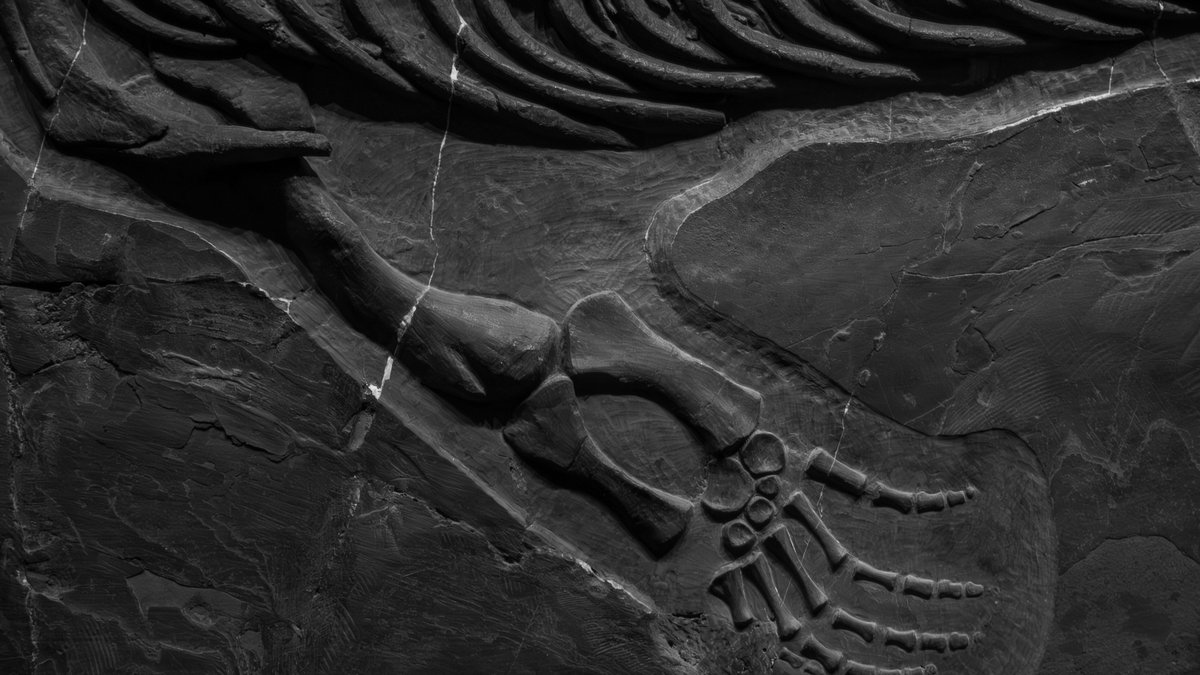
The specimens come from Mazon Creek, a celebrated fossil site near Chicago known for preserving soft-bodied and delicate organisms from the Carboniferous Period. Its fossils often form inside ironstone concretions, which can seal away details that usually vanish during fossilization. That unusual preservation made it possible for researchers to examine hatchlings only a few centimeters long.
At the center of the study are baby embolomeres, ancient predators that lived in rivers, lakes and swampy environments between roughly 350 million and 280 million years ago. Adults could grow into large, crocodile-like animals with elongated bodies. The hatchlings in the study capture them at a much earlier stage, likely days to weeks after hatching.
That timing matters. Fossils of adults can reveal anatomy, diet and ecological role, yet they say less about how an animal developed from embryo to juvenile. A newly hatched animal can preserve features tied directly to growth, breathing, feeding and life cycle. For early tetrapod relatives, those details are exceptionally scarce.
According to the public reporting on the study, co-author Arjan Mann first encountered one of the key baby embolomere fossils years before the new paper. He later worked with Pardo to determine what the tiny fossil represented. Mann recalled the moment by saying, “I think Jason and I both knew we were onto something big.”
Early Tetrapods Skipped the Tadpole Stage
The key finding is that the hatchlings show evidence for direct development. In this kind of life cycle, young animals hatch with a body plan that already resembles the later juvenile or adult form. Growth changes size and proportions over time, while the basic developmental pathway is already in place.
Many living frogs and salamanders follow a different life pattern that includes a larval phase. In familiar cases, a tadpole breathes through gills and later changes into a land-capable adult. Because living amphibians are often used as a reference point for early tetrapods, researchers have long asked whether this larval-to-adult shift reaches back to the earliest chapters of limb evolution.
The Mazon Creek hatchlings point to another pattern for the fossil groups examined. The tiny embolomeres lacked the classic signs expected from a tadpole-like stage, including external gills. Their preserved anatomy supports the idea that they hatched into a form already aligned with later growth.
Pardo summed up the shift in interpretation with a short line that captures the stakes: “We in fact have a completely different story.” For general readers, the surprise is simple. Some ancient relatives of land vertebrates appear to have started life as direct-growing juveniles, rather than moving through a dramatic amphibian-style transformation.
What the Hatchlings Preserved
Exceptional preservation allowed the team to look for small anatomical clues that usually disappear. The researchers examined soft- and hard-tissue evidence in early post-hatching fossils. They also compared the baby embolomeres with other fossils linked to the broader fin-to-limb transition.
One of the most important clues was what the fossils did show about early body form. The animals were tiny, yet their anatomy fit a hatchling stage of a tetrapod relative. The study also reported no tadpole-like larval anatomy among other fossil groups examined from before and during the transition from fish-like ancestors to limbed vertebrates.
That comparison widened the significance beyond a single species. Alongside embolomeres, the researchers considered megalichthyid fishes and aistopods, which were limbless, snake-like tetrapod relatives. Those additional fossils helped the team test whether direct development might have been broader across the early evolutionary neighborhood of tetrapods.
The evidence remains tied to the specimens available. Paleontology often works from incomplete archives and tiny hatchlings are especially rare. Even so, a few well-preserved juveniles can carry unusual weight because they record developmental stages that adult fossils cannot reveal.
The tools mattered, too. High-resolution inspection, including scanning electron microscopy at the Canadian Museum of Nature, helped confirm the identity of one key fossil as a baby embolomere. That kind of imaging can reveal fine structure at scales that are difficult to interpret by eye.
A New Clue in the Move From Water to Land
The move from water to land is one of the central stories in vertebrate evolution. During the Devonian and later Paleozoic, fish-like animals gradually acquired features that supported life in shallow aquatic margins and on land. Limbs, stronger skeletons, new feeding strategies and changes in breathing all helped reshape what vertebrates could do.
Development is part of that story because the first moments of life place hard constraints on survival. A hatchling has to breathe, move, feed and avoid predators in the environment where it begins life. If early tetrapod relatives grew directly, their reproductive strategy may have fit the watery habitats they already occupied before fully terrestrial life became common.
The study’s argument reaches into a longstanding question. Did the larval-to-adult metamorphosis seen in many living amphibians begin deep in the stem tetrapod lineage, or did it arise later among closer relatives of modern amphibians? The fossils examined by Pardo and Mann support a later origin for that style of metamorphosis.
That idea changes how scientists frame early land vertebrates. Their first life stages may have been shaped by inherited fish-like reproductive strategies and direct juvenile growth. The earliest steps toward land could have involved bodies that were already developmentally prepared for their environments soon after hatching.
Tim Smithson, a University of Cambridge researcher who was quoted in coverage of the study and was independent of the paper, captured the practical side of the finding. “Direct development made life easier,” he said. In evolutionary terms, a simpler life cycle can reduce the number of risky transitions an animal must survive.
Why Direct Development Matters
Tetrapod evolution is often told through adult anatomy, especially fins, limbs, skulls and backbones. Hatchlings add a different layer. They show how the developmental program was organized before the animal reached adult size. That makes the new fossils valuable for reconstructing biology, rather than anatomy alone.
Direct development can influence where eggs are laid, how young animals feed and how quickly juveniles enter the same ecological world as adults. In animals with a larval phase, young and adults may occupy different habitats or eat different food. In direct developers, early juveniles can enter a more continuous growth path.
For early tetrapod relatives, that continuity could have mattered in swamps, lakes and floodplain systems. These were dynamic habitats with shifting water levels and abundant predators. A hatchling that already had a functional juvenile body plan may have been able to feed and grow without passing through a fragile larval phase.
The finding also helps separate the history of modern amphibians from the deeper history of limbed vertebrates. Frogs, salamanders and caecilians are living branches with their own evolutionary histories. Their life cycles offer useful clues, yet fossils can reveal which traits were ancient and which ones took shape later.
That distinction is important for human ancestry as well. Humans descend from the broader tetrapod story, far removed from these Carboniferous animals. The new study does not make embolomeres direct human ancestors. It does show that some early relatives on the path toward land vertebrates developed in a way that feels surprisingly familiar, with young animals growing as smaller versions of a later form.
The Fossils Behind the Discovery
The Mazon Creek fossils used in the study came from a region with a long history of collaboration among museums, collectors and researchers. Amateur fossil hunters have helped bring many specimens from the site to scientific attention. That community effort has made Mazon Creek one of the most important windows into Carboniferous life.
The baby embolomeres are especially striking because their adult relatives were formidable aquatic predators. Adults have often been described as long-bodied animals with a crocodile-like look. Seeing them at hatchling size gives researchers a rare before-and-after view across a life span separated by enormous growth.
Field Museum connections run through the story as well. Mann is identified in coverage as an assistant curator of early tetrapods at the museum, while Pardo is described as a research associate there and a postdoctoral fellow at Vilnius University. Their work also drew on examination and imaging at the Canadian Museum of Nature.
In the study, the two centerpiece baby embolomeres were placed in a broader fossil comparison. That broader context matters because a single unusual fossil can be difficult to interpret. Multiple specimens from different parts of the early tetrapod family tree make the direct-development signal stronger.
The result is a sharper picture of early land vertebrates at the smallest scale. These fossils preserve the opening chapter of lives that began more than 300 million years ago. For paleontologists, that chapter helps explain how the animals near the base of the land-vertebrate story grew, survived and carried evolution forward.