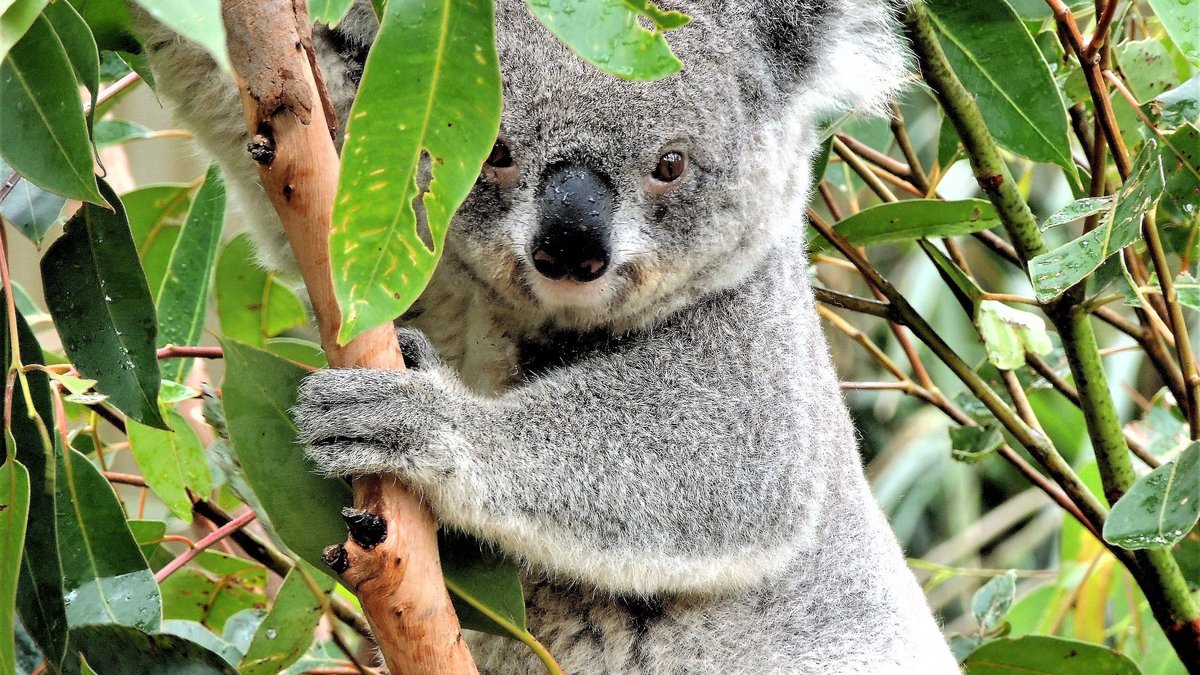
A study in Molecular Biology and Evolution has uncovered a hidden chapter in koala history, showing that the species began a major population decline around 100,000 years ago. The timing places the crash long before modern humans arrived in Australia, pointing researchers toward ancient climate stress and habitat change as major forces in the koala’s deep past.
The research, led by scientists associated with the University of Sydney and Texas A&M University, used a newly measured genetic clock to look backward through koala ancestry. By comparing parent and offspring genomes, the team estimated how quickly new mutations arise in koalas. They then used that rate to reinterpret the history written into hundreds of modern koala genomes.
The result changes a long-running story about the species. Earlier genetic work had placed a major decline closer to the time humans reached Australia. This new analysis moves the beginning of the decline much deeper into the late Pleistocene, when Australia was shifting through cold, dry and unstable climatic conditions.
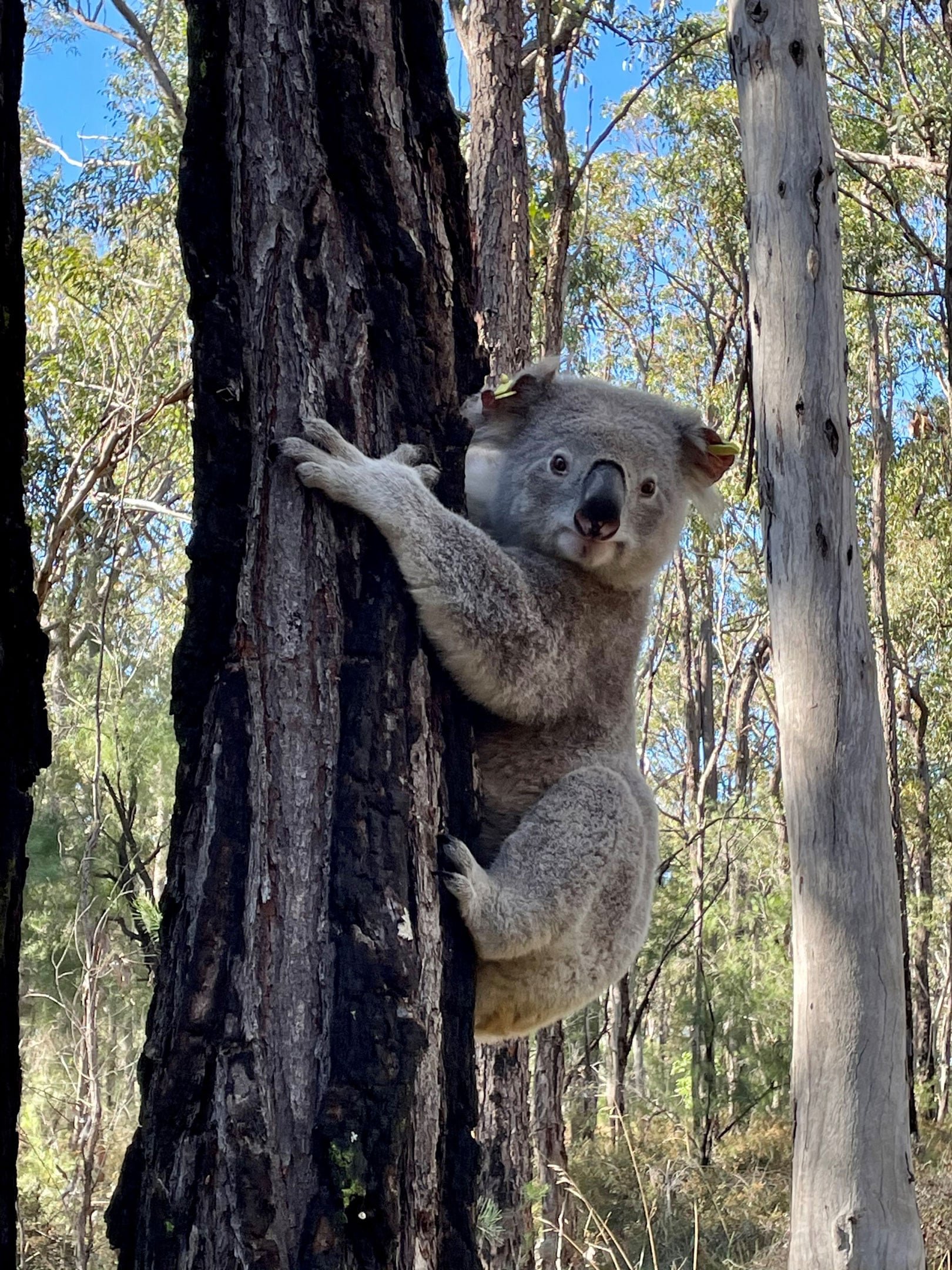
Genomes Reveal an Ancient Koala Crash
Koalas alive today carry traces of a much larger population that shrank dramatically in the distant past. The study focused on Phascolarctos cinereus, the modern koala and used whole-genome data to reconstruct changes in population size across tens of thousands of years.
Genomes can preserve signals of population growth, collapse, isolation and recovery. When a population is large, its members tend to carry more genetic variation. When numbers fall sharply, much of that variation can disappear. That loss leaves patterns that researchers can detect long after the event itself has passed.
In this case, the genomic signal pointed to a decline beginning about 100,000 years ago. The study also found evidence of a severe bottleneck around 60,000 years ago. A bottleneck means that only a smaller group contributed strongly to later generations, narrowing the genetic foundation of the species.
This finding matters because the koala fossil record is sparse. Fossils can reveal where animals lived and when they appeared. Genomes add another kind of evidence, one that can estimate how populations changed even when bones and teeth are rare.
A Mutation Clock Rewrites the Timeline
The key step was measuring the koala’s own mutation rate. A mutation rate describes how often new DNA changes appear from one generation to the next. Scientists use that rate like a clock when they estimate when ancient population events occurred.
The team sequenced genomes from four parent-offspring trios and counted newly arising mutations. That allowed them to calculate a direct estimate of the koala mutation rate, rather than relying on rates from distantly related animals. The study reported a mean rate of 6.12 × 10⁻⁹ mutations per base pair per generation.
That number changed the timeline. Previous studies had used mutation rates from species such as humans or mice, which can shift age estimates in population models. When the researchers applied the koala-specific rate to 457 whole-genome sequences, the decline moved earlier, into a period before modern humans are thought to have reached Australia.
As the paper states, “Our study shows that the koala population began to decline before the arrival of modern humans on the Australian continent.” That short sentence captures the main revision. The genetic clock placed the origin of the decline in a time shaped by environmental change across the continent.

Climate Shifts Reshaped Their World
Australia’s landscapes have changed profoundly over geological time. The study places koala history against that wider environmental backdrop, especially the drying trends and repeated glacial cycles that shaped habitats during the late Cenozoic and Pleistocene.
During earlier periods, wetter forests covered much of the continent. Over millions of years, Australia drifted northward and became increasingly arid. Forests pulled back toward wetter regions, grasslands and deserts expanded and many ecosystems became more fire-prone.
For koalas, habitat matters in a very direct way. They depend heavily on eucalyptus forests and woodlands. Large shifts in rainfall, temperature, fire patterns and vegetation can reshape where koalas can live. A long stretch of colder and drier conditions would have reduced suitable habitat across broad areas.
The study links the ancient decline to these environmental pressures. The researchers describe late Pleistocene climate instability as a plausible driver of population contraction, especially as suitable forests became fragmented. The koala genome records that pressure as a sharp reduction in ancestral population size.
One geographic change may have been especially important. The expansion of the Nullarbor Plain created a vast semi-arid region across southern Australia. That landscape would have limited forest habitat and helped separate western and eastern koala populations.
One Surviving Population Rebuilt the Species
The genomic results suggest that today’s koalas trace back to a surviving population after the ancient crash. The western population eventually disappeared, according to the reconstruction described in the research summary. A smaller eastern population endured and later expanded when conditions improved.
That recovery appears to have unfolded during the current interglacial period, when warmer and wetter conditions made more habitat available in parts of eastern Australia. As koalas spread again, they split into several genetic groups. The study found that modern koalas now fall into five genetic populations distributed along the east coast.
This pattern helps explain how a species can survive a severe bottleneck and still occupy a wide range later. A population can rebound when climate and habitat become favorable. The genetic effects of the bottleneck may remain, even after numbers rise and the range expands.
For conservation biologists, those surviving lineages matter. Different populations can carry different genetic variants, local histories and adaptive potential. Protecting that variation can help keep future options open for a species facing ongoing stress.
Why Ancient DNA Clues Matter Today
Koalas now face a different suite of threats. Habitat clearing, disease, bushfires, vehicle strikes, dog attacks and past hunting have all affected populations. Since 2022, koalas have been listed as endangered in Queensland, New South Wales and the Australian Capital Territory.
The ancient story gives scientists a longer view of resilience and vulnerability. Koalas survived a deep climate-driven decline in the past. Their present situation involves modern pressures that can act quickly and overlap in the same landscapes. That combination makes careful conservation planning essential.
The study’s value comes from timing as much as discovery. If researchers use a borrowed mutation rate, the inferred date of a population decline can shift. That can change which causes look most likely. With a direct koala rate, the team could better align genetic events with environmental history.
It also helps place human arrival in a more precise context. The study does not remove human-caused threats from the modern koala crisis. It shows that the major ancient decline began earlier, during a period when climate and habitat shifts were already transforming Australia.
That distinction gives conservation science a firmer foundation. When scientists know how koalas responded to past habitat contraction and later recovery, they can ask sharper questions about which populations carry rare variation, which regions preserve long-term lineages and where habitat connections may matter most.
New Tools for Koala Conservation
Beyond the ancient timeline, the study produced new genomic resources for marsupial research. The direct mutation-rate estimate is the first reported for koalas and for any member of the marsupial order Diprotodontia, a group that includes kangaroos, wombats and possums.
The team also used the mutation-rate estimate to infer population-specific recombination maps. Recombination is the process that shuffles genetic material between generations. Mapping it can help scientists understand how variation is inherited and how populations have changed over time.
Those tools can improve future work on koala adaptation, population structure and conservation management. They may also help researchers compare koalas with other Australian species, including living relatives of extinct megafauna. If other animals show similar pre-human declines, that could reveal a broader environmental pattern across the continent.
The study reported recent population declines across eastern states when koala-specific recombination rates were used. That adds another layer to the conservation picture. Ancient history explains part of the species’ genetic background, while recent genomic signals help track pressures that are still unfolding.
For the koala, the genome has become both archive and warning system. It records a near-vanishing event from 100,000 years ago, a later recovery along Australia’s east coast and the genetic structure of populations that conservationists are trying to protect today.