A study in Research proposes a sweeping answer to one of biology’s oldest mysteries. Yongdong Jin of Shenzhen University argues that tiny mineral particles with enzyme-like abilities may have helped early Earth turn simple gases and inorganic chemistry into the first life-related molecules.
The idea is called the nanozymes hypothesis. It places natural mineral nanozymes at the center of a long chemical journey from lifeless matter to biological building blocks. The proposal remains a hypothesis and it draws on existing studies, theoretical chemistry and origin-of-life research. Its ambition is large, though. It tries to connect several competing origin stories into one broader framework.
In the paper’s abstract, Jin frames the challenge plainly: “The origin of life (OoL) is a fundamental and long-standing scientific question.” The new proposal asks whether early Earth already had the right microscopic tools scattered through its rocks, waters, volcanoes, hot springs and atmosphere.
A New Origin-of-Life Hypothesis
The new framework begins with a simple question. If enzymes are essential for life today, could enzyme-like materials have helped chemistry move toward life before true biology existed?
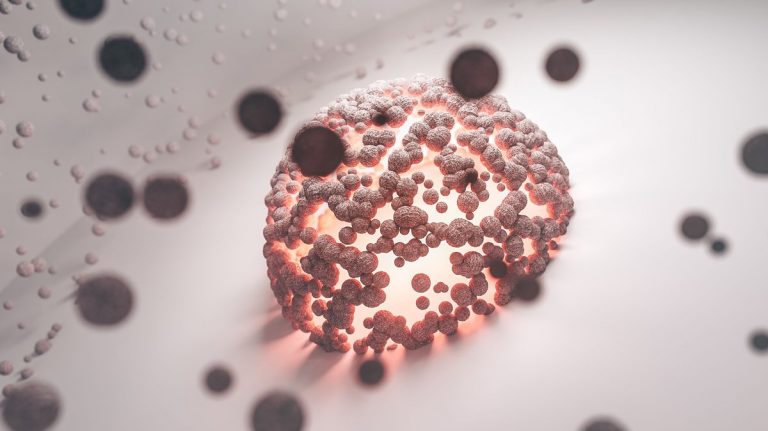
Jin’s answer centers on natural mineral nanozymes, often shortened as MN-zymes. These are mineral nanoparticles that can behave in ways that resemble enzymes. In living cells, enzymes speed up reactions with extraordinary precision. On the young Earth, mineral nanozymes may have offered a rougher and more primitive kind of catalytic help.
The study proposes that these particles played several roles at once. They may have sped up chemical reactions, held molecules on their surfaces, protected fragile compounds from ultraviolet radiation and helped manage energy moving through early chemical systems. That combination matters because the origin of life probably required many small advances happening together over huge spans of time.
Origin-of-life research has long explored models such as the RNA world, lipid world, metabolism-first ideas, thioester chemistry, zinc-based chemistry and iron-sulfur environments. Jin’s proposal treats those models as pieces of a larger picture. In this view, mineral nanozymes could have helped create conditions where several kinds of life-related molecules appeared and interacted.
The paper is a review and hypothesis article. It offers a unifying scenario rather than a single laboratory demonstration of life’s beginning. That distinction is important. The value of the proposal lies in the way it organizes known mineral, chemical and nanoscale behavior into a testable origin-of-life story.
Minerals That Act Like Enzymes
At the heart of the idea is a class of materials known as nanozymes. The name combines “nanomaterial” and “enzyme.” These particles can catalyze reactions, which means they help reactions proceed more easily. Modern scientists study artificial nanozymes for medicine, environmental chemistry, biosensing and biotechnology.
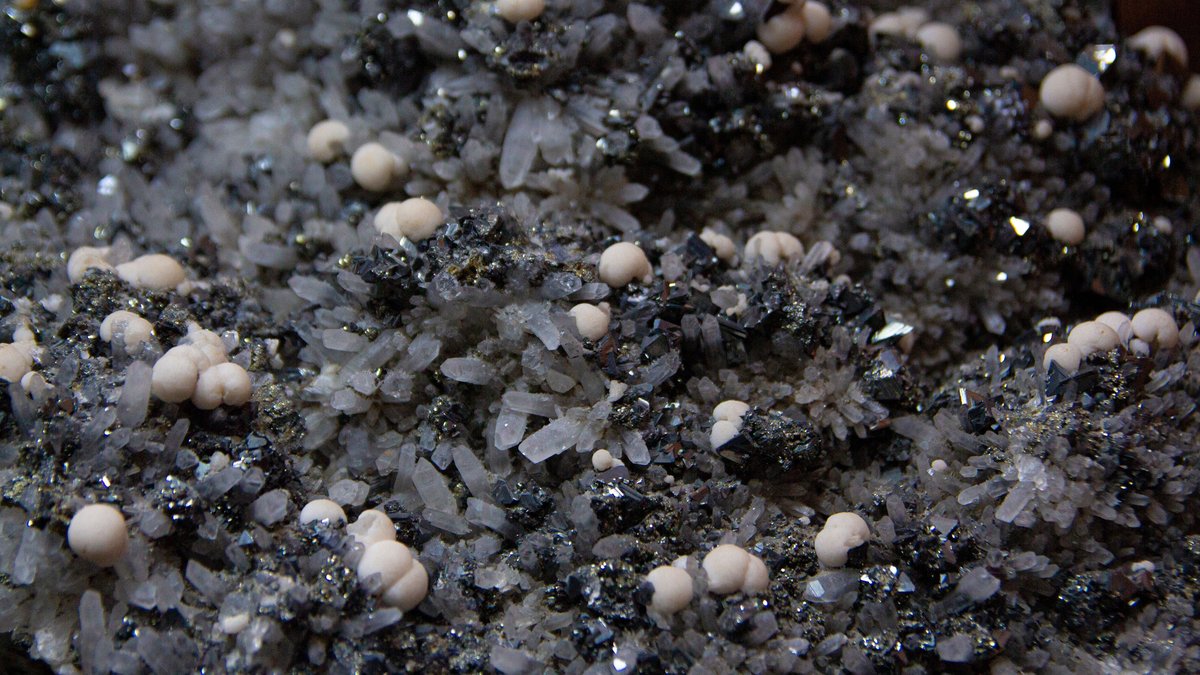
Jin’s hypothesis extends that idea backward into deep time. Before cells existed, the early Earth was rich in minerals. Some of those minerals likely appeared as extremely small particles. At that scale, materials can behave differently from larger crystals or rocks. Their surfaces become highly important because many atoms sit exposed and ready to interact with nearby molecules.
Those surfaces may have served as primitive reaction platforms. Small gases or molecules could have attached to a particle, stayed close together and reacted under sunlight, heat, electrical energy, or pressure. In origin-of-life chemistry, proximity can be powerful. Molecules drifting freely in water may meet only briefly. Molecules gathered on a mineral surface can react more often.
The hypothesis assigns MN-zymes five broad functions. They could catalyze reactions, bind and confine molecules, shield materials from ultraviolet light, guide selection among products and help direct energy flow. Each role addresses a recurring problem in prebiotic chemistry. Early molecules needed to form, persist, accumulate and combine in useful ways.
This is why enzyme-like minerals are such an intriguing candidate. They connect geology with chemistry. They also offer a bridge between simple minerals and later biological catalysts. Life today relies on protein enzymes and RNA catalysts. The nanozymes hypothesis suggests that mineral-like catalysts may have shaped chemical evolution before biological machinery took over.
Early Earth as a Chemical Reactor
Early Earth supplied harsh conditions and abundant energy. Volcanoes, geothermal hot springs, hydrothermal systems, wet-dry cycles, impact-heated environments and shifting mineral surfaces created a planet-sized chemistry experiment. The nanozymes hypothesis treats that environment as an enormous natural reactor.
In this scenario, mineral nanoparticles could have formed in many settings. High temperature and high pressure reactions near volcanic systems may have produced metals, metal oxides, sulfides and other nanoscale materials. Hydrothermal environments may also have generated mineral particles while moving hot fluids through rock. These processes resemble some methods used today to make nanozymes in laboratories.
The study proposes that early MN-zymes may have helped convert simple prehistoric gases into more complex molecules. Jin describes a key part of that process as inorganic photosynthesis. The phrase refers to light-driven chemistry on mineral surfaces, where inorganic materials absorb energy and help build more complex compounds.
That idea matters because sunlight was one of early Earth’s most reliable energy sources. Before biological photosynthesis evolved, minerals may have used light in a much simpler way. A particle absorbing sunlight could shift electrons, activate molecules, or promote reactions that would be difficult in ordinary water alone.
Earth’s surface also changed constantly. Minerals weathered, dissolved, reformed and moved through air, water and soil-like environments. Over long periods, that cycling may have renewed the supply of active particles. The hypothesis imagines a dynamic mineral world that kept testing chemical possibilities again and again.
How Light, Heat and Lightning May Have Helped
The proposal depends on energy as much as matter. Early chemistry needed a push. Light, heat, pressure and electricity could all supply that push in different places and at different times.
Sunlight may have driven photocatalytic reactions on mineral surfaces. A photocatalyst absorbs light and uses that energy to help chemical reactions proceed. Some mineral nanoparticles can perform this kind of work. On the early Earth, similar particles may have converted environmental energy into chemical change.
Lightning offers another pathway. Electrical discharges can reshape simple gases and generate reactive compounds. In the nanozymes framework, lightning could have supported electrocatalytic reactions involving mineral nanoparticles. These reactions may have helped generate or modify prebiotic molecules on the planet’s surface.
Heat and pressure also matter. Volcanic and hydrothermal systems create strong gradients. A gradient is a difference across space, such as hot to cool or high pressure to low pressure. Gradients can move fluids, concentrate chemicals and create repeated reaction zones. In origin-of-life research, such cycling is valuable because it can help molecules form and then assemble into larger structures.
Wet-dry cycles add another key ingredient. When water evaporates, dissolved molecules become more concentrated. When water returns, those molecules can move, mix and reorganize. Repeated cycles could have helped small molecules link together or settle onto mineral surfaces. Combined with MN-zymes, these cycles may have created pockets where prebiotic chemistry advanced step by step.
The Proposed “Au World”
One of the most striking parts of Jin’s hypothesis is the proposed Au world. “Au” is the chemical symbol for gold. The paper argues that gold nanoparticles may have been unusually effective mineral nanozymes during some stages of chemical evolution.
Gold nanoparticles are familiar to modern nanotechnology researchers. They can interact with light, support surface chemistry and act as catalysts under the right conditions. Today, scientists often treat them as engineered materials. Jin’s paper explores the possibility that they also formed naturally under plausible geological conditions on early Earth.
The hypothesis focuses especially on monolayer-protected gold nanoparticles. These particles have a gold core wrapped in a thin layer of small molecules. That outer layer can help stabilize the particle and shape its chemistry. According to the paper, free gold nanoparticles may have faced stability problems in a primitive chemical soup. Surface coatings could have changed that.
Small molecules containing chemical groups such as thiols and amines may have accumulated after other mineral nanozymes helped produce them. Once present, those molecules could have coated gold nanoparticles. The resulting particles may have persisted long enough to participate in additional reactions. In Jin’s framework, this creates a plausible route from simple mineral particles to more sophisticated organic-inorganic hybrids.
The gold nanoparticles idea is bold because it gives one element a special role in a broad origin story. The study presents it as part of the larger nanozyme family tree. Other metals, metal oxides and sulfide particles also remain important in the framework. Gold is highlighted as a potentially powerful member of that early catalytic network.
Four Conditions for Life’s First Molecules
Jin’s paper also identifies four conditions that may have helped life-related molecules survive and evolve. These are wet-dry cycling and amphiphilism, self-assembly and self-organization, catalytic and protoenzyme activity and pairing symbiosis and stabilization.
Wet-dry cycling gives early chemistry a rhythm. Drying can concentrate molecules and encourage bonds to form. Rewetting can separate products, move them into new settings and allow fresh reactions. Amphiphilism refers to molecules that have both water-attracting and water-avoiding parts. Such molecules can gather into membranes or membrane-like structures.
Self-assembly is another crucial step. Some molecules naturally organize into larger shapes because of their physical and chemical properties. Lipid-like molecules can form bubbles or vesicles. Other molecules can stack, pair, or attach to surfaces. These behaviors may have created early compartments where reactions became more organized.
Catalytic and protoenzyme activity adds function. A molecule or particle that helps produce useful products gains a chemical advantage. In the nanozymes hypothesis, minerals began this catalytic work. Later, organic molecules and hybrid nanozymes may have improved it. Over time, primitive catalysts could have become more selective and more closely tied to life-like systems.
Pairing symbiosis and stabilization describe cooperation among molecules. A fragile molecule might survive longer when attached to another molecule or particle. Two chemical systems might help each other persist. These partnerships could have stabilized early genetic, metabolic, or membrane-like components before true cells existed.
Why the Idea Could Link Competing Theories
Many origin-of-life models emphasize one leading pathway. RNA world ideas focus on molecules that can store information and help catalyze reactions. Metabolism-first models emphasize energy flow and reaction networks. Lipid world ideas focus on compartments. Mineral-centered models highlight surfaces and geochemical settings.
The nanozymes hypothesis gives these pieces a common stage. Mineral nanozymes could have helped generate useful molecules, concentrate them, protect them and expose them to changing energy conditions. That would allow information-bearing molecules, metabolism-like chemistry and membrane-like structures to develop in overlapping ways.
This integrated view also addresses a major difficulty in origin-of-life science. Living systems depend on several features at once. They need information storage, catalysis, compartmentalization, energy use and replication-like behavior. A single molecule type has trouble explaining every part of that transition. A diverse network of minerals and emerging organic molecules may offer more flexibility.
The hypothesis even suggests that proteins, DNA and RNA could have emerged in a more parallel fashion than some older models propose. That remains speculative. Still, the point is useful. Early Earth probably contained many reaction pathways at the same time. The nanozymes framework asks whether mineral catalysts helped those pathways interact.
The next step is testing. Researchers can examine whether natural mineral nanoparticles form under realistic early Earth conditions. They can also test whether these particles catalyze reactions that produce amino acids, nucleobases, lipids, sugars, or other prebiotic molecules. Experiments can probe whether mineral surfaces protect compounds from ultraviolet light or promote useful wet-dry chemistry.
For now, Jin’s proposal gives origin-of-life research a provocative new map. It treats Earth’s ancient minerals as active chemical participants. If future experiments support the idea, mineral nanozymes may become a key part of the story of how chemistry crossed the threshold into biology.