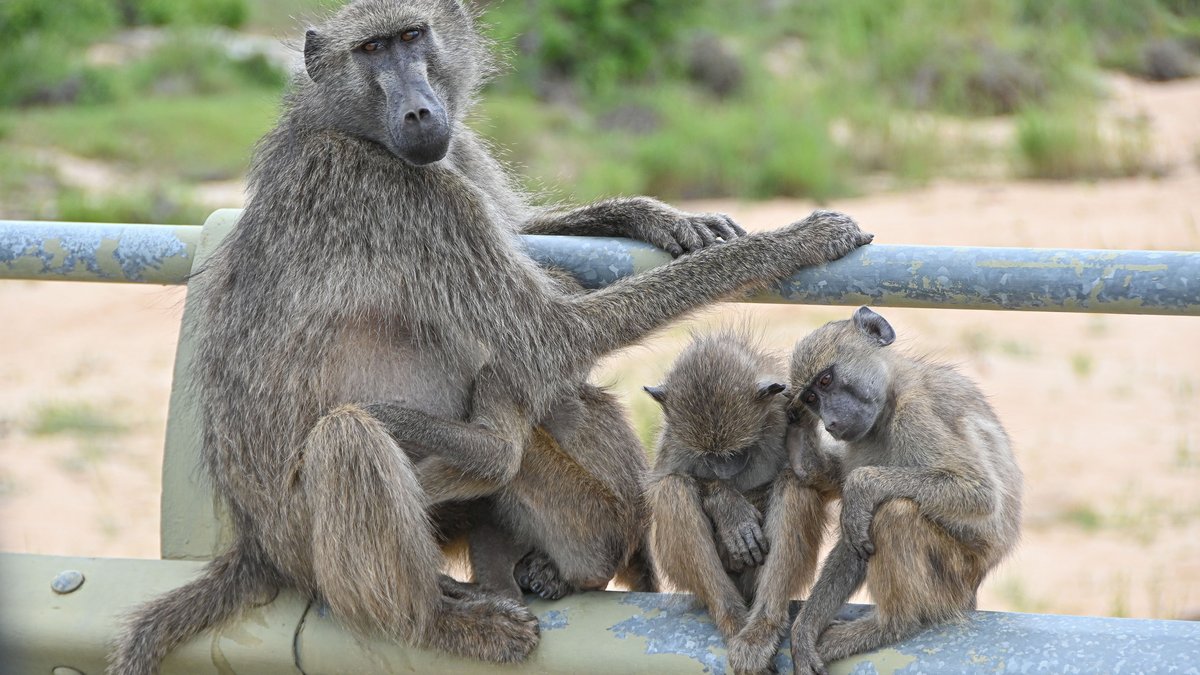
A study in Current Biology found that survival in the wild can depend on the strength of everyday social ties. In free-ranging female baboons, the animals with stronger and more stable bonds lived longer than females whose relationships were weaker or less consistent.
The finding comes from decades of fieldwork on baboons, animals whose societies offer a rare window into how evolution shapes cooperation, family life, stress and survival. For female baboons, kinship can guide where they sit, who they groom, who helps them during fights and how they move through the risks of life in a group.
The research also helps explain why social bonds matter across primates. Baboons live in complex groups with shifting alliances and long memories. Their lives show how small daily interactions can build into measurable biological consequences.
Family ties shape daily life
Female baboons are born into a social world that often stays with them for life. In several baboon species, males usually leave their birth groups around sexual maturity. Females stay, which means adult groups are built around mothers, daughters, sisters, aunts and grandmothers.
That pattern creates matrilines, family lines connected through female ancestors. These maternal networks shape daily life in ways that researchers can observe in the field. Related females spend time near one another, groom one another and often form the most reliable partnerships in the group.
Kinship gives these bonds a strong evolutionary logic. Close relatives share genes, so helping a mother, daughter, or sister can still support the helper’s genetic legacy. Behavioral ecologists describe this through kin selection, a framework that explains how cooperation can evolve when relatives benefit.
Baboons make this pattern visible. A female’s closest companions are often her mother, daughters, or sisters. These relationships can endure for years when family members remain in the same group, giving researchers a living record of social stability.
Mothers help daughters rise
A young female baboon’s position in the group begins long before she has offspring of her own. Her mother feeds, carries, protects and warms her during infancy. After weaning, the young baboon still spends time close to her mother and may seek her out during danger.
As juveniles grow, mothers can also influence social rank. Female baboons live in dominance hierarchies, where higher-ranking animals often gain better access to food, support and safer social positions. Daughters commonly acquire ranks just below their mothers.
This happens through repeated interactions. When a young female becomes involved in a conflict, her mother may intervene. With maternal support, the daughter can win against females her mother can defeat. Over time, these outcomes help place the daughter in the hierarchy.
The result is a social ladder that often follows family lines. A mother’s position can echo through her daughters and the group’s structure can remain recognizable across generations. For researchers, this makes baboons valuable for studying how inherited social environments shape life outcomes.
Grooming carries hidden costs
Grooming is one of the most visible signs of baboon friendship. A female parts another baboon’s fur and removes parasites from the skin. The recipient gets a direct benefit because parasites can irritate the skin and spread disease.
The groomer pays a cost. Time spent grooming is time away from feeding, resting, watching for danger, or caring for an infant. In a wild habitat, those tradeoffs matter. Even a calm-looking grooming session can carry hidden biological stakes.
Because grooming has costs, researchers treat it as more than casual contact. It is a form of cooperation. When scientists record who grooms whom, how often and how evenly partners exchange grooming, they can map the social fabric of a group.
In baboons, grooming often tracks close bonds. Mothers groom daughters. Sisters groom sisters. Long-term partners may exchange grooming over many seasons. These repeated choices can reveal which relationships are stable enough to matter for survival.
Social bonds may buffer stress
Life in a baboon group brings protection and pressure at the same time. Group living can reduce danger from predators and help animals find resources. It also brings competition, conflict and social uncertainty.
Stress is one pathway that may connect social life to health. When animals face threats, their bodies release glucocorticoids, hormones that help mobilize energy. In humans, cortisol is one familiar example. Short bursts can help an animal respond to danger.
Longer periods of elevated stress hormones can harm the body. Field researchers can study this without handling the animals by collecting fecal samples from known individuals. Those samples contain hormone metabolites, small chemical traces that reveal how an animal’s body is responding over time.
Several studies of wild primates suggest that close social bonds help females cope with disruption and danger. When a preferred partner disappears or dies, stress can rise. When stable bonds remain available, they may help reduce the biological burden of group life.
This possible buffering effect gives grooming and proximity deeper significance. A trusted partner can be a source of support during aggression, a calming presence after conflict and a predictable companion in an unpredictable landscape.
Long-term studies reveal survival benefits
The strongest evidence comes from research programs that follow known animals for years. Baboons live long lives, so the link between relationships and survival can only be seen through patient observation. Field teams must know individual animals, record births and deaths and track social behavior across changing seasons.
In the Moremi Reserve of Botswana’s Okavango Delta, researchers studied free-ranging female chacma baboons. The Current Biology study reported that “females who form stronger and more stable social bonds with other females live significantly longer.” That statement captures the core result, but the pattern also had another important feature.
The study found that social bonds mattered alongside status. In the paper’s wording, “dominance rank and the quality of close social bonds have independent effects.” A high rank could help a female and strong relationships could also help her. Both were part of the survival picture.
Other long-term baboon research has pointed in a similar direction. In the Amboseli Basin of Kenya, scientists studying yellow baboons have found links between social integration and fitness-related outcomes. In both sites, the broad pattern is consistent. Females that are better connected tend to fare better.
These results carry special weight because they come from wild animals living their normal lives. The researchers are measuring real relationships in real ecological conditions. Droughts, predators, injuries, births, deaths and rank changes all unfold around the data.
What baboons can tell us about primate evolution
Baboons are among Africa’s most widespread primates. Their range extends across sub-Saharan Africa and into the Arabian Peninsula. Their success reflects ecological flexibility, including the ability to live in deserts, swamps, grasslands, woodlands and forests.
That flexibility makes them useful for studying social evolution. Different baboon species live in different habitats and face different pressures. Yet many show strong female kin networks, long-lasting maternal bonds and social behavior that affects survival and reproduction.
For evolutionary anthropologists, baboons also help illuminate the deep roots of primate social life. Humans and baboons followed separate evolutionary paths, but both are long-lived social primates. Both depend on learning, alliances, memory and relationships across many years.
The Current Biology study highlights this broader relevance with the phrase, “There are striking parallels in the benefits of sociality for humans and baboons.” That comparison should be handled carefully. Baboon societies and human societies differ in many ways, yet both show that social connection can have measurable consequences for health and longevity.
The next questions are still wide open. Researchers want to know why some females are more sociable than others. They also want to understand the biological mechanisms that connect relationships to longer lives. Stress hormones, immune function, rank, food access and protection during conflict may all play roles.
For now, the evidence points to a clear message from the savannas and delta woodlands where baboons live. Family bonds, grooming partnerships and stable companions can shape the arc of a life. In female baboons, friendship leaves a biological trace.