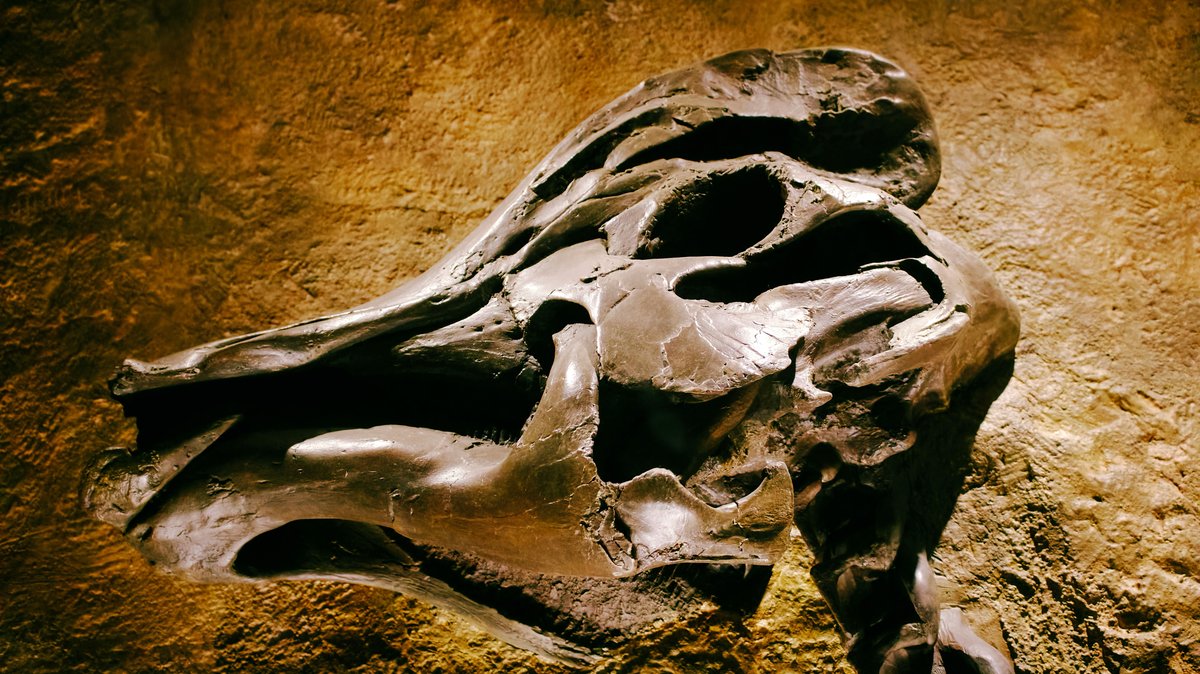
Researchers at UC Berkeley have identified a nearly complete museum skull as Adelphailurus kansensis, an early saber-toothed cat that lived in North America more than 5 million years ago. The discovery, described in the Journal of Vertebrate Paleontology, gives scientists a rare look at a little-known branch of the cat family before saber teeth reached their most dramatic forms.
The fossil had been tucked away in the American Museum of Natural History in New York and identified only in broad terms as a feline. Berkeley postdoctoral fellow Narimane Chatar recognized that the skull, jaws and teeth belonged to something much more specific. With the first nearly complete skull referred to this species, researchers can now compare Adelphailurus with later sabertooths such as Smilodon fatalis.
The finding points to a broader evolutionary story. Saber-toothed cats appear to have started with smaller upper canines, then evolved longer and more specialized blades over time. That specialization made them fearsome hunters, yet it also may have helped push them toward extinction when ecosystems changed.
A fossil labeled “feline” gets a new identity
The rediscovered fossil began as a quiet museum mystery. Chatar was visiting collections with a portable laser scanner while studying the evolution of saber-toothed animals. At the American Museum of Natural History, she opened drawers labeled for felids and cats, then noticed a cranium assigned to Pseudaelurus.
Pseudaelurus means “false cat,” and the name has often been used for catlike fossils that were hard to place. This skull looked different from modern cats. It also came with a fragmentary lower jaw and much of the dentition, giving Chatar more anatomical clues than isolated teeth would have provided.
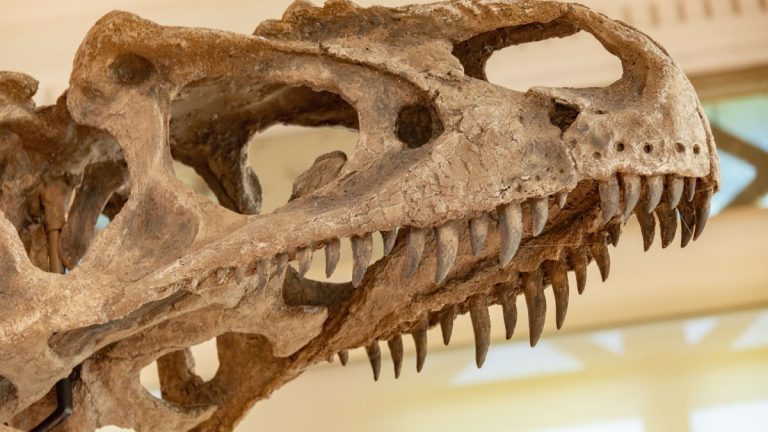
The key clue was the shape of the upper canines. They were flattened from side to side, a knife-like form associated with saber-toothed carnivores. Modern lions, tigers and house cats have rounder canine teeth. Adelphailurus had teeth already adapted for slicing flesh, even though its fangs were shorter than the spectacular sabers of later species.
Chatar later compared the fossil with a cast of the original Adelphailurus kansensis specimen at the Yale Peabody Museum. The original species had been discovered in Kansas and was known mostly from jaw fragments and teeth. The match helped turn an overlooked skull into a major new piece of the sabertooth puzzle.
The cat before the giant fangs
Adelphailurus kansensis lived more than 5 million years ago and was roughly the size of a modern mountain lion, according to the Berkeley account. Its anatomy places it among early-diverging machairodontine felids, the group that includes many saber-toothed cats. That position makes it valuable because early members of this lineage remain poorly known.
For the public, saber-toothed cats often begin and end with Smilodon. Paleontologists now see a wider evolutionary landscape. “There was a crazy variety of saber-toothed cats,” Chatar said. Some had long sabers, some had shorter blades and some belonged to groups that evolved saber-like teeth independently.
The new skull shows a narrow and long snout, which sets Adelphailurus apart from some saber-toothed cats of the same general period. The animal’s teeth also had slight serrations along the edge. These features suggest cutting surfaces that may have worked a bit like serrated knives.
That mix of traits helps scientists place Adelphailurus between better-known forms in the broader shape of its skull. The paper compares it with related fossil cats and clarifies why the species deserves a more precise diagnosis. For a fossil once stored under a loose label, that is a remarkable upgrade.
Why saber teeth were powerful and fragile
Saber-shaped teeth brought a deadly advantage. Their flattened form could slice into flesh with high efficiency. In animals like Smilodon, the upper canines became long blades that could help deliver deep wounds to large prey.
That same shape also came with a mechanical cost. “Those upper canines were extremely efficient but also break very easily,” Chatar said. A blade-like tooth can cut well, yet it has less resistance to bending and impact than a rounder tooth.
Chatar has studied that tradeoff through simulations using 3D-printed saber teeth. In tests described by Berkeley, saber teeth from several species penetrated flesh-like gel effectively. When they struck simulated bone, they fractured more readily. Smilodon performed especially well at penetration and especially poorly against bone-like resistance.
Teeth in carnivorous mammals often balance slicing and crushing. Slicing helps cut meat. Crushing helps break tougher tissues and bones. Saber-toothed animals pushed strongly toward slicing, while many other carnivores retained sturdier teeth and bone-crunching molars.
This matters because predators live inside changing food webs. When large herbivores such as bison and camels declined after the last Ice Age, saber-toothed specialists faced a harsher world. Carnivores with rounder teeth and stronger crushing tools may have had more dietary flexibility.
The evolutionary ratchet behind longer canines
The Berkeley study highlights a pattern Chatar describes as a macroevolutionary ratchet. Once a lineage evolves a highly specialized trait, that lineage may keep moving in the same direction. Over time, the trait can become more extreme and harder to abandon.
In saber-toothed cats, the key trait was the lengthening of the upper canines. Early forms such as Adelphailurus had shorter sabers. Later forms pushed the design further, leading to the huge canines of Smilodon. Chatar’s interpretation is that lineages that started down this path kept doubling down on the slicing strategy.
That strategy could be very successful under the right conditions. Large prey animals would have rewarded predators that could deliver fast, precise killing bites. The skull, neck, jaws and teeth would have evolved together around that way of hunting.
Specialization becomes risky when the environment changes. A predator built around one kind of prey and one kind of kill may lose its edge when those prey disappear. The last saber-toothed cats went extinct about 10,000 years ago, leaving no living sabertooth lineage behind.
Chatar put the pattern sharply in the Berkeley release. “We are now starting to see a great disparity within those animals,” she said. Adelphailurus shows that the lineage had variety before it produced the most famous long-fanged hunters.
What Adelphailurus reveals about Smilodon
Smilodon fatalis, California’s state fossil, sits near the dramatic end of the saber-toothed story. Its upper canines could reach about 7 inches, or 18 centimeters. Those teeth helped make Smilodon one of the most recognizable extinct mammals on Earth.
Adelphailurus helps scientists see what came earlier. Its shorter canines suggest that saber-toothed cats passed through a phase of moderate specialization before reaching the giant-fanged form of Smilodon. That makes the fossil especially important for reconstructing how skull shape and tooth function changed through time.
The contrast also helps correct a common mental shortcut about sabertooths. Many species with saber-like teeth may have hunted differently from Smilodon. Differences in skull proportions, canine length, tooth serrations and jaw anatomy can all point to different killing styles or prey preferences.
Other saber-toothed animals add even more complexity. Saber-like canines appeared in several mammal groups, including felids, nimravids and South American thylacosmilids. This repeated evolution shows that the blade-tooth strategy offered real advantages across deep time.
Still, Adelphailurus matters because it belongs near the cat side of that story. Its skull gives researchers a fuller anatomical reference point for a species that had long been known mainly from fragments. With that reference, paleontologists can better compare early and late saber-toothed cats.
Why old museum drawers still matter
The Adelphailurus skull also shows the scientific value of museum collections. Fossils collected decades ago can gain new importance when researchers bring fresh questions and better tools. A specimen that once seemed vaguely catlike can become a window into a major evolutionary transition.
Chatar’s work depended on careful collection visits, direct comparisons and digital scanning. Portable scanners allow researchers to capture surface details without moving fragile fossils far from their repositories. Those scans can then be used to build precise 3D models for anatomical comparison.
The fossil’s history also reflects the challenge of classifying fragmentary carnivores. Catlike predators can share broad similarities, especially when only teeth or jaw pieces are available. A more complete cranium gives researchers a stronger basis for identifying species and testing evolutionary relationships.
For Chatar, the lesson reaches beyond a single saber-toothed cat. “It highlights the need to go back to those old collections and open every single drawer,” she said. The next overlooked skull could already be waiting under an old label.
The study was co-authored by Chatar and Berkeley professor Jack Tseng. Together, their work links museum paleontology with biomechanical thinking, showing how fossil anatomy can reveal both family history and the physical tradeoffs of extinct predators.