Coral Bleaching Heat Stress Today
- Data updated
- Source data dated
- Editorially updated
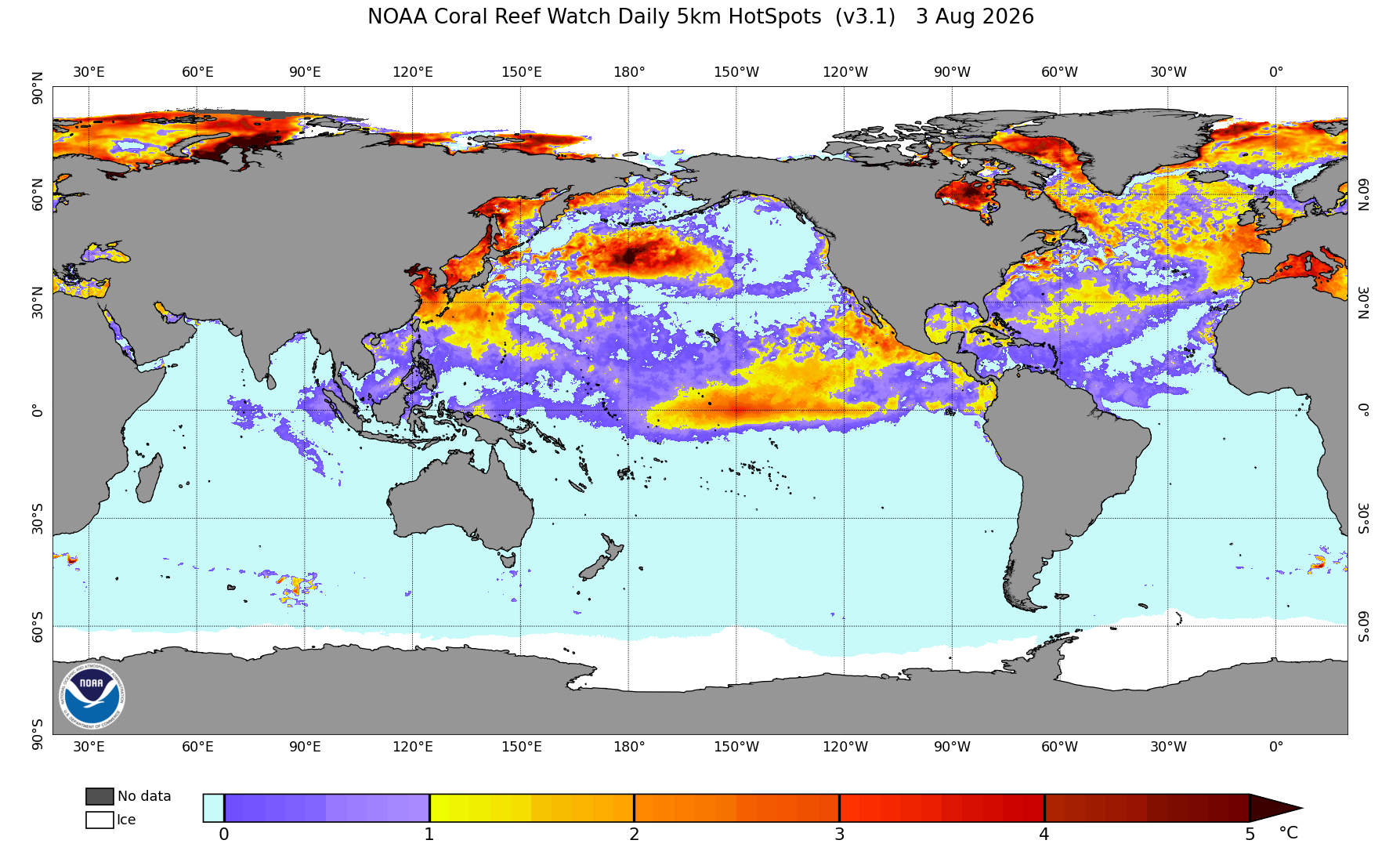
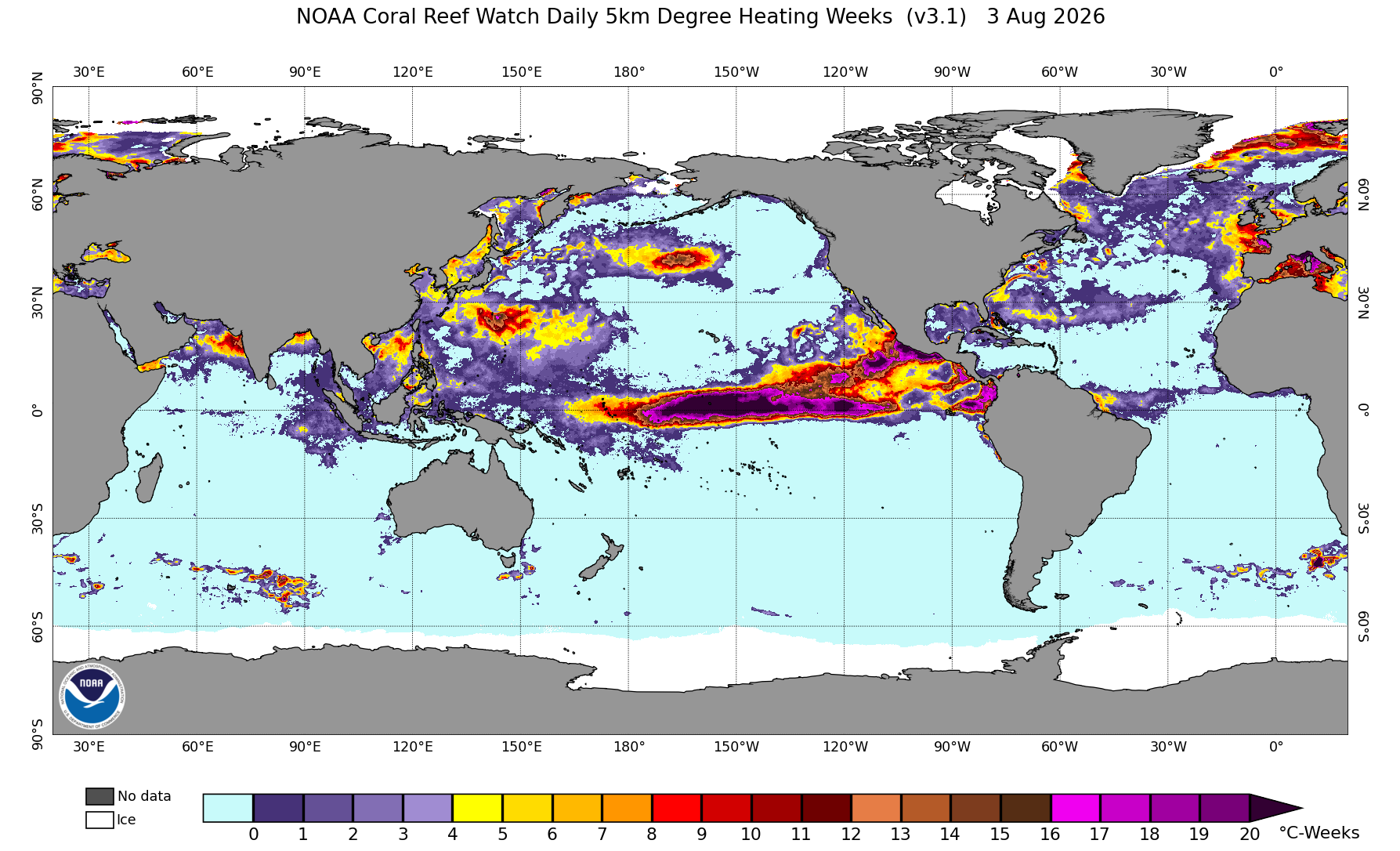
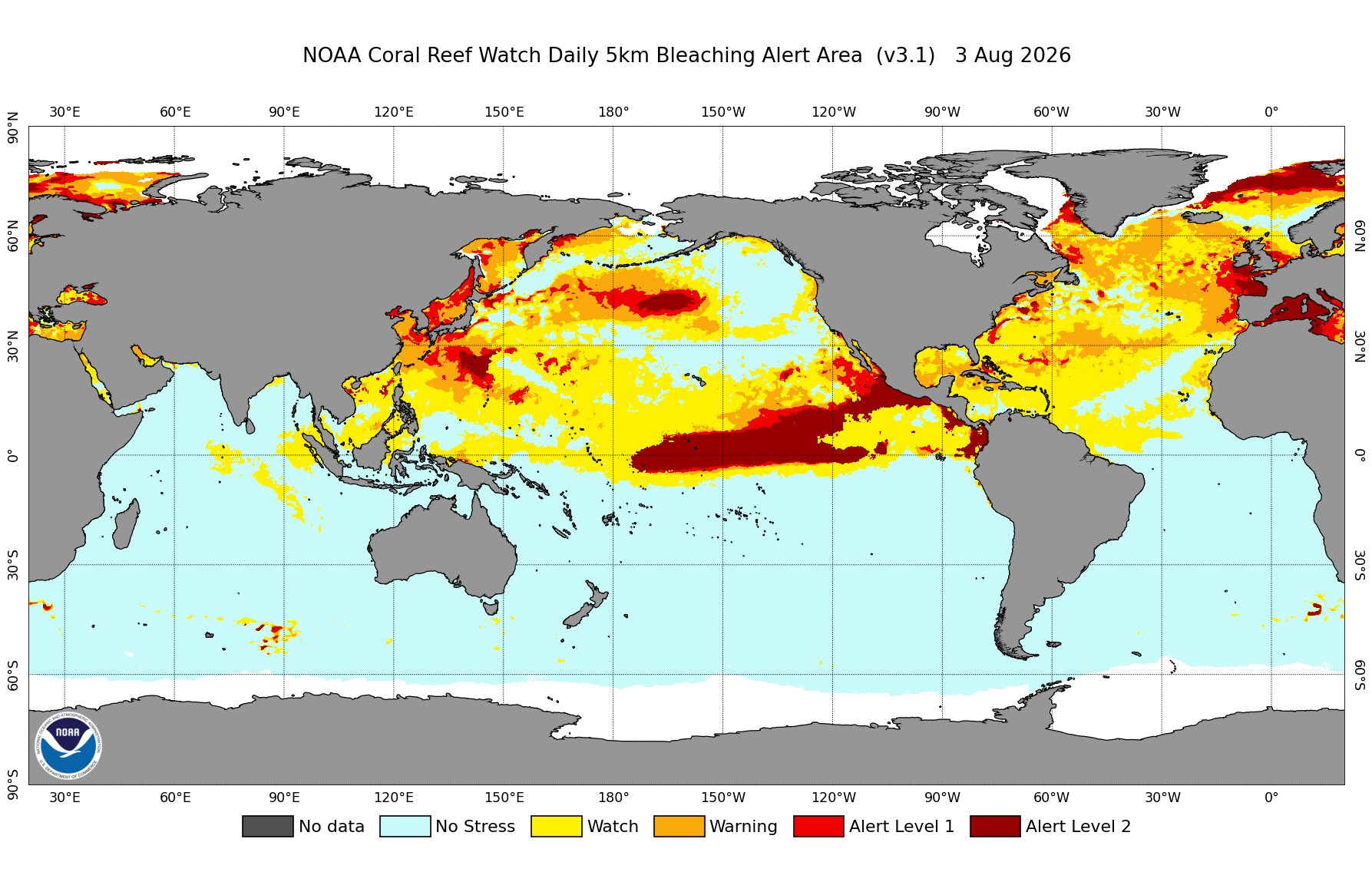
How to read these maps: A HotSpot shows current thermal stress; Degree Heating Weeks measure its recent accumulation. Heat stress raises bleaching risk but does not by itself confirm bleaching at a particular reef.
Three views of coral heat stress
The maps come from NOAA Coral Reef Watch and describe related but different parts of thermal stress.
- HotSpot shows where current sea surface temperature exceeds the expected warm-season maximum.
- Degree Heating Week accumulates meaningful heat stress over the previous 12 weeks.
- Bleaching Alert Area combines current and accumulated stress into NOAA’s operational alert categories.
How often it updates
ARGO.net checks for new NOAA maps every six hours. Coral Reef Watch products are based on satellite-derived sea surface temperatures and are generally updated daily.
What the maps can—and cannot—tell us
Sustained marine heat raises the risk that corals expel their symbiotic algae and bleach. The maps estimate heat stress at a broad scale; they do not confirm the condition, mortality, or recovery of a particular reef. Local depth, currents, clouds, water quality, species composition, and prior exposure can change the outcome.
Use alongside field reports
For a complete picture, combine these maps with local monitoring, reef surveys, management notices, and regional forecasts. Bleaching is a stress response, not automatically coral death, although long or intense events can cause extensive mortality.