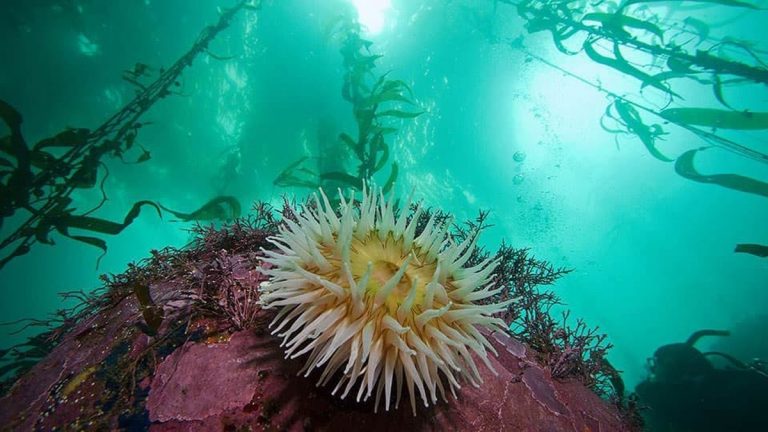
Aquatic plants create food and shelter, release oxygen while photosynthesizing, stabilize sediment and influence how nutrients move through lakes, rivers, wetlands and coasts. Their leaves and stems turn open water into structured habitat, while their roots connect the water column to the bottom. Beds also slow local currents, provide attachment surfaces and create shade. Those physical effects change which animals can feed or avoid predators in shallow water.
The category includes floating, submerged and emergent plants adapted to different depths. It does not include every alga casually called a plant. NOAA’s overview of underwater vegetation emphasizes the ecological work performed by seagrasses and freshwater species.
Aquatic plants come in several growth forms
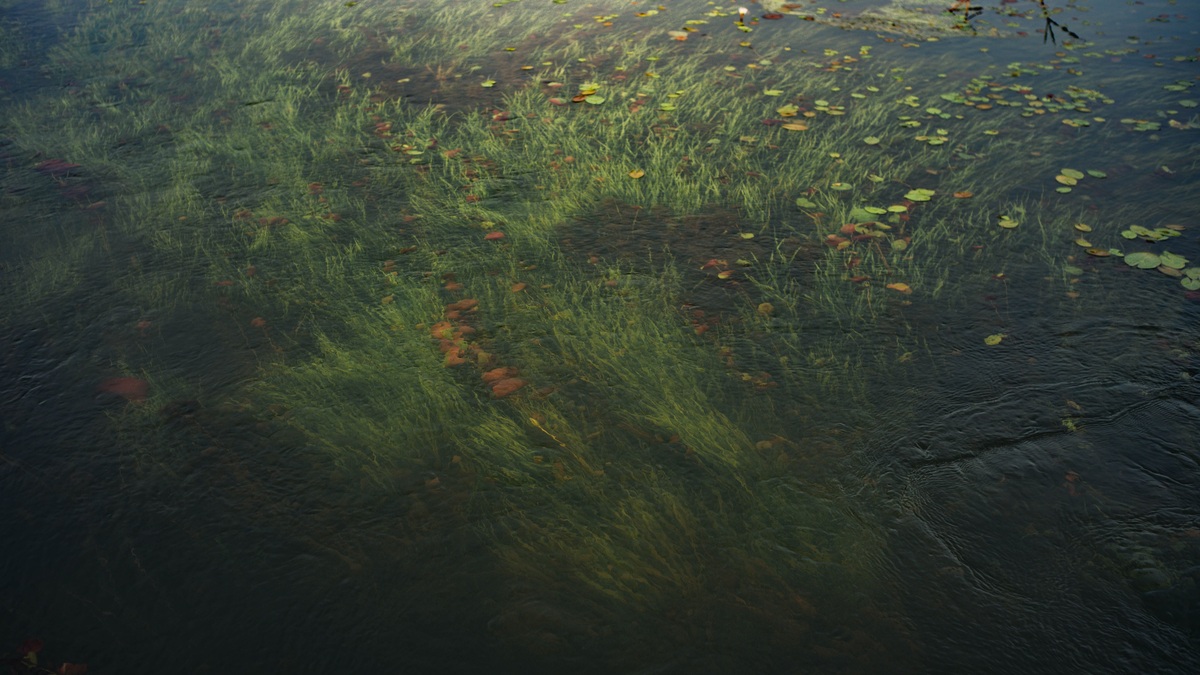
Submerged plants grow mostly below the surface, where flexible leaves encounter moving water. Pondweeds and eelgrass are examples from fresh and marine systems. Their maximum depth is set largely by how much light penetrates the water.
Floating-leaved plants root in sediment but place leaves at the surface, as water lilies do. Free-floating plants such as duckweed are not anchored. Emergent plants including cattails root underwater while stems and leaves rise into air.
These forms occupy different physical spaces and provide different habitat. Treating all aquatic vegetation as one interchangeable mass obscures which organisms use it and how managers should respond.
Plants build shelter and nursery habitat
Leaves break up sightlines between predators and prey. Small fish can shelter among stems, insects attach to surfaces and snails graze films growing on leaves. Amphibians place eggs on vegetation, while waterbirds feed or nest around emergent stands.
The EPA notes that macrophytes provide cover and food and serve as substrate for aquatic invertebrates. Habitat value depends on plant density, diversity and arrangement rather than simple presence.
A moderate bed may contain open lanes and dense patches. That mosaic supports animals with different needs. An extremely thick mat can impede movement or alter oxygen, showing why more vegetation is not always ecologically better.
Photosynthesis changes oxygen and food supply
Aquatic plants use sunlight, carbon dioxide and water to build organic tissue. They release oxygen during daylight and consume oxygen through respiration around the clock. Oxygen near a dense bed can therefore rise by day and fall after dark.
Herbivores eat living tissue, seeds or attached algae. Dead material enters a detrital food web as microbes and small animals decompose it. Plant production can feed consumers even when few animals bite intact leaves.
Light limits this process. Turbid water, algal blooms and disturbed sediment can shade submerged plants. Once a bed declines, loose sediment may resuspend more easily, further reducing clarity and making recovery difficult.
Roots hold sediment and influence nutrients
Rooted vegetation slows water near the bottom and binds particles. In shallow areas, that action can reduce routine resuspension. Clearer water then allows more light to reach leaves, reinforcing suitable growing conditions.
Roots and microbes around them exchange nutrients with sediment. Plants take up nitrogen and phosphorus for growth, then return some when tissue dies. Harvest can remove nutrients from a managed system, but ordinary seasonal dieback mostly recycles them locally.
The EPA describes submerged aquatic vegetation as food, shelter and spawning habitat that can trap sediment and reduce nutrients in the water column. Those benefits depend on a healthy community rather than an invasive monoculture.
Vegetation reveals waterbody condition
Scientists survey plant species, depth, density and distribution because these patterns respond to water clarity, salinity, nutrients and disturbance. The absence of submerged plants may indicate excessive turbidity, herbicides or salinization, though naturally deep or shaded water may also lack them.
Overabundance can signal nutrient enrichment or invasion. Dense surface mats may restrict recreation and reduce oxygen beneath them. Diagnosis requires identifying the species and measuring environmental conditions rather than labeling every plant a weed.
Repeated mapping is especially useful. A single survey shows where plants occurred that day, while a time series reveals expansion, seasonal cycles or sustained loss.
Seagrass meadows support coastal ecosystems
Seagrasses are flowering plants that live fully submerged in saltwater. Their meadows shelter juvenile fish and shellfish, feed turtles and waterfowl and stabilize shallow sediment. Flowers and seeds distinguish them from seaweeds.
Because seagrasses require light, they respond quickly to declining water clarity. Nutrient pollution can stimulate phytoplankton or algae on leaves, creating shade. Dredging and anchors can remove plants directly and disturb the bottom.
NOAA Fisheries explains why submerged aquatic vegetation is essential fish habitat for many coastal species. Protecting a meadow often means controlling watershed pollution far from the shoreline.
Native plants and invasive plants need different management
Native aquatic vegetation is sometimes removed because it tangles boats or looks untidy. Broad clearing can sacrifice fish habitat and destabilize sediment. Targeted access lanes usually preserve more ecological function than eliminating an entire bed.
Invasive plants present another problem. Species such as hydrilla or water hyacinth can spread rapidly outside their native ranges, crowding local communities and changing water flow. Control may combine mechanical removal, herbicides and biological methods under careful monitoring.
Management should begin with a clear goal: navigation, native biodiversity, water quality or recreation. Each method has tradeoffs and disturbed fragments can sometimes spread the very species being removed.
Aquatic plants are important because they are living infrastructure. They connect sunlight, sediment and animals while recording changes in water quality. Keeping the right plants in the right abundance protects more than scenery; it preserves the physical structure of aquatic life.
Restoration consequently begins with causes. Replanting cannot overcome chronic muddy runoff or light blocked by algal blooms. Improving water clarity and protecting shallow bottom often precede any successful planting effort.
How scientists survey aquatic vegetation
Field crews identify species along shorelines or sample plants from boats with rakes and quadrats. Divers and underwater cameras document submerged beds without relying entirely on material brought to the surface.
Sonar maps vegetation height and extent across large lakes. Aerial and satellite imagery can detect broad surface or shallow-water beds when clarity and weather permit.
Measurements should distinguish plant abundance from diversity. One invasive species can produce enormous biomass while replacing a varied native community.
Repeated surveys reveal the deepest edge of growth, seasonal expansion and long-term loss. The maximum depth of rooted vegetation is often a useful indicator of how far light penetrates.
Managers combine maps with oxygen, nutrients and turbidity data. That evidence shows whether aquatic vegetation change reflects water quality, physical disturbance or natural seasonal cycles.
Plant beds connect water with the shoreline
Emergent vegetation slows runoff at the edge of lakes and streams. Roots hold soil, while stems intercept some suspended material before it moves into open water.
Insects living on shoreline plants become prey for fish when they fall. Aquatic insects emerge as adults and feed birds, bats and spiders on land, carrying energy out of the water.
Flooded vegetation offers spawning surfaces for some fishes and amphibians. During high water, it expands the area available for feeding and shelter.
Removing a continuous shoreline plant band can therefore affect both aquatic and terrestrial animals. A managed access point causes less fragmentation than clearing the entire edge. The remaining vegetation should be wide enough to retain cover and root structure rather than becoming a decorative fringe.
Maintaining a vegetated shoreline does not require letting invasive species spread. Native plant selection and targeted control can preserve access while retaining shoreline habitat. Buffer width, water depth and wave exposure determine which species can persist. Follow-up monitoring shows whether planted areas remain rooted after floods and whether native animals begin using the restored structure. Seasonal surveys can distinguish temporary dieback from a failed planting.
Related reading: living shorelines and national marine sanctuaries.