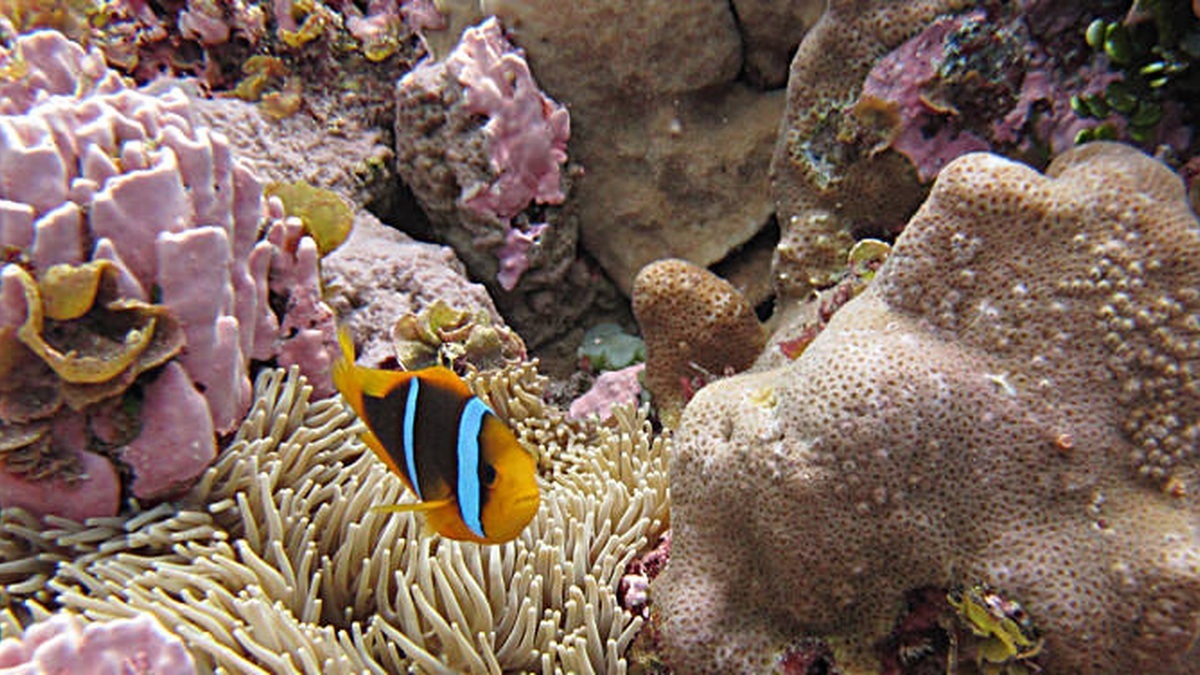
Coral jewelry can harm reefs when living colonies or slow-growing deep-sea corals are removed faster than they recover. The polished red, pink, black or gold material sold in ornaments is the skeleton of particular coral species, not an inert stone. Harvest can reduce habitat, disturb seafloor communities and create trade that is difficult for buyers to trace.
NOAA’s explanation of coral jewelry advises consumers to choose alternatives. Vintage appearance, a shop’s verbal assurance or the word sustainable does not by itself establish a legal and ecologically responsible origin.
Not all coral is reef-building coral, but that does not make collection harmless. Precious corals often grow in deeper water, forming branching colonies that may take decades to reach harvestable size.
Jewelry begins as an animal skeleton
Corals are colonies of small polyps. Many secrete hard skeletons and jewelry makers cut or polish the dense axes of selected species into beads, cabochons and carvings. Color and texture determine commercial value.
Red and pink precious corals largely belong to the family Coralliidae. Black corals form protein-rich skeletons and belong to a different group. Their names describe traded material rather than one interchangeable biological resource.
Removing a branch takes away living polyps and three-dimensional structure. If the base survives, regrowth may be possible, but recovery depends on species, colony size, technique and environmental conditions.
Harvest removes habitat as well as colonies
Slow growth raises the stakes. Deep habitats can be cold and food-limited and some colonies are long-lived. Damage that takes minutes may require decades to replace.
Branching corals provide attachment surfaces and refuge for other organisms. Removing them simplifies the seafloor. Gear can also break neighboring colonies or disturb sediment during collection.
Selective removal of the largest colonies can alter population structure and reproductive output. Coral larvae need successful spawning, fertilization, dispersal and settlement, so visible fragments do not guarantee rapid replacement.
The Smithsonian coral overview explains how coral structures support diverse communities. Precious coral gardens differ from tropical shallow reefs, yet habitat complexity remains ecologically important.
Trade rules depend on species and origin
Wildlife laws vary by species and country. Some corals are listed under the Convention on International Trade in Endangered Species, which regulates international shipments through permits. Domestic harvest rules may impose seasons, size limits or protected areas.
A permit can show that a shipment met a legal process, but buyers still need accurate species identification and origin. Processed beads are difficult to identify visually and products may pass through several intermediaries.
Labels require evidence. Terms such as bamboo coral, sponge coral or reconstructed coral can refer to dyed materials or composites. They can reduce demand for wild precious coral, though sellers should disclose what the item actually contains.
The U.S. Fish and Wildlife Service CITES guide explains the permit system for covered wildlife. Travelers should check current import rules before purchasing coral abroad.
Marine heat waves, acidification, pollution and destructive fishing already pressure coral communities. Jewelry harvest adds a direct removal that managers can control. Its relative impact differs by region, but multiple stresses can reduce recovery.
Climate stress slows ecological recovery
Ocean acidification changes carbonate chemistry and can make skeleton building more difficult for some species. Warming can also alter food supply, disease risk or reproduction in deep and shallow habitats.
Precaution is practical for consumers. A buyer rarely has enough information to evaluate a wild coral fishery. Choosing glass, ceramic, recycled metal or clearly identified synthetic material avoids that uncertainty.
Precious coral fisheries are data-limited. Colonies occur across rugged seafloor where surveys are expensive. Catch records may omit discarded branches or illegal collection, making sustainable quotas difficult to calculate.
Size and age are related imperfectly because growth varies with current and food. Removing large colonies can disproportionately reduce reproductive capacity if those colonies produce more gametes. Fragmented habitat may also reduce fertilization when colonies become sparse.
Consumers need evidence behind labels
Deep-sea corals are not barren ornaments. Fish, crustaceans and other invertebrates use coral gardens for refuge, feeding or egg laying. Structural damage can outlast the market life of the jewelry made from it.
Scientific monitoring uses remotely operated vehicles, genetic identification and age measurements from skeletal bands or radiometric methods. These techniques reveal growth rates and distribution needed for management.
Imitation material can be attractive without ecological ambiguity. Glass and ceramic beads accept durable color, while lab-created materials can reproduce branching patterns. Sellers should avoid marketing substitutes as genuine coral because transparency protects both consumers and enforcement.
Precious corals grow and reproduce slowly
Photographs of harvest grounds before and after collection help quantify structural loss. Without baseline images, later observers may mistake a depleted site for naturally sparse habitat.
Measured recovery, not the presence of a few surviving branches, determines whether collection remained within ecological limits.
Harvest methods differ from hand collection by divers to dredging. Gear contacting the seabed can widen the footprint beyond colonies retained for sale.
Marine protected areas safeguard some coral gardens, but enforcement at depth is challenging. Vessel monitoring and traceable landings support patrols and legal fisheries.
Deep coral gardens support other animals
Restoration cannot justify routine damage. Transplanting fragments is labor-intensive, survival varies and a planted colony cannot immediately replace an old habitat-forming structure.
Precious coral polyps capture plankton and organic particles from currents. Colony growth depends on food delivery, temperature and the energy allocated to skeletal extension.
Sexual reproduction produces larvae that must find suitable hard substrate. Recruitment can be sporadic and new colonies remain small for years.
Broken branches do not reliably seed a replacement population. Fragments may be buried, transported into unsuitable habitat or lose living tissue.
Age structure matters. A site with many small colonies may still lack the reproductive output and habitat volume once supplied by older branches.
Alternatives avoid uncertain supply chains
Supply chains can separate a finished necklace from the boat and reef where material originated. That distance makes individual verification difficult but gives buyers leverage: reduced demand lowers the incentive for poorly documented collection.
Retailers can publish sourcing policies, train staff and retain import documents. Claims should name the species and fishery rather than rely on broad environmental language. Independent certification for precious coral remains limited compared with some other commodities.
Family heirlooms deserve careful handling and documentation, not panic disposal. Throwing an existing piece away does not restore a colony. The conservation priority is preventing new unverified extraction and illegal trade.
Tourist purchases deserve particular caution. A product legal in the country of sale may need export or import permits. Confiscation at a border can occur even when the buyer did not understand the rules.
Monitoring reveals whether harvest is sustainable
Choosing an alternative is a direct way to avoid supporting a supply chain whose biological source is slow-growing and hard to monitor. Beauty does not require a material taken from a living marine habitat.
Ask the seller for the material’s scientific name, country of origin and documentation. Vague stories about beach collection or naturally shed branches are not reliable proof. Coral fragments can remain on a reef and continue providing habitat even after tissue dies.
Antique coral avoids a new harvest only when it is genuinely old; resale can still maintain market value and complicate enforcement. Some jurisdictions restrict trade regardless of age, so provenance remains important.
The CITES coral information program describes international efforts to monitor coral trade. Rules change and an authoritative customs or wildlife agency is the best source for a specific purchase.
Coral jewelry is harmful when beauty depends on removing slow-growing animal skeletons from functioning habitats. The simplest response is to select materials whose production can be verified without extracting wild coral.
Related reading: coral bleaching and what coral reefs are made of.