Fringing reefs, barrier reefs and atolls are the three main coral reef types in the classic geographic classification. The categories describe each reef’s position relative to land and the lagoon that may separate them. They also capture stages in a long interaction among coral growth, sea level and the movement or erosion of oceanic islands.
Real reefs do not always fit a single tidy shape, yet the three-part framework remains useful for reading tropical coastlines. NOAA’s reef type summary identifies fringing reefs as the most common, barrier reefs as offshore structures separated from land and atolls as rings around a central lagoon.
How reef shape reflects its setting
Reef-building corals need suitable temperature, light, water movement and hard substrate. When larvae settle near an island or continental shore, colonies can expand upward and seaward. The resulting reef framework records where corals could grow while waves, sediment and changing water depth modified the structure.
The width and depth of a lagoon provide the clearest visual clue. A reef attached to shore or separated by only a narrow shallow channel is usually classed as fringing. A broad lagoon points toward a barrier reef, while an open-ocean ring enclosing water suggests an atoll.
Charles Darwin proposed a developmental sequence for reefs around volcanic islands. Coral growth could continue near sea level while the island slowly subsided, changing a fringing reef into a barrier and eventually an atoll. Modern drilling and geological evidence confirmed the importance of subsidence, although sea-level change and local geology can produce more complicated histories.
1. Fringing reefs grow from the shore
A fringing reef begins along the coast of an island or continent and extends seaward. Its landward edge may touch the shoreline, or a narrow shallow lagoon may lie between reef and beach. Because the reef starts beside land, it is often the easiest type for people to reach.
Corals occupy zones determined by light, wave exposure and depth. The reef flat near shore may be shallow and partly exposed at very low tide. Farther seaward, a raised crest absorbs breaking waves and the outer slope descends into deeper water where coral communities change with available light.
Proximity to land brings both opportunities and risks. Coastal nutrients can support food webs, while too much sediment can cover polyps and block light. Freshwater runoff may rapidly alter salinity after heavy rain. Roads, construction and wastewater in the watershed can therefore affect a fringing reef within a short distance.
Fringing reefs are widespread around tropical islands and suitable continental margins. They should not be treated as small or young by definition. Some extend for long distances and their form depends on local topography as much as age.
Shoreline shape can divide a fringing reef into embayments and exposed points with different wave climates. River mouths may interrupt growth where freshwater or sediment is high. The category describes the reef’s geographic relationship to land while leaving room for strong ecological variation along its length.
2. Barrier reefs sit beyond a lagoon
A barrier reef also follows a coastline, but a wider and often deeper lagoon separates it from land. The reef forms a long offshore barrier between ocean waves and relatively sheltered water. Passes through the structure allow tides, currents and vessels to move between lagoon and open sea.
The best-known example is Australia’s Great Barrier Reef, which is a vast system of individual reefs rather than one continuous wall. Other barrier systems occur where coral growth, seabed shape and geological history have created extensive offshore foundations.
Barrier reefs can develop as an island subsides while corals continue growing upward near the sunlit surface. The widening space between reef and land becomes a lagoon. Rising sea level can produce a similar relative change in water depth and erosion may reduce the island while the carbonate framework persists.
Lagoon conditions differ from those on the ocean-facing slope. Protected water favors seagrass, patch reefs or sandy habitats in some locations, while the outer crest receives stronger wave energy. The Florida Keys sanctuary describes how physical and biological processes divide reefs into distinct zones.
Water exchange through passes influences lagoon temperature and water quality. A restricted lagoon can retain fine sediment, whereas a well-flushed one receives more ocean water. These differences help explain why barrier reef habitats vary even within the same system.
3. Atolls form rings around lagoons
An atoll is a roughly circular or oval reef surrounding a central lagoon, usually in the open ocean. Low sandy islands may rise on parts of the reef rim and channels can connect the lagoon to the sea. The original high island may have disappeared beneath the water long before the modern atoll took shape.
In the classic sequence, corals first grow as a fringing reef around a volcanic island. The island then subsides while reef builders keep adding skeleton near sea level. A barrier reef develops and continued subsidence eventually leaves the coral ring around a lagoon.
NOAA’s atoll formation model notes that the full process can span millions of years. Growth is not a smooth race upward. Storms break reef material, organisms erode skeleton and sea level changes, so different parts of an atoll can advance or retreat.
Atolls are especially sensitive to the health of the surrounding reef. Reef organisms contribute sediment to islands and reduce incoming wave energy. If the carbonate structure loses height or complexity, low-lying land can become more exposed even before the reef disappears.
The central lagoon may contain patch reefs and deep channels, while ocean-facing slopes descend steeply. Coral communities change across these settings as light and wave energy decline. An atoll is therefore a broad reef-landscape system, not merely the narrow ring visible on a map.
Other reef forms do not replace the main three
Patch reefs are small isolated structures found within lagoons or on shallow shelves. Platform or bank reefs rise from the seabed without a direct connection to a nearby coast. Scientists may also classify reefs by detailed geomorphology, habitat zone or dominant organisms.
Those additional labels describe real forms that the three main categories cannot capture. They do not make the classic types useless. Fringing, barrier and atoll remain a clear first description of the reef’s relationship to land and lagoon.
Modern mapping divides reefs into finer units such as crest, fore reef and back reef because management often operates at that scale. The classic classification answers a different question: how the whole reef sits beside land and open water. Both levels can be used without treating one as a replacement for the other.
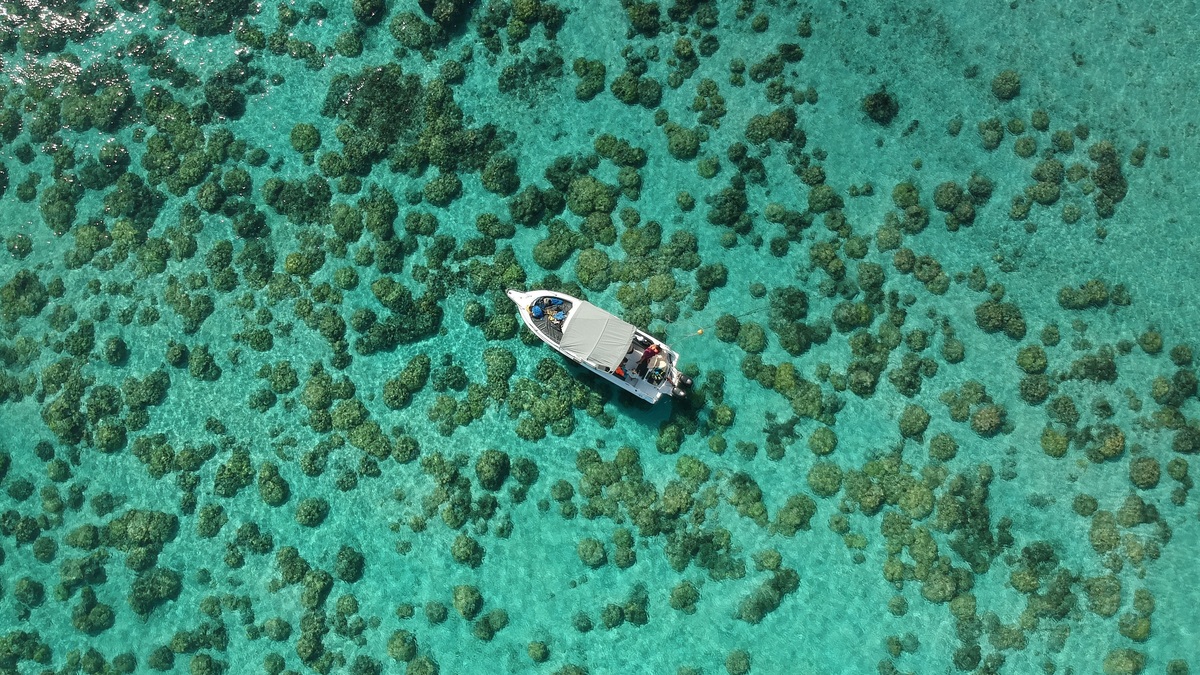
Reef type alone does not measure ecological health. A damaged reef can retain its geographic outline after living coral cover has declined and a healthy reef may include several smaller landforms. Biological monitoring is needed alongside maps and aerial images.
Why the classification is useful
Knowing the reef form helps scientists anticipate environmental pressures. Fringing reefs may receive land-based runoff directly, barrier lagoons can trap or redirect sediment and isolated atolls face different limits on freshwater and access. Managers can then match water-quality monitoring or restoration to the setting.
Shape also influences waves and currents. Reef crests force waves to break, lagoons store and exchange water and channels concentrate flow. The NOAA Fisheries habitat profile connects this structure with the shelter and coastal protection reefs provide.
The three main coral reef types are therefore geographic patterns with geological histories. Fringing reefs remain close to shore, barrier reefs stand across a lagoon and atolls encircle lagoons after the central land has largely vanished. Each form contains many habitats and each continues to change as living corals build against erosion.
Related reading: mesophotic coral ecosystems and artificial reefs.