An artificial reef is a human-made structure underwater that provides hard surface and physical relief used by marine organisms. It may be placed specifically for habitat, diving, shoreline protection, or fisheries management. Shipwrecks and offshore platforms can also function as reefs even when reef creation was not their original purpose.
NOAA’s artificial reef overview lists vessels, concrete, limestone, steel and other structures. A successful project requires far more than dropping material into the sea. Planners choose a site, clean and prepare the structure, secure permits, assess navigation and habitat risks, then monitor what happens after deployment.
The term describes function as well as origin. A purpose-built concrete module, a cleaned ship intentionally sunk under permit and part of an offshore platform can all develop reef communities. Loose trash does not become a legitimate reef because organisms settle on it. Authorized placement, environmental suitability, structural stability and a defined management purpose separate a planned reef from illegal dumping.
How a structure becomes living habitat
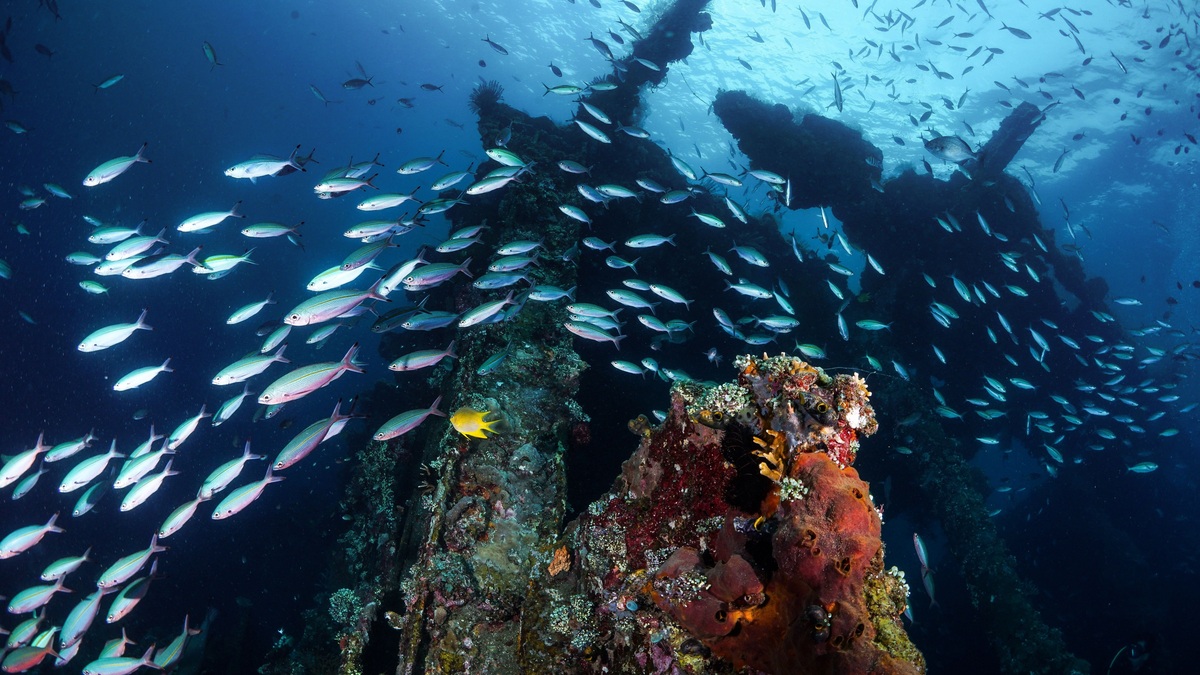
Bare material is quickly coated by microbes and algae. Larvae of barnacles, oysters, corals, sponges and other attached animals settle when water conditions and surface texture suit them. Crevices shelter small animals, while higher surfaces reach into faster currents that carry oxygen and food. Over time, living growth makes the structure more complex.
Fish respond to that relief in several ways. Some shelter inside openings; others hunt near current breaks or use the structure as a visual reference. Reef residents add waste and become prey, concentrating activity around the site. NOAA’s science review says artificial structures can alter currents, provide spawning sites and support epibiotic communities that create smaller habitats.
A crowded reef does not automatically mean the project produced more fish. The attraction versus production question asks whether animals were drawn from nearby habitat or whether added shelter and food increased survival and reproduction. Both can occur and the balance varies by species, site design, fishing pressure and the surrounding seafloor.
Colonization follows no universal timetable. Warm water can support rapid biological growth, while cold or sediment-rich sites develop differently. Mobile fish may appear within hours, but a mature attached community takes much longer. Storms, burial, grazing, disease and seasonal recruitment can reset parts of the surface. Researchers therefore compare multiple years and nearby natural habitat before describing reef development as successful.
What artificial reefs are made from
Modern purpose-built reefs commonly use durable, stable concrete modules with holes and rough surfaces. Rock and specially prepared steel are also used. Designers consider how the material behaves in seawater, whether storms can move it, how long it will last and whether its openings could trap wildlife. Shape is chosen to match the target habitat and local currents.
Decommissioned ships can provide large, intricate structures and popular dive sites. Before sinking, contractors remove fuel, oils, loose wiring, floatable debris and other potential contaminants. Openings may be cut for water flow or diver safety. The vessel must settle where it will not block shipping, damage valuable natural habitat, or shift during severe weather.
Past projects sometimes used tires, vehicles, or poorly prepared debris. Tires can break loose and scour natural reefs; unstable materials scatter; contaminants can enter the water. EPA and maritime agencies now emphasize environmental preparation, engineering, permits and long-term oversight rather than treating disposal as habitat creation.
The federal vessel preparation guidance explains that siting, monitoring and evaluation are necessary parts of a project. Materials should minimize environmental risk and support clearly defined goals. Legal dumping rules still apply even when someone claims an object is intended to become a reef.
Preparation addresses more than visible fuel tanks. EPA guidance identifies oils, asbestos, polychlorinated biphenyls, paint residues, refrigerants, mercury-containing equipment and floatable debris as potential concerns. Contractors document cleanup so permitting agencies can evaluate the vessel before placement. Engineers also calculate how flooding will occur during sinking, since an uncontrolled descent can miss the approved footprint or leave the hull in an unsafe orientation.
Benefits depend on the goal and location
A reef placed on a flat, low-relief seabed can add shelter that was scarce locally. Managers may use structures to support fishing opportunities, shift recreational pressure, create dive attractions, or aid habitat restoration. Economic benefits can reach charter boats and coastal businesses. Scientific installations also allow researchers to compare designs and measure colonization.
Potential costs deserve equal attention. Concentrated fish may become easier to catch, leading to overharvest. Structures can spread invasive species as stepping stones, alter sediment movement, or damage nearby natural reef if they move. Lost fishing gear can snag on the relief. Crowded dive sites bring anchor damage and safety concerns.
Strong design begins with a measurable objective. A reef intended for juvenile fish may need small refuge spaces, while a dive site requires access and safe clearance. Water depth, bottom type, waves, currents and existing communities shape the choice. Managers also consult fishers, divers, conservation groups and navigation authorities because different users may value the same area differently.
Location can determine whether a good design performs poorly. Fine sediment may bury low modules while strong currents undermine foundations; waves may move material placed too shallowly. A reef should avoid seagrass, natural coral, archaeological sites, cables and navigation lanes. Surveys also consider the distance to existing habitat because placing structures nearby may extend a community, whereas an isolated reef can create a different pattern of use.
Fishing access deserves specific planning. When a reef concentrates vulnerable adults during spawning, easier capture can offset habitat benefits. Seasonal closures, gear rules, or no-take research areas may be paired with deployment. At recreational sites, mooring buoys can reduce anchor damage. These controls make human use part of the design rather than an issue considered only after fish and divers arrive.
How managers judge whether a reef works
Monitoring starts before deployment with a baseline survey. Divers, sonar, remotely operated vehicles and baited cameras can document bottom habitat and marine life. Later surveys measure attached growth, fish abundance, species composition, structural movement, corrosion and debris. Comparing the reef with nearby control sites helps distinguish a project effect from regional environmental change.
Success should match the original purpose. A reef meant to restore a particular habitat is assessed differently from a wreck designated for recreation. High fish counts may look encouraging, but managers also ask whether native species reproduce, whether fishing mortality changes and whether surrounding habitats remain unharmed.
Counts need consistent methods. A diver can inspect small crevices but may influence fish behavior and has limited bottom time. Stationary video records longer visits, while sonar covers a wider area without identifying every species. Marked photo plots track attached organisms on the same surface. Combining methods reduces the chance that visibility, current, or observer differences are mistaken for an ecological trend.
Removal or repair may be necessary when modules break, contaminants appear, or the reef conflicts with navigation. Adaptive management uses monitoring results to modify future designs and access rules. Artificial reefs can add useful local habitat, yet they cannot replace a natural reef’s full biological history, geology, age, or water quality. Careful planning keeps a habitat project from becoming marine debris.
Long-term responsibility matters because steel corrodes and concrete can crack; storms can also expose previously buried material. Permit conditions may assign inspection schedules and identify who must respond if the structure moves. Archived coordinates and design records help future managers interpret survey results. A reef remains an engineered installation within a living seascape, so adaptive management continues well beyond deployment day.
Related reading: pelagic and benthic zones and abiotic factors in the ocean.