Abiotic factors in the ocean are the nonliving parts of the environment that influence marine organisms. They include the water’s temperature and salt content, the light that reaches each depth, water pressure, dissolved gases, acidity, nutrients, currents and the material on the seafloor. Living components are biotic factors, from microscopic plankton to large fish. The physical and chemical conditions around them are abiotic factors.
Marine life is unevenly distributed because those conditions vary from one place and season to another. A sunlit coastal shelf can support dense plant growth, while the dark open seafloor may receive only a slow fall of organic particles. NOAA describes ocean habitat as the product of interacting conditions, including salinity, temperature, oxygen, pH, light, nutrients, pressure, substrate and circulation. Each factor sets limits, but organisms usually experience several limits at once.
Temperature and salinity control density
Ocean temperature varies across latitudes and seasons, then changes again with depth. Sunlight warms the surface most directly, while deep water is generally cold. Temperature affects an organism’s metabolism. Growth and reproduction can also change because the chemical reactions inside an organism speed up or slow down as water warms or cools. Temperature also affects how much oxygen water can hold. Warm water usually contains less dissolved oxygen than cold water under otherwise similar conditions.
Salinity measures the amount of dissolved salt in water. Evaporation can raise it, while rainfall, river flow and melting ice can lower it. Marine organisms must keep water and salts in balance across their tissues, so many species tolerate only a limited salinity range. Estuaries are especially changeable because river water meets the sea. Animals living there may face large salinity shifts over a tidal cycle or after heavy rain.
Temperature and salinity together influence seawater density. Cold, salty water tends to be denser and sink beneath warmer or fresher water. NOAA’s explanation of thermohaline circulation shows how density differences help drive deep currents. When layers of different density resist mixing, the resulting stratification can keep surface light separated from nutrients stored at depth.
Light fades quickly with depth
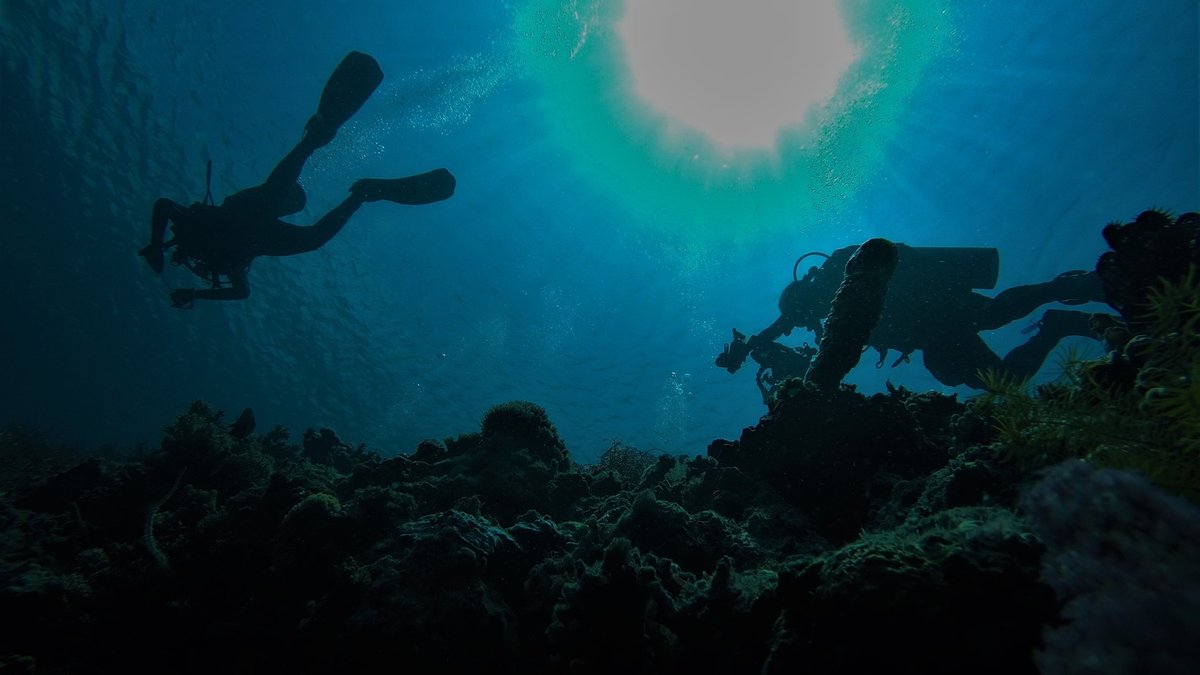
Sunlight provides the energy for photosynthesis, so its reach helps determine where phytoplankton, algae and seagrasses can grow. Water absorbs and scatters light. Suspended sediment and dissolved material can reduce visibility further, particularly near coasts or river mouths. Clear water may transmit detectable light far below the surface, yet NOAA notes that significant sunlight is rare below 200 meters.
The upper sunlit layer supports most ocean photosynthesis. Below it, the twilight zone receives too little light for photosynthesis even though some animals can still see. Deeper water is dark. Argo’s overview of the five ocean zones follows this transition from surface waters to the deepest trenches.
Light also supplies visual information. Its intensity and color influence feeding behavior, while the daily cycle helps time movement. Some animals rise toward the surface at night, then descend during the day. On the seafloor around hydrothermal vents or cold seeps, ecosystems can use chemical energy through chemosynthesis, which allows food production without sunlight.
Pressure increases throughout the water column
Water has weight and every deeper layer carries the water above it. According to the National Ocean Service, pressure rises by about one atmosphere for every 10 meters of depth. At 1,000 meters, an organism experiences roughly 100 additional atmospheres of water pressure compared with the surface.
Hydrostatic pressure affects gas-filled spaces and the molecular machinery of cells. Deep-sea animals have body structures and biochemistry suited to their usual depth. A rapid move toward the surface can be harmful to some fishes because expanding gas may damage tissues. Animals that routinely cross depth ranges need ways to manage those changes.
Pressure often changes alongside light and temperature. NOAA Ocean Exploration explains that deep-ocean life commonly faces high pressure, cold water and little available light. Those combined conditions slow many biological processes and limit how energy enters the habitat, although vents and seeps create productive local exceptions.
Oxygen, pH and nutrients set chemical limits
Most marine animals depend on dissolved oxygen for respiration. Oxygen enters surface water from the atmosphere and photosynthesis adds more where light is available. It is consumed when organisms respire and when microbes break down dead material. Restricted mixing can leave deep water with little replacement oxygen. The EPA uses the term hypoxia for water that lacks enough oxygen to support aquatic organisms normally.
Seawater pH describes its acidity on a logarithmic scale. Carbon dioxide dissolves in water and participates in reactions that affect carbonate chemistry. Those reactions influence organisms that build shells or skeletons from calcium carbonate. Global ocean acidification is driven mainly by rising atmospheric carbon dioxide, while runoff and biological activity can produce strong local pH changes in coastal water. The EPA’s ocean acidification overview explains how carbon moves among dissolved forms in seawater.
Nitrogen and phosphorus support phytoplankton growth. Some plankton also require silica or iron. Nutrients are often used rapidly in well-lit surface water, then returned at depth as sinking organic matter decomposes. Excess nutrient inputs near shore can feed algal blooms. When that biomass dies, microbial decomposition consumes oxygen and releases carbon dioxide, linking nutrient supply to both oxygen and pH.
Substrate creates the physical habitat
Substrate is the surface on which bottom-dwelling organisms live. It may consist of exposed bedrock, loose sand, fine mud, shell fragments or organic deposits. Grain size affects whether an animal can burrow and whether currents wash particles away. Hard surfaces provide attachment sites for organisms such as corals and sponges. Soft sediment supports burrowing worms and clams. Many microbes also live beneath its surface.
The seafloor is not uniform. NOAA Ocean Exploration describes a seabed that ranges from muddy clay to rocky boulders, with sediment thickness and texture varying across ocean basins. Coastal sediments often arrive from land by rivers or wind. Farther offshore, mineral dust, volcanic material and the remains of tiny organisms can accumulate slowly.
Topography modifies the substrate’s effect. Ridges and seamounts redirect currents. Canyons can expose rock or collect sediment in sheltered areas. The same depth can therefore contain very different habitats. A current-swept rocky slope favors organisms that can cling to a hard surface, while a nearby basin may hold fine sediment and lower oxygen in its pore water.
Circulation connects every factor
Ocean circulation moves heat, salt, gases and dissolved nutrients. Winds drive much of the surface flow, while tides stir coastal water. Density differences sustain slower currents through the deep ocean. Mixing can replenish oxygen below the surface and bring nutrients upward, so circulation links conditions that might otherwise remain separated.
Upwelling offers a clear example. Winds can push surface water away from a coast, allowing cold, nutrient-rich water to rise. NOAA reports that this process can support high biological productivity because nutrients reach the illuminated layer where phytoplankton grow. Downwelling carries surface water and its dissolved gases deeper. Eddies create smaller moving boundaries that concentrate or disperse plankton and their predators.
Circulation can also reinforce chemical stress. If dense surface water caps a deeper layer, weak mixing may prevent atmospheric oxygen from reaching the bottom. Organic matter continues to sink and decompose there, drawing oxygen down further. The outcome depends on water depth, local topography and the rate at which currents replace the trapped water.
Ocean habitats form from interacting conditions
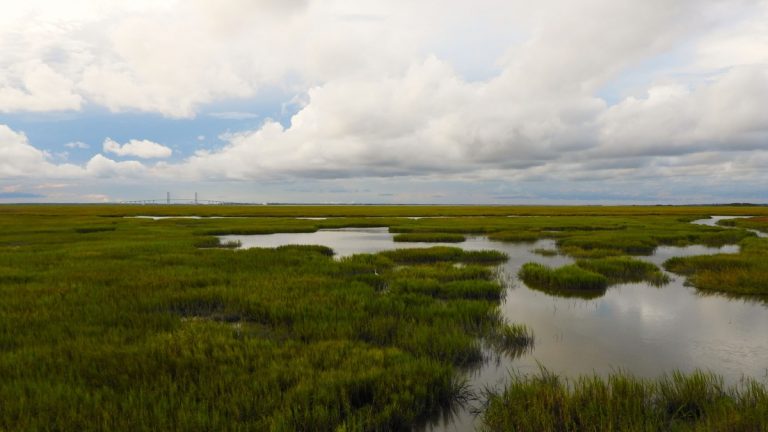
Ocean habitats arise from several conditions acting together. Coral reefs require suitable temperatures and enough light for their symbiotic algae, along with water chemistry that permits reef building. Salt marshes experience changing salinity and regular exposure to air, while their muddy substrate stores organic matter. The open deep sea combines darkness with cold water under high pressure, then adds regional differences in oxygen supply and food delivery.
The same interaction explains why climate patterns can affect marine communities through several routes. Surface warming changes temperature directly and may strengthen stratification. Stronger layering can reduce nutrient transport into sunlit water while limiting oxygen replacement at depth. A broader account of these gradients appears in Argo’s guide to marine biome climate.
Oceanographers track these conditions together rather than treating them as isolated measurements. NOAA’s World Ocean Atlas compiles temperature, salinity, dissolved oxygen and inorganic nutrient observations at standard depths. Combined measurements reveal where physical boundaries form, how water masses move and why suitable habitat expands or contracts over time.
More ocean science basics
Continue with 25 ocean facts and trivia questions, how saltwater lakes form.
Ocean ecosystems and exploration
Continue with the Pacific Ocean food web, the ocean’s unexplored share.
The physical and chemical setting is only half of an ecosystem. Argo’s guide to biotic factors in the ocean covers the organisms, feeding relationships and living interactions.
For the geographic setting behind those factors, see marine geography explained. A biological comparison appears in Argo’s Hawaii food web.
A practical demonstration appears in the underwater-volcano convection experiment. Argo also separates genuinely marine species from loosely named examples in its guide to animals with “sea” in their name.