Beneath the ocean’s bright surface lies a vertical world that changes dramatically with depth. Sunlight fades, water pressure rises and the animals that can survive there become very different. Oceanographers divide this open-water realm into five broad pelagic zones. Together, they trace a journey from the plankton-filled surface to the trenches at full ocean depth.
These zones are defined mainly by depth and light. Their boundaries are useful reference lines, though conditions can shift with clear water, season and location. The ocean twilight zone, for example, spans roughly 200 to 1,000 meters below the surface. It is a vast middle layer where dim light, daily migrations and carbon transport meet.
The sunlit epipelagic zone
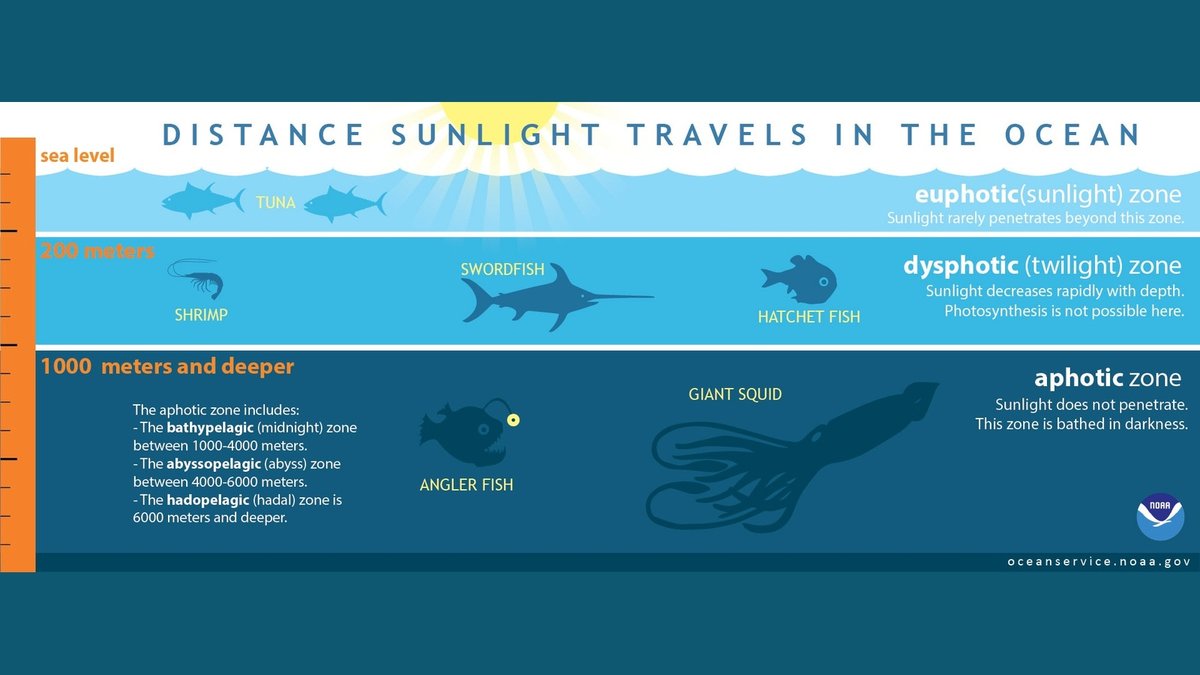
The epipelagic zone reaches from the surface to about 200 meters, or 660 feet. It is often called the sunlight zone because enough light penetrates the water for photosynthesis. There, microscopic phytoplankton use sunlight, water and carbon dioxide to make organic matter. That production supplies energy to much of the ocean food web.
Near shore, winds and currents can lift nutrient-rich deep water toward this layer. That upwelling can fuel large blooms of phytoplankton. In open water, drifting plankton share this bright zone with jellies and large swimmers. Tuna, sharks, sea turtles and dolphins also pass through it. Many large animals move rather than staying at one depth all day.
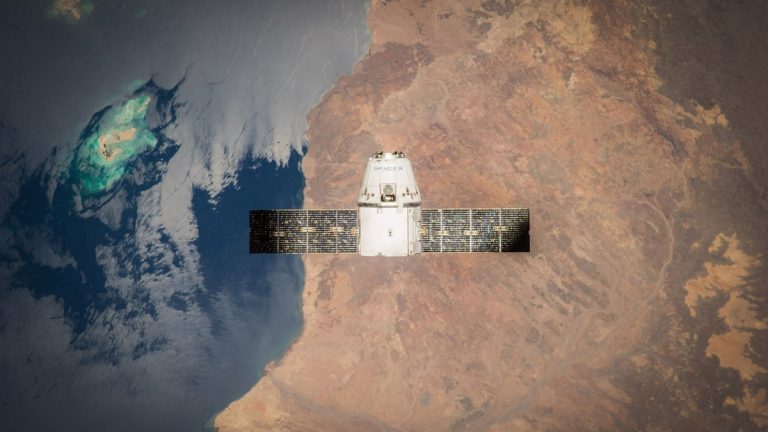
The lower edge of the epipelagic zone is set by light rather than by a solid boundary. In clear tropical water, useful light can reach farther down than in sediment-rich coastal water. Clouds, seasons and waves also change the light that enters the sea. Since phytoplankton depend on that energy, this zone concentrates much of the ocean’s daytime food production. Satellites can track surface color changes that often signal plankton blooms, while ships collect water samples to identify the organisms involved.
The twilight zone carries carbon
From about 200 to 1,000 meters lies the mesopelagic zone, widely known as the twilight zone. A little blue light may remain near its upper edge, but photosynthesis soon stops. The water can be cold and dim, yet it holds a remarkable range of life. Bristlemouths and lanternfish swim there alongside squid, shrimp, jellies and tiny crustaceans.
Every night, many of these animals swim upward to feed near the surface, then return deeper by day. This daily vertical migration is considered Earth’s largest animal migration. It also moves carbon. As animals feed, produce waste and die, carbon-rich particles sink through the water. Woods Hole Oceanographic Institution describes this linked set of processes as the biological carbon pump, which helps send part of surface carbon toward the deep sea.
Studying this layer takes more than lowering a net from a ship. Fast animals can avoid nets and delicate gelatinous creatures may break apart during collection. Researchers combine acoustic surveys with cameras, water samples and underwater vehicles that can work for long periods at depth. Satellites cannot directly image the twilight zone and ship-based sonar has limits in this moving habitat. Acoustic surveys reveal layers of animals through returning echoes. Cameras and sampling devices then help identify species and measure carbon-carrying particles. The work also helps scientists estimate how much organic carbon is eaten in the twilight zone and how much continues into deeper water.
Midnight waters and marine snow
The bathypelagic zone extends from about 1,000 to 4,000 meters. It is also called the midnight zone because sunlight does not reach it. Food made at the surface arrives only in small amounts. Much of it falls as marine snow, a slow drift of dead plankton, bits of organic material and animal waste.
Animals in this dark water often conserve energy and wait for scarce meals. Anglerfish, dragonfish, gulper eels and deep-sea squid show how varied those solutions can be. Some species make their own light through bioluminescence. A flash can help an animal attract prey, confuse a predator, or recognize a mate in a place where daylight never arrives.
Pressure rises quickly with depth, so bathypelagic animals need cells and body structures that keep working under that force. Many have large mouths or expandable stomachs because a meal may be rare. Some drift with little effort, while others use sensitive eyes or light-producing organs to find food. These adaptations make sense in a habitat where the food supply is scattered through a huge volume of dark water.
The abyssal plain
Below the midnight zone, the abyssopelagic zone runs from about 4,000 to 6,000 meters. It sits above much of the broad, deep seafloor known as the abyssal plain. The water is near freezing in many places and pressure is immense. With no sunlight and limited food, life depends heavily on material sinking from waters above.
Sea cucumbers and brittle stars live there with worms, crustaceans and fishes. Their bodies and behavior are shaped by the steady cold and crushing pressure. The deep ocean also receives carbon that began as surface life. Some of that material is eaten or broken down before it reaches the bottom. A smaller fraction settles into seafloor sediments for long periods.
Currents still matter in the abyss. They can deliver particles across the seafloor or sweep them into patches where animals gather to feed. A carcass that sinks from above can briefly support a busy community of scavengers. Such events show how closely the deep seafloor remains tied to the productive surface. Scientists use sediment cores, seafloor cameras and samples of bottom-dwelling animals to piece together these slow-moving food webs.
Hadal trenches at full ocean depth
The hadopelagic zone, or hadal zone, begins around 6,000 meters and occurs inside ocean trenches. These narrow depressions form where tectonic plates meet. NOAA Ocean Exploration places the hadal range at roughly 6,000 to 11,000 meters. Challenger Deep in the Mariana Trench is its best-known location.
Pressure at these depths makes exploration technically difficult. Scientists use specially designed landers, cameras, sampling gear and deep-rated vehicles to study the animals and sediments there. Amphipods, sea cucumbers, microbes and other trench dwellers show that life can persist under extraordinary pressure. Research is still filling basic gaps about which species live in individual trenches and how surface conditions affect them.
Trenches are separate habitats rather than one continuous belt around the planet. Their shape can trap sinking material and create local conditions that differ from nearby abyssal seafloor. That separation may help explain why some trench animals occur in only one region. Reaching them requires equipment built to withstand full-ocean pressure. A successful expedition can return images, water data, sediment and specimens that were impossible to collect from a research vessel alone.
Repeated visits are especially valuable because a single dive captures only a small slice of a trench. Researchers compare samples from different depths and locations to learn which animals are widespread and which are local. They also measure temperature, salinity, oxygen and the chemistry of the water. Those observations can directly connect the trench community to the ocean above it and provide a baseline for future changes.
Each zone is connected to the next by falling food, moving water and migrating animals. This vertical exchange helps explain why events at the surface can matter far below it. It also gives deep-sea research a climate role. WHOI’s ocean twilight zone project follows sinking particles and water samples to learn how much carbon continues downward. Its carbon research shows why the middle ocean matters to the wider planet.
Water moves between these layers through the system introduced in Argo’s ocean currents overview. The organisms occupying each zone connect through aquatic food chains.
Light, temperature, pressure and dissolved gases change across these layers. See how those abiotic ocean factors set the physical conditions for marine life.
Those zones impose different limits on how deep humans can enter the ocean and how deep sharks have been recorded.
Depth zones intersect the horizontal regions mapped in Argo’s guide to the seas of the Arctic Ocean. The living component of every layer is covered in ocean biotic factors.
Processes crossing these layers include marine snow sinking toward the deep ocean, thermoclines separating warmer and colder water and the SOFAR channel carrying sound over long distances. On some seafloors, dense saltwater forms ocean brine pools.
Argo’s layer-by-layer explainers cover the epipelagic, mesopelagic, bathypelagic, abyssopelagic and hadal zones in greater detail.