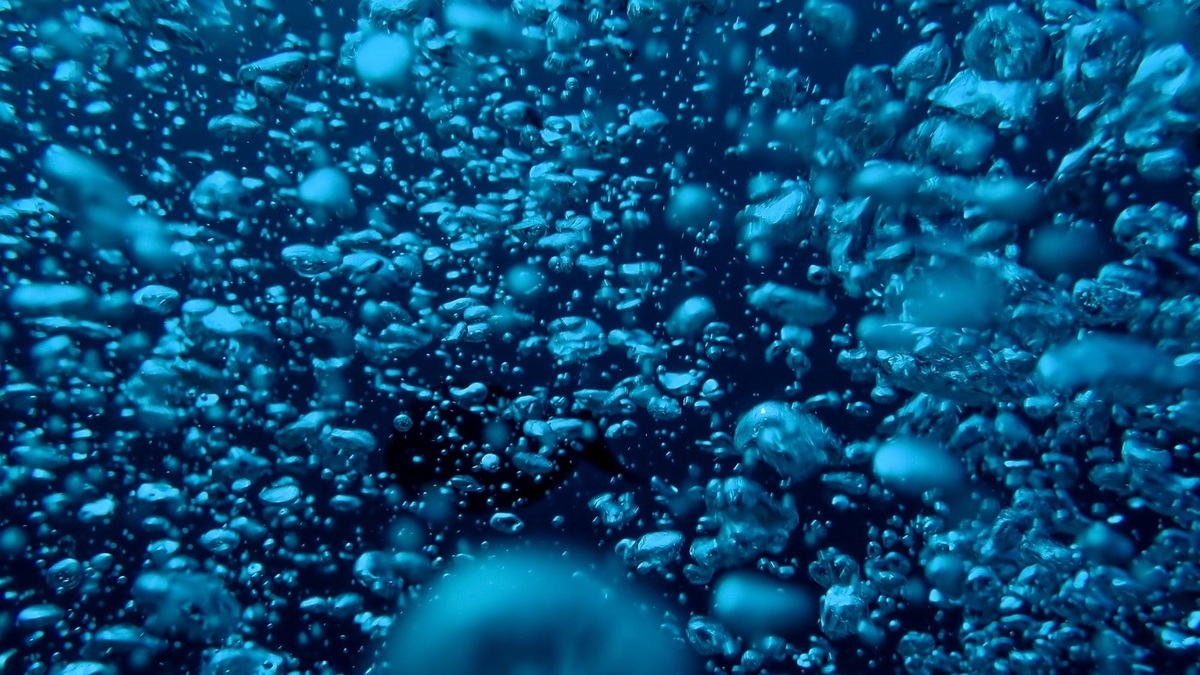
The abyssopelagic zone occupies the ocean water column from roughly 4,000 to 6,000 meters, or 13,100 to 19,700 feet. Sunlight never reaches it. Temperatures commonly remain near 2 to 3 degrees Celsius and pressure rises from about 400 to 600 times atmospheric pressure at sea level. It is the deepest broad layer above the ocean’s trenches.
Depth-zone boundaries are conventions rather than walls. NOAA places the abyssopelagic between the bathypelagic above and the hadal zone below in its explanation of light in the ocean. Water masses, animals and sinking particles cross the 4,000-meter line without encountering a physical barrier, yet the label helps scientists compare observations made under a similar range of pressure and darkness.
The word abyssal is also used for the seafloor at comparable depths. Context is important: abyssopelagic describes open water, while an abyssal plain is bottom terrain. A camera drifting at 5,000 meters samples the abyssopelagic community until it approaches the seabed, where benthic habitats become the focus.
A vast layer with little incoming food
Most organic matter in the abyssopelagic began as photosynthetic production near the surface. It sinks as marine snow, a loose mixture of dead plankton, fecal pellets and other particles. Animals and microbes consume the material repeatedly during its descent, so only a small fraction of surface production reaches abyssal depths.
The dwindling supply favors organisms that use energy carefully. Some wait for prey rather than swimming continuously. Others feed on particles suspended in the water or intercept larger food falls. A carcass creates a brief local abundance within a layer where meals are usually scattered.
Particle flux varies by region and season. Productive surface waters can send more carbon downward than nutrient-poor subtropical gyres. Fast-sinking aggregates deliver material before it is fully decomposed, while small particles may remain suspended or be carried sideways by deep currents.
Argo’s account of marine snow follows that supply from surface production into the deep sea. In the abyssopelagic, the amount, size and nutritional quality of particles help determine how much animal biomass the water can support.
Pressure changes the rules inside cells
At 5,000 meters, the surrounding pressure is close to 500 atmospheres. Water-filled tissues do not collapse like an empty container, but pressure affects the weak chemical interactions that give proteins their working shape. It also changes the physical behavior of cell membranes.
Abyssopelagic organisms possess adaptations that keep these systems functional. Membrane lipids can retain suitable fluidity in cold, high-pressure water. Small organic compounds known as piezolytes can stabilize proteins. The exact combination differs among lineages and depth ranges.
Many deep animals lack large gas-filled spaces. Buoyancy may come from watery tissues, oils or reduced mineral content instead. Fish that depend on a gas bladder in shallower water need a different strategy at abyssal pressure.
Pressure adaptation can also limit vertical movement. An enzyme that performs well at 5,500 meters may work poorly after an animal is brought rapidly toward the surface. Researchers use pressure-retaining samplers and laboratory chambers to separate true biology from damage caused during recovery.
Darkness does not make the water visually empty
Solar light is absent, yet bioluminescence remains possible. Animals produce light through chemical reactions or partnerships with luminous bacteria. A flash can startle a predator, attract prey or signal to another member of the same species.
Eyes vary with ecology. Some animals retain sensitive visual systems for detecting flashes, while others rely more heavily on smell, touch or vibration. There is no single abyssal body plan. Gelatinous predators, crustaceans and fish solve the same environmental constraints in different ways.
Color behaves differently without daylight. Red or black tissue reflects little usable light and can provide concealment. Transparent bodies reduce the visible outline of some organisms, though transparency becomes harder to maintain in larger animals with complex organs.
Sound and chemical traces remain useful across distances where vision cannot help. Pressure does not prevent sound from traveling through seawater, so animals can detect vibration from movement or feeding. Dissolved molecules also identify food, potential mates or a nearby carcass. Antennae, lateral-line systems and other sensory structures sample those cues without requiring an animal to spend scarce energy producing continuous light. Slow movement can preserve those signals longer than a turbulent surface environment would allow.
Deep currents keep the zone connected
Abyssopelagic water is part of global overturning circulation. Dense water formed at high latitudes spreads through basins and carries oxygen into the deep ocean. Ridges and fracture zones steer its route, while mixing gradually modifies its temperature and chemistry.
The flow is slow on a human timetable, but it transports dissolved carbon and nutrients across ocean basins. Respiration converts sinking organic matter into dissolved inorganic carbon. Some of that carbon remains isolated from the atmosphere until deep water eventually returns toward the surface.
Oxygen conditions reflect both supply and consumption. Recently ventilated water may carry more oxygen, while older water has accumulated the products of respiration. A depth label alone therefore cannot predict habitat quality. Oceanographers pair depth with temperature, salinity and dissolved oxygen.
Argo’s comparison of surface and deep currents explains the density-driven circulation that carries water through this realm. The abyssopelagic is broad, yet basin geometry and water-mass history create meaningful regional differences within it.
Vehicles sample only narrow windows
Ships map the deep water with acoustic instruments and lower packages that measure conductivity, temperature, depth and chemistry. Nets can collect animals, though fragile species may be damaged and mobile ones can avoid capture. Baited cameras reveal scavengers without requiring a trawl.
Autonomous underwater vehicles follow programmed routes and can survey without a tether. Remotely operated vehicles send video and data through a cable to pilots at the surface, allowing deliberate sampling. Each method trades range, control, payload and cost.
WHOI’s abyssal-zone overview describes robotic systems and the human-occupied vehicle Alvin. Alvin’s 6,500-meter certification gives scientists direct access to the lower abyss and puts about 99 percent of the seafloor within its rated reach.
A single dive sees a tiny fraction of the zone. Researchers combine vehicle observations with long-term moorings, environmental DNA and water-column acoustics. Repeat sampling is necessary because food pulses and migrating animals can change what an instrument detects.
The water column and seabed exchange material
Particles leaving abyssopelagic water settle onto plains, ridges or seamounts. Bottom animals consume them and microbes alter their chemistry within sediment. Resuspension can return fine material to the water, especially where currents cross rough terrain.
Manganese nodules grow on some abyssal plains and provide hard surfaces for attached organisms. Proposed mining would directly disturb the bottom and create sediment plumes that enter overlying water. Predicting plume behavior requires current measurements and knowledge of how suspended particles settle.
WHOI notes that communities at disturbed deep-sea sites may show limited recovery even after decades. Baseline surveys must therefore document microbes and water-column animals as well as conspicuous seafloor species. A site without large animals in one camera transect can still contain an active microbial community.
The abyssopelagic zone is best understood as moving water above a varied bottom. Its biology responds to pressure, food flux and circulation. Those controls shift gradually across depth, but together they distinguish the abyss from the better-lit and more food-rich ocean above.
Sampling plans keep the two environments separate while measuring their exchange. A rosette collects water a known distance above bottom and a lander records processes at the sediment surface. Paired observations show whether a chemical signal originated in the water column or diffused from seabed sediment. Without that vertical context, a measurement from “the abyss” can be assigned to the wrong habitat. Distance above bottom belongs in every sample record.
Argo also explains the trench-bound hadal zone and the broad abyssal plains beneath much of the deep ocean.