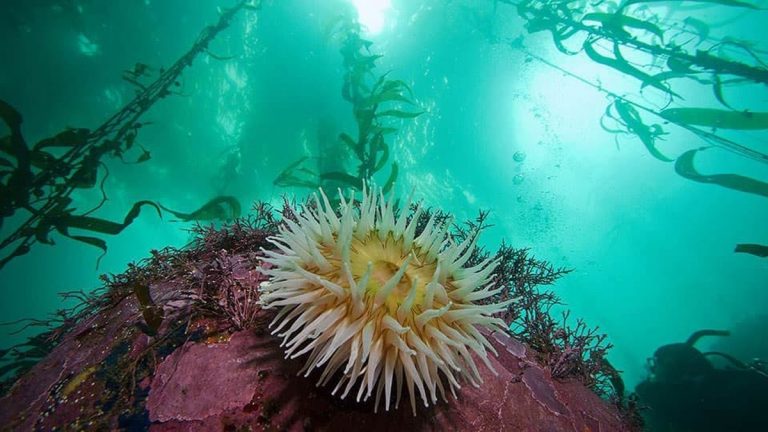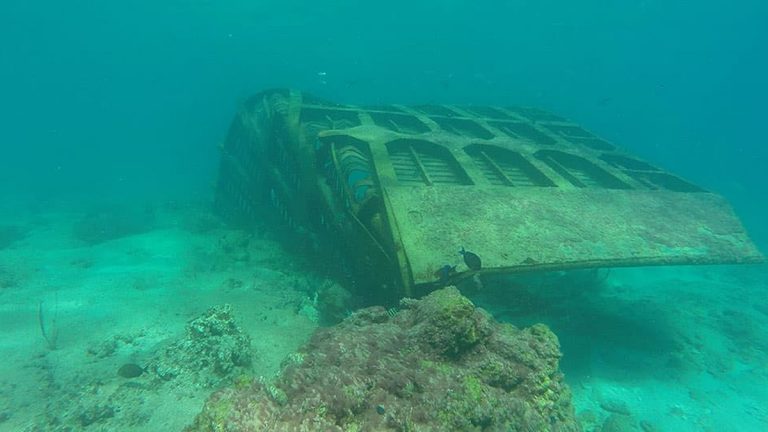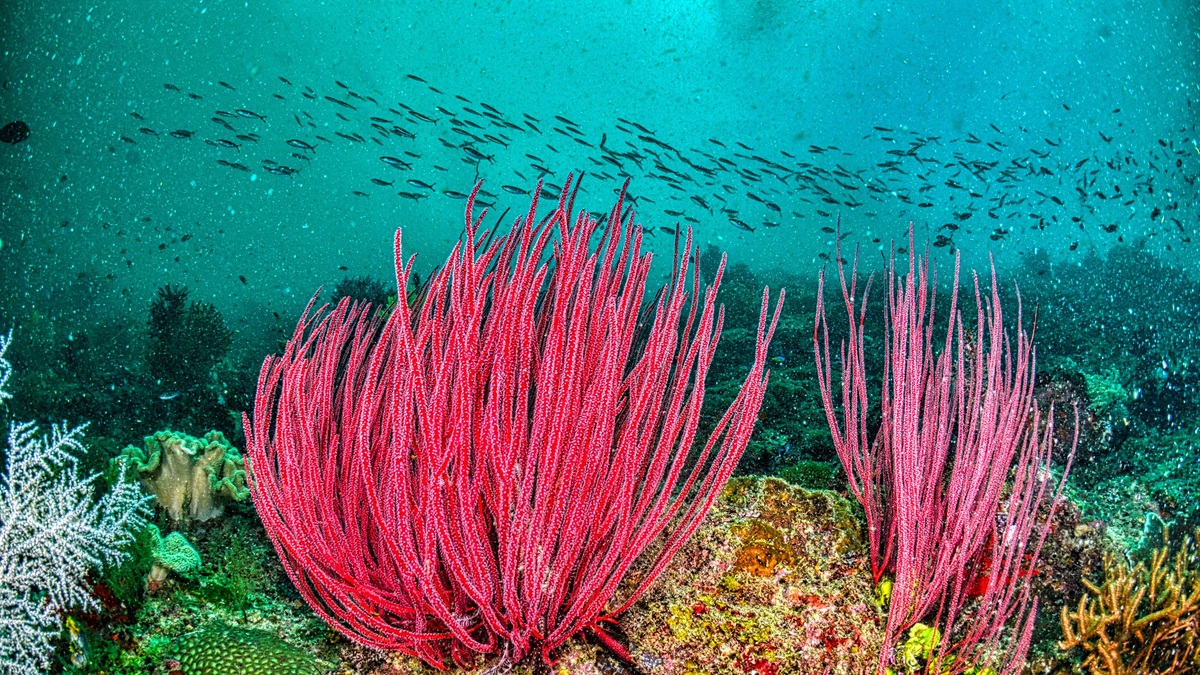
The Pacific Ocean contains the greatest coral diversity. Its tropical western reaches, especially the Coral Triangle around Indonesia, the Philippines, Malaysia, Papua New Guinea, Timor-Leste and Solomon Islands, form the global center for shallow reef-building coral species.
NOAA says there are generally about twice as many coral species on Pacific reefs as on Atlantic reefs. The comparison concerns species richness rather than the number of individual colonies or the total area covered by living coral.
Several features contribute to the pattern. The tropical Pacific is enormous, its island arcs provide abundant shallow habitat and its geological history allowed lineages to accumulate and spread. Ocean currents connect many reefs while distance and barriers still create opportunities for populations to diverge.
The western Pacific is the diversity center
The highest counts occur in a region that joins the western Pacific and eastern Indian Ocean. Known as the Coral Triangle, it contains hundreds of reef-building coral species and an extraordinary range of reef fish, molluscs and other animals.
Warm water alone does not explain the concentration. The region has complex coastlines, deep basins and many islands. Reefs occur across changing depth, exposure and substrate, giving species a wide variety of ecological settings.
Sea level repeatedly fell and rose during glacial cycles. Shallow habitats contracted, shifted and reconnected. Those changes influenced where coral populations survived and how they later expanded, helping create the modern geographic pattern.
The Pacific diversity peak fades gradually away from the center rather than ending at a hard border. Reefs across Micronesia, Polynesia and the central Pacific hold distinctive communities, even when their species totals are lower.
Pacific reefs are diverse at every scale
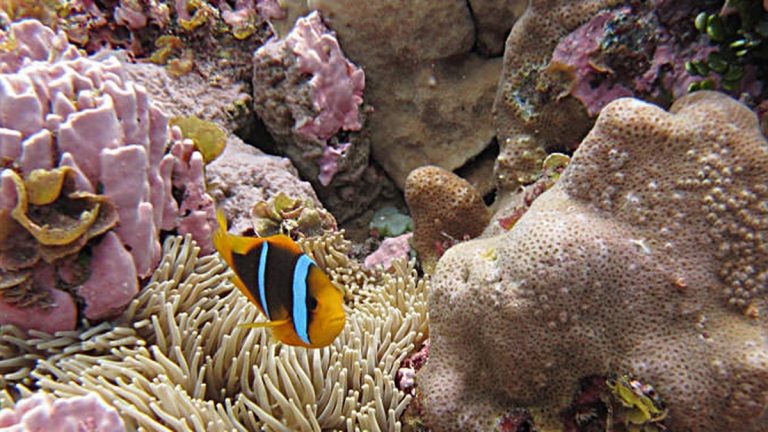
Coral richness includes branching, plating and massive growth forms. Different shapes use light and water flow in different ways. Their combined architecture creates ledges and crevices for other reef organisms.
At the Great Barrier Reef, the Reef Authority reports more than 450 hard-coral species. That one system spans latitude and shelf position, so its local reefs do not all contain the same set.
A species count also changes with sampling. Easily reached shallows have been studied longer than mesophotic slopes. Genetic research can reveal that corals once grouped under one name are separate species, while taxonomic revision can combine names that referred to the same organism.
The Atlantic has fewer species but unique reefs
The tropical western Atlantic includes the Caribbean, Florida and reefs near the coasts of Central and South America. It holds fewer reef-building coral species than the Indo-Pacific, yet many Atlantic species occur nowhere else.
Long isolation separated Atlantic coral lineages from the Indo-Pacific. The closure of the Central American Seaway also changed currents and marine connections millions of years ago. Extinction and environmental history reduced diversity without eliminating the ecological importance of remaining reefs.
Atlantic reefs support fisheries, protect coastlines and provide habitat for distinctive communities. Lower species richness does not mean lower value. A small species pool can make the loss of one major reef builder especially consequential because few species perform the same structural role.
Comparisons must also distinguish warm-water reef builders from deep-sea corals. Cold-water species occur in every ocean, including the Atlantic. Their distribution follows seafloor topography and food-bearing currents rather than tropical sunlight.
Counting corals is harder than counting reefs
Coral diversity can mean species richness, genetic diversity or variety of growth forms. A location with many species may have low living cover after a disturbance. Another site may have high cover dominated by only a few species.
Individual coral colonies are also difficult to count across a whole ocean. Some spread clonally and may consist of genetically identical patches. Others form dense fields at depth where mapping remains incomplete.
The IUCN global reassessment covered 892 warm-water reef-building coral species. Cold-water corals are much less completely assessed, with thousands of known species and many habitats still poorly explored.
High diversity does not guarantee safety
A species-rich region can sometimes retain more functions after local loss because multiple organisms perform similar roles. Diversity cannot protect corals from unlimited heat. Marine heat waves affect broad areas and repeated bleaching can reduce both sensitive species and the framework they build.
Pollution, sediment and destructive fishing add local pressure. A reef closer to a population center may face a different risk profile from a remote atoll. Conservation plans therefore need regional data rather than assuming every Pacific reef shares the same condition.
The IUCN climate brief describes reefs as globally threatened despite their exceptional biodiversity. Forty-four percent of warm-water reef-building coral species were estimated to be threatened in the later Red List reassessment.
The Pacific remains the answer to which ocean has the most corals by species. Within that ocean, the western tropical region holds the peak. The number is a biological inheritance, while its future depends on water quality, habitat protection and the pace of ocean warming.
Currents spread larvae without erasing differences
Coral larvae drift for a limited period after spawning. Pacific currents can move some across islands and shelf systems, allowing a species to occupy a wide range. Larvae still need suitable temperature, depth and substrate when they are ready to settle.
Larval connectivity is uneven. Eddies can retain offspring near a parent reef, while a strong current carries others farther away. Island gaps and deep channels filter movement, creating genetically distinct populations inside a species with a broad map range.
Species also differ in reproductive timing and larval duration. A current that connects two reefs for one coral may fail to connect them for another. Models combine ocean circulation with biological traits, then genetic samples test whether the predicted pathways appear in living populations.
The result is a regional network with both exchange and isolation. Exchange can support recovery after local damage. Isolation can produce unique diversity, but it may leave a population dependent on its own surviving adults.
Field surveys protect a moving baseline
Researchers record species along fixed transects, photograph colonies and collect small samples when identification requires skeletal or genetic evidence. Reference collections preserve material that can be checked after names change.
Remote islands and deeper slopes receive less sampling than reefs near established research stations. An apparent blank on a diversity map may represent missing effort. Survey design therefore reports where observers looked, not only what they found.
Repeated inventories distinguish geographic richness from current condition. A reef can remain inside a species’ historical range after its local colony has disappeared. Temperature records and bleaching observations add the environmental context behind a loss.
Conservation priorities use both richness and uniqueness. A site with many species may protect broad diversity, while a less rich island may contain an endemic lineage found nowhere else. The Pacific’s lead in total coral species does not reduce the importance of smaller Atlantic or Indian Ocean communities.
Species totals change as evidence improves
Identification effort also changes the ranking at its margins. Molecular methods uncover species that look almost identical, while revision can merge old names. Broad conclusions about the Pacific diversity center remain strong, but an exact species total is a scientific snapshot rather than a permanent number.
Open databases and shared reference collections make records easier to compare across countries. Location data still require care when a threatened species could attract collection. Data quality depends on preserving evidence without exposing vulnerable colonies to unnecessary risk. Vouchered records, clear photographs and transparent taxonomic updates let later researchers trace how each regional count was assembled. They also show why counts changed as surveys expanded, institutions compared collections and classifications were revised over time. Museum specimens preserve physical evidence for later checks.
Related reading: mesophotic coral ecosystems and artificial reefs.