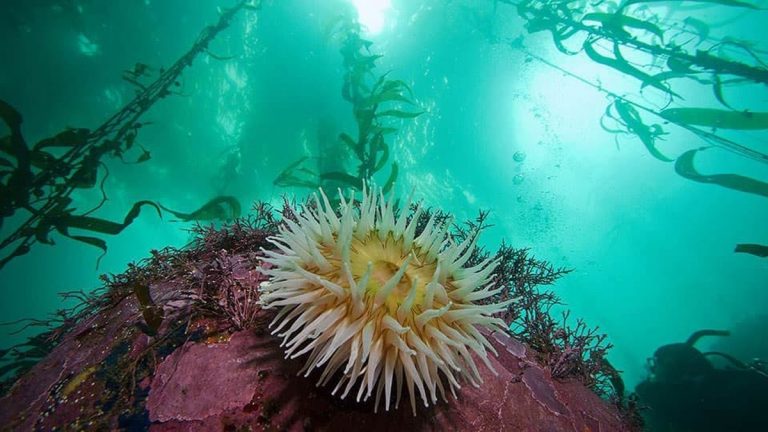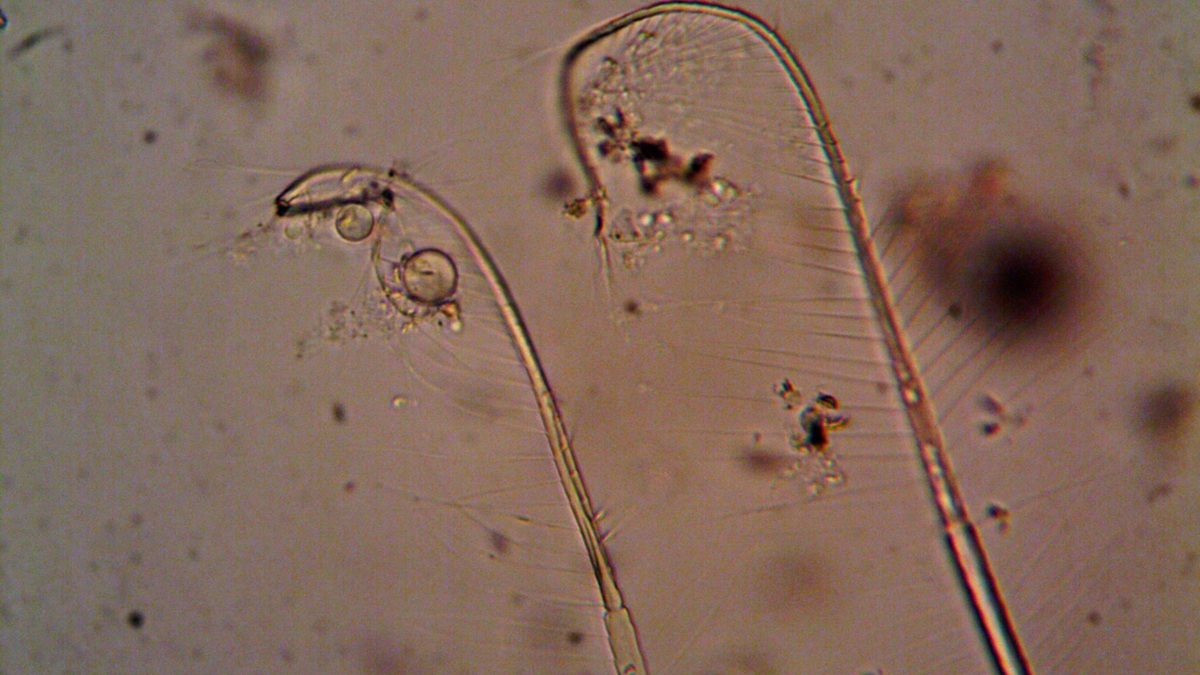
Plankton are organisms that drift with currents because they cannot consistently swim against the surrounding water. Most are microscopic, but the category also includes larger drifters such as jellyfish. The defining feature is how an organism moves through its environment, not its size or ancestry.
Some plankton remain drifters throughout life. Others belong to the plankton only as eggs or larvae before becoming fish, crabs or bottom-dwelling animals. NOAA’s introduction to plankton describes a community spanning producers, consumers and temporary life stages.
Drifting defines the planktonic way of life
The word plankton comes from a Greek term for wanderer or drifter. A planktonic organism may move with cilia, flagella or body contractions, yet its movement is too limited to overcome large-scale currents.
The boundary is functional rather than perfectly sharp. A jellyfish can pulse through the water but still travels largely where currents carry it. A strong-swimming fish belongs to the nekton, even if it is smaller than some jellyfish.
Water motion distributes plankton horizontally and vertically. Tides carry coastal species in and out of estuaries, while ocean currents connect distant regions. Turbulence can keep dense cells suspended or move them away from favorable light.
Because movement depends on both organism and water, the same weak swimmer may control position in calm conditions and lose that control during strong flow. Scientists describe the broader ecological role rather than testing every instant of motion.
Phytoplankton capture sunlight
Phytoplankton are photosynthetic microbes, including diatoms, dinoflagellates and cyanobacteria. They use light and carbon dioxide to build organic matter, supplying food to much of the open-water ecosystem.
Light confines most photosynthesis to the upper ocean and illuminated parts of lakes. Nutrients such as nitrogen and phosphorus also limit growth. Where light and nutrients coincide, populations can increase rapidly.
NOAA explains that phytoplankton form aquatic food-web foundations. Their photosynthesis also produces a large share of the oxygen generated on Earth, although much is consumed again by marine respiration and decomposition.
Diatoms build silica shells with intricate shapes. Dinoflagellates often have flagella and can adjust their position over small distances. Cyanobacteria are bacteria capable of photosynthesis and some can use nitrogen gas when dissolved nitrogen is scarce.
Phytoplankton is a functional category rather than a single branch of life. Different groups respond differently to temperature, nutrients and grazing.
Zooplankton graze and hunt
Zooplankton include animal drifters and single-celled consumers. Copepods graze phytoplankton or prey on other microbes. Krill, arrow worms and gelatinous species occupy different levels of the food web.
Many zooplankton rise toward surface water at night and descend during daylight. This diel vertical migration can reduce exposure to visual predators while allowing feeding where phytoplankton is abundant.
Fish, seabirds and baleen whales consume zooplankton. Krill support large predators in polar seas, while copepods transfer energy to young fish across many temperate ecosystems.
Grazing affects which phytoplankton dominate and how much organic material sinks. Zooplankton excretion returns dissolved nutrients to the water, where producers can use them again.
Some animals are plankton only when young
Meroplankton spend part of their life cycle drifting. Eggs and larvae of fish, sea stars, crabs, mollusks and many worms travel in the water before settling or developing into stronger swimmers.
Permanent plankton are called holoplankton. Copepods and many gelatinous animals remain planktonic as adults. The distinction concerns life history rather than evolutionary relationship.
A drifting larva can disperse beyond its parents’ habitat, helping populations colonize new sites. Currents may also carry larvae away from suitable settlement ground, making timing and behavior important.
Larvae often look unlike adults and feed differently. Identifying them can require microscopy, developmental knowledge or DNA methods. Their abundance offers clues about reproductive timing and future recruitment.
Temporary plankton connect seabed and open water. A coral or oyster fixed in place as an adult can send offspring through currents before the next generation settles.
Scientists classify plankton by size
Size classes help researchers choose sampling methods. Picoplankton and nanoplankton can pass through nets designed for larger organisms, while broad plankton nets may undersample fragile jelly forms that break apart.
Microscopes, imaging systems and flow cytometers count cells at small scales. Nets collect mesozooplankton such as copepods and acoustic instruments detect dense layers of larger animals.
Satellites estimate surface chlorophyll over wide ocean areas, revealing blooms and seasonal patterns. They cannot identify every species or see deeply, so ships and autonomous instruments remain essential.
NOAA’s World Ocean Database includes plankton observations alongside physical and chemical profiles. Pairing biology with temperature and nutrients helps explain why a community changed.
Plankton move carbon through the ocean
Phytoplankton fix carbon near the sunlit surface. Grazers consume part of that production, while dead cells, fecal pellets and aggregates sink. This transfer is part of the biological carbon pump.
Most sinking material is eaten or decomposed before reaching the deep sea, returning carbon dioxide and nutrients to water. A smaller fraction travels far enough to remain isolated from the atmosphere for longer periods.
Vertical migration also transports carbon. Zooplankton feed near the surface and respire or release waste at depth. The amount varies with species, food webs and ocean conditions.
Changes in plankton composition can alter sinking speed. Large mineralized cells and compact pellets behave differently from tiny cells recycled near the surface, so total phytoplankton growth alone does not determine export.
Blooms can feed ecosystems or cause harm
A bloom is a rapid increase in a plankton population. Many blooms are normal seasonal events that feed zooplankton and fish. Satellite images often reveal them as broad changes in ocean color.
Some algae produce toxins or reach densities that damage wildlife and threaten human health. Other blooms become harmful when decomposition consumes oxygen after cells die.
Excess nutrients from land can intensify coastal blooms. Temperature, water-column stability and grazing also affect growth, which means nutrients alone do not explain every event.
NOAA’s harmful algal bloom program combines monitoring, forecasts and research. Species identification matters because visual color cannot reveal whether a bloom is toxic.
Why plankton observations matter
Plankton respond quickly to temperature, nutrients and circulation. Long records can reveal changes in bloom timing, species ranges or food available to fish larvae.
A single sample captures a moving community at one place and time. Repeated sampling across depth and season separates daily patchiness from a persistent ecological shift.
Researchers increasingly combine microscopy with genetic sequencing and automated imaging. Each method has biases, so agreement among approaches provides stronger evidence than one instrument alone.
Plankton link sunlight and dissolved nutrients to nearly every level of aquatic food webs. Their small size can hide that influence, but oceans and lakes would function very differently without their production, grazing and drifting life cycles.
Freshwater plankton follow the same broad definition
Lakes and rivers contain phytoplankton, zooplankton and microbial drifters. Water fleas, rotifers and copepods graze algae and become prey for fish, while cyanobacteria can dominate under some nutrient conditions.
River plankton face downstream transport and shorter residence time. Lakes provide more opportunity for populations to build, especially when warm surface water becomes separated from cooler deep water.
The EPA’s freshwater phytoplankton indicator uses community composition and abundance as evidence about lake condition. Interpretation requires chemistry and habitat context because naturally productive lakes differ from clear, nutrient-poor ones.
Freshwater plankton reinforce the central definition: drifting is the common feature, while species and ecological effects depend on the water body. Lake monitoring tracks those communities through seasons because one sample can easily miss a brief seasonal bloom or a migration into much deeper water below during the same sampling day.
Related reading: ocean dead zones and harmful algal bloom forecasts.