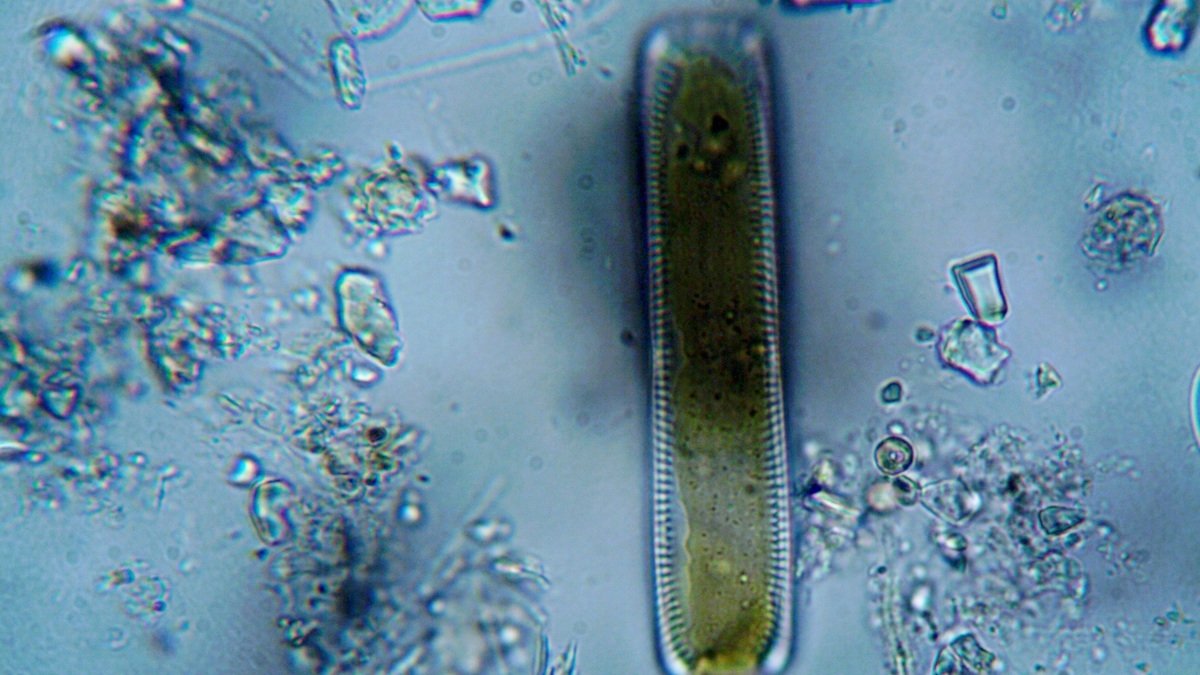
Phytoplankton are microscopic photosynthetic organisms that drift through sunlit water. They include diatoms, dinoflagellates, cyanobacteria and other groups rather than one branch of life. By converting light and carbon dioxide into organic matter, they form the productive base of most open-water food webs.
These tiny cells also generate a large share of Earth’s oxygen, although ocean organisms consume much of it again. NOAA’s phytoplankton overview explains their need for sunlight and inorganic nutrients near the ocean surface.
Photosynthesis powers aquatic food webs
Chlorophyll and accessory pigments absorb light. Cells use that energy to fix carbon dioxide into sugars and other compounds needed for growth.
Zooplankton graze phytoplankton, then fish consume those grazers. Energy continues to seabirds and marine mammals through many possible pathways.
Primary production is the creation of organic matter from inorganic carbon. Phytoplankton perform most primary production in the open ocean because rooted plants cannot live far from shallow coasts.
Production changes rapidly with daylight, nutrients and mixing. A small population can multiply into a bloom when conditions align.
Diatoms and dinoflagellates use different designs
Diatoms build cell walls from silica in two fitting halves. Many sink readily when growth slows, although chains, spines and turbulence help keep them in illuminated water.
Dinoflagellates have flagella that permit limited movement. Some photosynthesize, some eat other organisms and some combine both strategies.
Cyanobacteria are photosynthetic bacteria. Tiny oceanic forms contribute greatly in warm, nutrient-poor regions and some species can use nitrogen gas.
Coccolithophores cover themselves with calcium carbonate plates. Their blooms affect ocean color and connect biological production with carbonate chemistry.
Different pigments and nutrient requirements allow groups to occupy distinct niches. Referring to phytoplankton as “plants” is convenient but biologically incomplete.
Light confines growth to the upper water
Sunlight weakens with depth as water and particles absorb or scatter it. Photosynthesis is concentrated in the euphotic zone, where enough light remains for net growth.
Clear open-ocean water can transmit useful light deeper than a turbid estuary. Sediment runoff and dense blooms make the illuminated layer shallower.
Mixing carries cells up and down. Gentle mixing can supply nutrients without leaving cells in darkness too long, while deep winter mixing may reduce average light exposure.
Some phytoplankton adjust pigment content or position. Dinoflagellates can swim short vertical distances, but currents control their broad distribution.
Nutrients regulate blooms and communities
Nitrogen and phosphorus are required for proteins, genetic material and cellular energy. Diatoms also need dissolved silica to build their walls.
Upwelling brings nutrient-rich deep water toward the surface, supporting productive fisheries along several eastern ocean boundaries. River discharge supplies coastal nutrients from natural weathering and human activity.
In much of the ocean, iron limits growth despite abundant nitrate. Windblown dust and mixing can supply iron in forms that cells use.
The nutrient in shortest effective supply limits production, but limitation can shift with season and species. Adding one nutrient may favor a different community rather than simply increasing every cell equally.
NASA Earth Observatory tracks global chlorophyll patterns from satellites, revealing high productivity near coasts and changing seasonal blooms.
Phytoplankton produce and consume oxygen
Photosynthesis releases oxygen during daylight. Respiration consumes oxygen at all times and bacteria use more as dead cells decompose.
Globally, marine photosynthesis contributes roughly half of oxygen production. The oxygen in the atmosphere is a long-term reservoir, so daily breathing does not depend on one local bloom.
A bloom can raise oxygen near the surface while ultimately contributing to low oxygen at depth. Organic matter sinks and decomposition proceeds below the layer where photosynthesis can replace oxygen.
The balance between production and respiration explains why productive water can still develop a dead zone. Physical stratification slows replenishment from the atmosphere.
Cells move carbon toward the deep sea
Phytoplankton absorb carbon dioxide and incorporate carbon into tissue. Grazers recycle much of it near the surface through respiration and waste.
Dead cells, aggregates and fecal pellets sink. Part is decomposed on the way, while a smaller fraction reaches deep water or sediment.
This biological carbon pump helps maintain the vertical carbon gradient in the ocean. Its strength depends on food-web structure, particle size and water movement.
NOAA’s Pacific Marine Environmental Laboratory studies the ocean carbon cycle, including exchanges among atmosphere, surface water and the deep ocean.
More phytoplankton does not automatically mean durable carbon storage. If nearly all new material is respired near the surface, carbon dioxide soon returns to the water and atmosphere.
Blooms can support fisheries or cause harm
Seasonal blooms feed zooplankton and young fish. Timing matters because larvae need prey when they hatch.
Some species produce toxins that accumulate in shellfish or move through food webs. Others damage gills or create oxygen loss without toxins.
Harmful algal blooms depend on species identity, abundance and exposure. Water color alone cannot determine risk and clear water is not a guarantee that toxins are absent.
NOAA’s harmful algal bloom resources combine forecasts, monitoring and health information. Local agencies decide closures using samples and toxin tests.
Satellites and water samples see different scales
Ocean-color satellites estimate chlorophyll by measuring reflected light. They cover enormous areas repeatedly, which makes them ideal for mapping surface blooms.
Clouds, sea ice and deep water limit the view. Satellite color cannot always distinguish species and colored dissolved material can complicate coastal estimates.
Ships collect water for microscopes, pigments, nutrients and genetic analysis. Automated instruments follow rapid changes between cruises.
Flow cytometry counts tiny cells, while imaging systems identify larger forms. Combining methods provides stronger evidence than treating one chlorophyll map as a complete community survey.
Climate change alters several controls at once
Warming strengthens stratification in many regions, reducing the upward supply of nutrients. It can also extend growing seasons or favor small cells adapted to stable surface water.
Changing winds and currents affect upwelling. Melting ice changes light and salinity in polar seas, while ocean acidification changes carbonate chemistry.
Species respond differently, so global totals can hide regional gains and losses. Food webs may change even where total chlorophyll remains similar.
Long records of phytoplankton communities help reveal whether bloom timing, cell size or dominant groups are shifting. Their microscopic scale makes them sensitive indicators of ocean change and indispensable engines of aquatic life.
Food webs depend on timing as well as abundance
A large bloom does not automatically benefit every consumer. Zooplankton must be present when edible cells become abundant and young fish must hatch while suitable prey are available. If warming changes bloom timing without shifting animal life cycles at the same rate, food can peak before or after the organisms that need it.
Cell size and chemistry also influence feeding. Some grazers capture small cells efficiently, while others depend on larger diatoms or chains. Protective structures and toxins can reduce consumption. A chlorophyll measurement therefore estimates photosynthetic biomass but does not fully describe how much nutrition will move into a particular food web.
Grazing returns part of the captured material to surface waters through waste and respiration. The rest supports growth or sinks in particles. Predators then transfer that energy through fish, seabirds and marine mammals. These pathways connect microscopic production with the animals people observe and harvest.
Scientists compare cell counts, pigments and genetic records with zooplankton and fish data to study food-web timing. Long-term sampling is especially valuable because a single bloom may reflect weather rather than a lasting trend. Tracking both producers and consumers reveals whether an ecosystem is maintaining productive seasonal connections.
Coastal observatories add frequent measurements between research cruises. Moorings can record light, temperature and fluorescence through storms, while shore programs collect samples for species identification. Together, these records connect rapid local events with broader satellite patterns and reveal how long a change in primary production persists.
Related reading: ocean dead zones and harmful algal bloom forecasts.