Herman Melville’s white whale was fictional, but Moby-Dick drew from real whaling history. A famous white sperm whale called Mocha Dick supplied part of the name and legend, while the 1820 sinking of the whaleship Essex supplied a documented example of a sperm whale attacking a ship.
Melville also brought firsthand experience from a whaling voyage. NOAA’s account of the real stories behind Moby-Dick treats the novel as a creative combination rather than a transcript of one event.
Mocha Dick inspired the white whale
Mocha Dick was a large, unusually pale sperm whale associated with waters near Mocha Island off Chile. Sailors’ stories made the whale famous before Melville published his novel. The geographic name followed a common practice of attaching a place to a well-known whale.
Writer Jeremiah N. Reynolds published “Mocha Dick: Or The White Whale of the Pacific” in The Knickerbocker in 1839. His account described a scarred whale that had survived repeated encounters with whalers and carried old harpoons.
The Smithsonian’s history of Mocha Dick explains how the story circulated in the whaling era. Some dramatic totals in later retellings rest on nineteenth-century lore, so they should be read as part of the legend rather than a modern population record.
Melville’s Moby Dick shares the whiteness, sperm-whale identity and reputation for resisting hunters. The novel changes the animal into a symbolic force pursued across oceans by Captain Ahab.
The Essex supplied the shipwreck precedent
On November 20, 1820, a large sperm whale struck the Nantucket whaleship Essex in the Pacific. The damaged wooden vessel sank, leaving the crew in small whaleboats far from the South American coast.
First mate Owen Chase published an account of the disaster in 1821. Melville encountered the story before writing Moby-Dick and the episode offered a real case in which a whale caused the loss of a whaling ship.
The Essex sinking and Mocha Dick contributed different elements. One was a documented maritime disaster involving a ship; the other was a celebrated white whale whose story accumulated through print and seafarers’ reports.
The Nantucket Historical Association preserves an account of Nantucket and the Essex story, including the whaling community from which the ship departed. The human aftermath was far harsher than the fictional Pequod’s brief final destruction because survivors spent months trying to reach land.
Separating the sources prevents a common simplification. No historical record describes one white whale named Moby Dick sinking the Essex and then becoming Melville’s character.
Melville knew whaling from the deck
Melville sailed aboard the whaler Acushnet from Massachusetts in 1841. His time at sea exposed him to shipboard labor, whale processing and the social hierarchy of a commercial voyage.
The Smithsonian Institution notes that his whaleship experience supplied background for the novel published in 1851. Experience gave the technical scenes texture, while imagination determined the plot and meaning.
Melville also read widely. Natural history, voyage narratives and whaling documents appear throughout the book, sometimes as factual explanation and sometimes as material for satire or philosophy.
The result mixes recognizable work with deliberate invention. Sail handling and cutting a whale into blubber coexist with prophecy, symbolism and an obsessively personal hunt that no commercial captain could justify as routine business.
Sperm whales could damage wooden ships
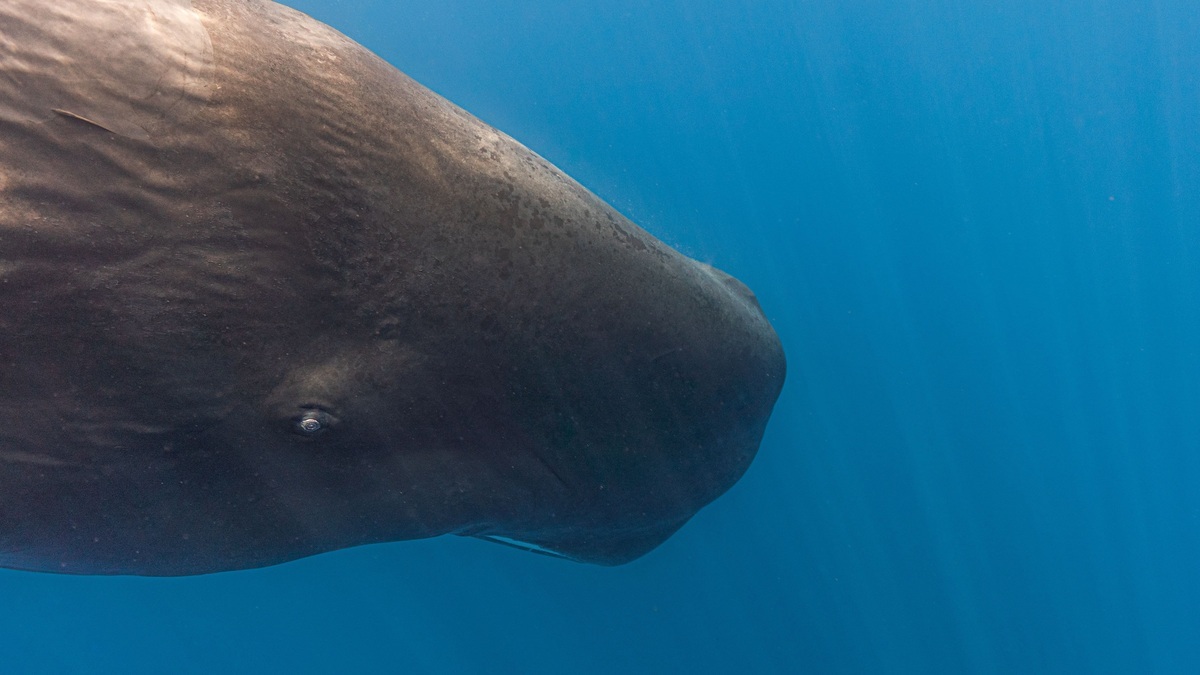
Adult male sperm whales can reach great size and have massive heads. A collision with a nineteenth-century wooden hull could cause serious damage, whether contact was intentional or accidental.
Historical reports of whales striking boats exist, yet the events were rare compared with the enormous number of whaling encounters. Whalers usually attacked first by approaching closely in small boats and driving harpoons into the animal.
Modern observations do not support the novel’s picture of a calculating whale pursuing revenge. Sperm whale behavior includes social communication, deep diving and defensive responses, while assigning Ahab-like intention to an animal exceeds the evidence.
NOAA Fisheries describes sperm whales as deep-diving toothed whales that feed mainly on squid. Males can travel to high latitudes, whereas females and young generally remain in warmer waters.
Whiteness made the legend memorable
Mocha Dick’s pale appearance separated him from the dark gray color typical of sperm whales. Historical descriptions cannot establish the exact biological cause from a distance of nearly two centuries.
Albinism reduces melanin, while leucism produces partial or extensive loss of pigmentation through a different mechanism. Scarring can also create pale areas. Calling the animal albino without diagnostic evidence goes farther than the record allows.
For Melville, whiteness carries meanings far beyond coloration. The book devotes an entire chapter to its beauty, terror and ambiguity. The fictional whale’s appearance therefore functions as literary architecture as well as a borrowed physical trait.
The fictional whale differs from a real animal
Moby Dick appears almost supernaturally persistent. He is described through the fears and stories of whalers before the final encounter, so the reader meets a reputation as much as an animal.
Mocha Dick belonged to a dangerous historical relationship in which people hunted whales for oil. Reports of resistance came from the hunters’ perspective and often celebrated risk, violence and masculine endurance.
Modern science sees sperm whales as long-lived marine mammals with complex social lives and specialized echolocation. Females and young form social units, while mature males range more widely. The fictional antagonist cannot serve as a biological profile.
The distance between literature and zoology is useful. It shows how a real species can become a cultural symbol while retaining a natural history independent of the story.
Why historians describe several inspirations
Writers rarely build a major novel from one document. Melville had Mocha Dick’s legend, the Essex narrative and his own voyage, plus a library of maritime and religious material.
Scholars can demonstrate that these sources were available and that clear parallels exist. They cannot reconstruct every private step by which Melville combined them or assign an exact percentage of influence.
The most accurate answer to the title is therefore qualified: Moby Dick was based partly on real whales and real events. Mocha Dick helped inspire the white whale and the Essex disaster helped establish that a sperm whale could sink a ship.
Melville transformed those materials into a character whose role exceeds the historical record. The real story is richer when each strand remains visible: an exploited species, a maritime catastrophe and a novel that rearranged both into enduring fiction.
The novel changed how readers remember whaling
Moby-Dick received mixed attention in Melville’s lifetime and later became central to American literature. Its survival in classrooms and popular culture kept the white whale more familiar than the historical animals and crews behind it.
Adaptations often emphasize Ahab’s pursuit and the final wreck, compressing the book’s long discussions of labor, natural history and belief. The cultural version can therefore look more like an adventure than Melville’s sprawling original.
Recovering the historical whaling context changes the moral frame. People launched the violence, whales were commercial targets and dramatic resistance entered print because the industry regarded it as exceptional.
The enduring question asks how Melville combined records and experience until a fictional animal became more famous than its several real-world sources. Mocha Dick, the Essex crew and Melville’s shipmates entered that process through different routes. Reading their histories beside the novel preserves the boundary between documented suffering and literary invention, while showing why the white whale could feel credible to readers familiar with nineteenth-century whaling. The comparison also keeps the real sperm whale visible behind a character whose humanlike motives belong entirely to Melville’s deliberate literary fiction rather than documented animal behavior.
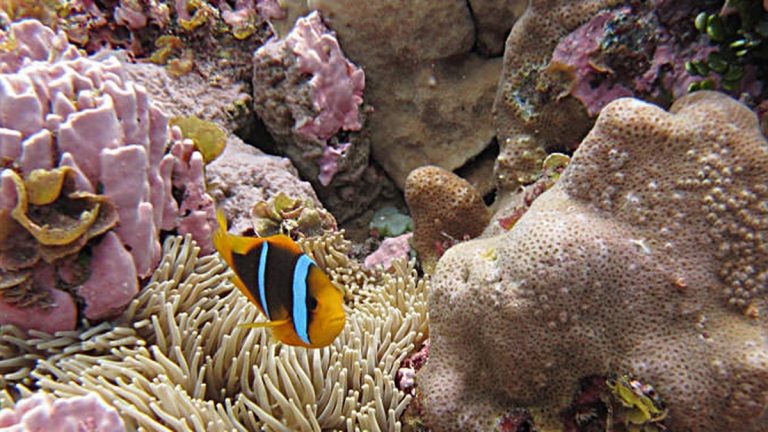
Related reading: animals that live on coral reefs and marine biogeography.