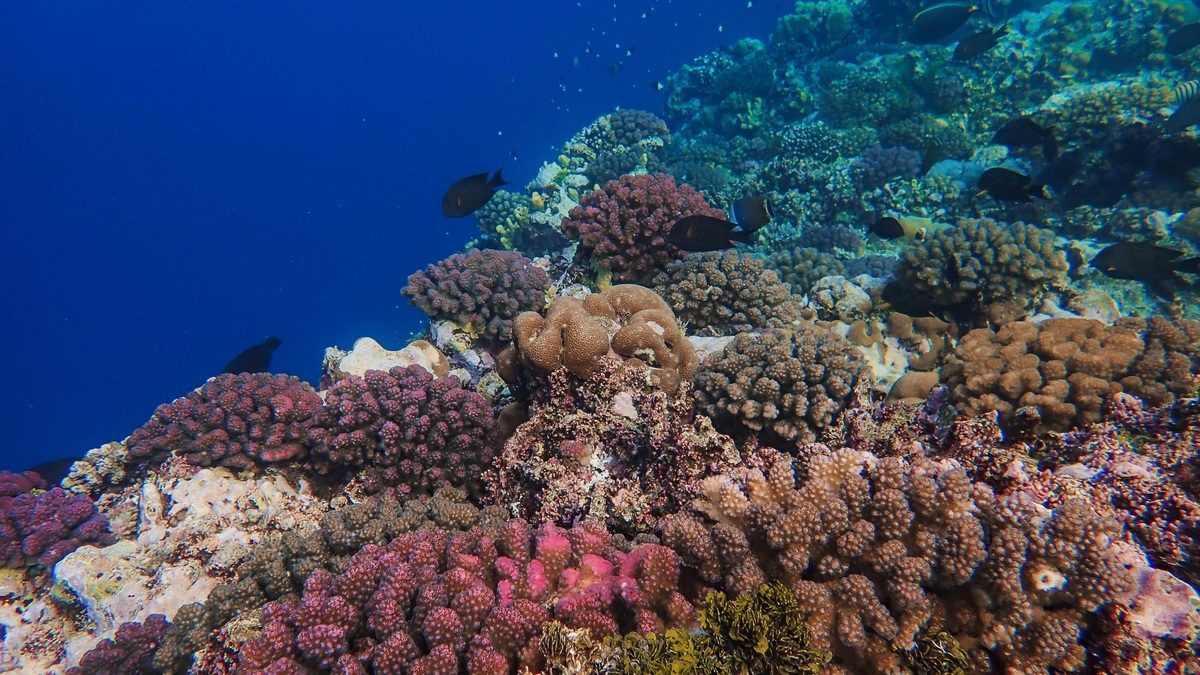
Coral reefs occupy a small fraction of the seafloor, yet the activity around them reaches fishing boats, coastal businesses and homes exposed to waves. Their value comes from several real services rather than a single price tag. A living reef produces habitat for harvestable species, draws visitors and weakens incoming wave energy before it reaches shore.
The NOAA overview says approximately half of federally managed U.S. fisheries depend on coral reefs or related habitats during part of their life cycles. NOAA Fisheries estimates the commercial value of U.S. reef fisheries at more than $100 million. Visitor spending adds billions of dollars to local economies near reefs.
Economists describe these benefits as ecosystem services. Some have a visible market price, such as a dive trip. Others appear as avoided losses, including the flood damage prevented when a reef takes energy out of storm waves. Economic valuation helps communities compare those benefits with the cost of conservation and restoration.
Reefs support fishing from nursery to market
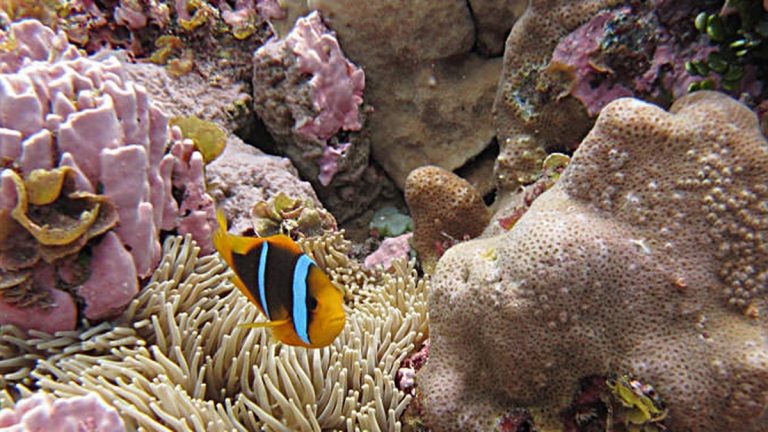
A reef is both a physical structure and a busy food web. Crevices give small fish places to hide, while nearby seagrass beds and mangroves can serve as nurseries. Animals move among those habitats as they grow. A fish caught offshore may therefore owe part of its life history to a reef it no longer occupies.
Commercial fisheries convert that ecological support into dockside revenue and work in processing, transport and sales. Recreational fishing supports guides, marinas and equipment businesses. Subsistence fishing has another kind of value because households consume the catch directly instead of buying an equivalent amount of food.
NOAA Fisheries identifies shallow reefs as habitat for thousands of marine creatures, including species people eat. The benefit depends on ecological function, not merely coral cover. A reef with damaged structure or an unbalanced food web may support fewer fish even when some coral remains.
Tourism spreads reef income through a community
Clear water and abundant wildlife attract snorkelers, divers and boat passengers. Their payments reach tour operators first, then spread to hotels, restaurants, transport providers and other local businesses. Reef tourism can therefore support people who never enter the water.
The size of that contribution varies sharply by place. Accessibility, visitor numbers and the share of spending retained locally all affect the result. Counting ticket sales alone misses wages and purchases elsewhere in the supply chain, while broad regional totals can mistakenly include activity that would have happened without the reef.
Researchers use visitor surveys, business records and travel-cost methods to estimate recreation value. NOAA’s coral reef valuation program applies these tools across U.S. reef jurisdictions. It treats cultural heritage and sense of place as benefits too, although they are harder to express in dollars.
Tourism also depends on limits. Crowded anchorages, careless contact and polluted runoff can erode the natural asset that draws visitors. Well-designed mooring systems, waste controls and visitor rules protect the reef while allowing continued use.
Living reefs reduce wave energy at the coast
Waves begin losing energy when they break across a reef crest. The rough reef surface creates more friction as water travels toward land. Lagoons and reef flats provide additional distance over which waves can weaken before reaching beaches or buildings.
Coastal protection has economic value because lower waves can mean less flooding and erosion. The benefit is usually estimated as avoided damage under a set of storm and sea-level conditions. It cannot guarantee that a shoreline will remain dry, especially during an extreme event, but it changes the hazard people face.
Coral growth can maintain complex, elevated structures, while physical breakage and coral death can flatten them. A lower, smoother reef allows more energy to pass across it. Restoration projects sometimes focus on places where ecological recovery and risk reduction can reinforce one another.
The Great Barrier Reef Marine Park Authority describes reef biodiversity as the basis of a productive environment that supports human use. That connection explains why economic protection cannot be separated from the condition of the wider ecosystem.
Economic value is broader than annual revenue
Market activity captures only part of a reef’s contribution. Researchers may also estimate the value people place on knowing a reef will remain available for future generations. Cultural relationships with sea country, traditional practices and community identity resist simple accounting, yet excluding them would make the assessment incomplete.
Different methods answer different questions. An economic-impact study tracks spending and jobs within a region. A benefit study asks how much better off people are because the reef exists. An avoided-loss analysis estimates damage that natural protection prevents. Adding results from incompatible methods can double count the same benefit.
Values are also tied to location and condition. A remote reef with little tourism may still have great ecological or cultural importance. A heavily visited reef may generate large revenue while facing intense pressure. The economic case for conservation becomes strongest when the analysis explains exactly whose benefits are counted and over what period.
Damage creates costs that can outlast the event
Heat stress, pollution, disease and destructive use can reduce living coral or alter the community around it. The IUCN assessment links reef decline to risks for food, flood protection and tourism. A biological loss can therefore appear later as lower catches, canceled trips or higher exposure to waves.
Recovery may take years because reef-building corals grow slowly. Businesses can lose income during that interval and restoration requires money without promising a full return to previous conditions. Prevention often protects a wider set of benefits than a repair project can recreate.
Economic estimates should not imply that a reef can be replaced by paying an equivalent sum. They provide a way to make consequences visible in decisions that already compare costs. The reef itself remains a living system whose fisheries, shoreline protection and community meaning depend on its continued function.
Research and new products add another layer
Reef organisms produce chemicals for defense, competition and communication. Scientists study some of those compounds as starting points for biomedical research. A promising molecule still requires extensive testing before it becomes a safe treatment, so the economic value cannot be counted as guaranteed drug revenue.
The opportunity is better described as preserving a library of biological chemistry. Losing a species can also remove reef-derived compounds before researchers understand them. Research stations, monitoring projects and restoration nurseries support skilled work while expanding knowledge of the ecosystem.
Education has value as well. Reefs give students and scientists places to study ecology, evolution, geology and climate records. Those activities may generate travel and employment, but their lasting contribution includes methods and information used far beyond the original field site.
Benefits and costs are unevenly distributed
Reef income does not automatically remain in the community beside the water. A resort owned elsewhere may send much of its profit away, while local workers receive wages and local government bears infrastructure costs. Economists call the share kept nearby local retention.
Access rules can change who receives the benefit. A protected area may improve fish abundance over time while restricting a fisher’s current grounds. Tourism can create new work yet increase housing pressure or crowd culturally important places. Measuring distributional effects shows who gains, who pays and when.
Good valuation begins with a baseline scenario, the conditions expected without the proposed action. It then compares the same period, population and geographic area. This prevents ordinary economic growth or unrelated tourism from being credited to the reef project.
Policymakers sometimes describe healthy ecosystems as natural capital. The term highlights an asset that produces benefits over time, but a reef is not a bank account with perfectly interchangeable units. Its location, species and cultural relationships make every system distinctive.
Related reading: mesophotic coral ecosystems and artificial reefs.