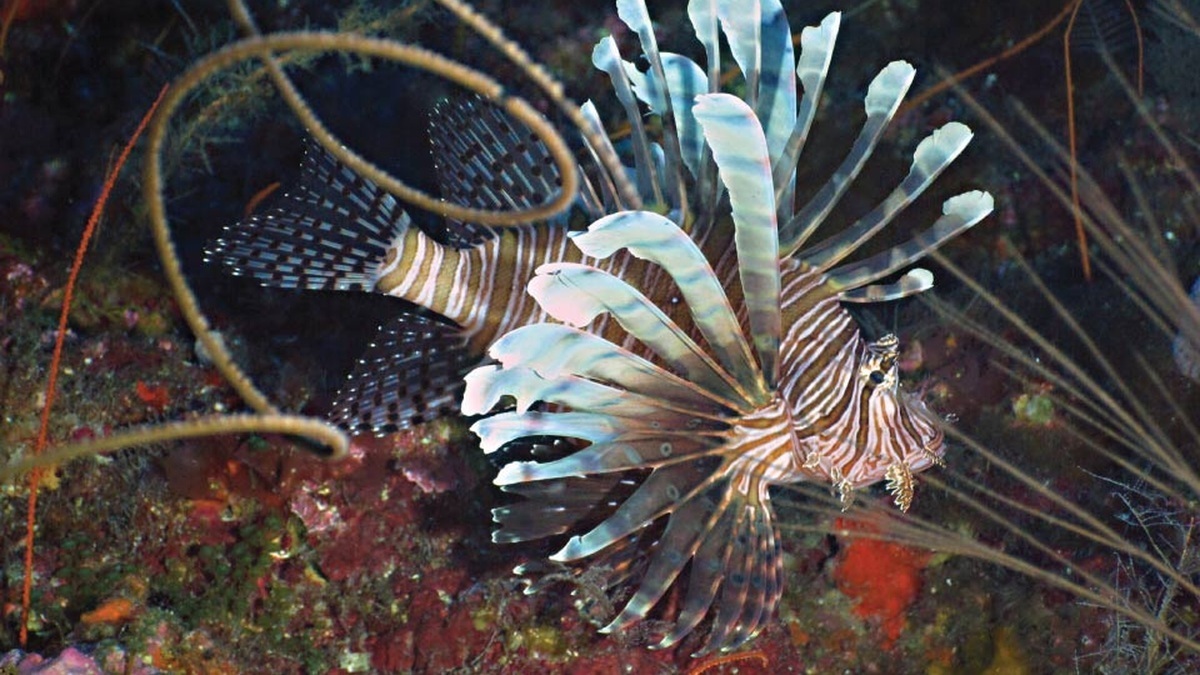
Lionfish threaten Atlantic reefs because they are efficient Indo-Pacific predators living far outside their native food webs. They eat young fish and crustaceans, reproduce frequently and occupy habitats from shallow reefs to deep hard bottom. Local predators and parasites have not kept their numbers low enough to prevent ecological damage.
The invasion spans the western Atlantic, Caribbean and Gulf. NOAA’s lionfish threat overview explains that established populations cannot be eliminated with conventional methods, making sustained local control the realistic goal.
Aquarium releases started a marine invasion
Red lionfish and devil firefish are native to the Indo-Pacific. They appeared off Florida during the 1980s and later expanded along the southeastern United States and throughout the Caribbean.
Genetic and historical evidence points to the aquarium trade as the introduction route. Exact release events are unknown, so claims about one storm or one aquarium exceed the evidence.
Egg masses and larvae drift with currents, allowing offspring to reach distant reefs. Warm water sets the main geographic boundary, while seasonal currents can carry juveniles farther north.
NOAA Fisheries summarizes the history of invasive lionfish and describes repeated aquarium releases as plausible. Prevention now focuses on avoiding new introductions and limiting further spread.
Lionfish consume many native species
Lionfish approach prey slowly and use broad pectoral fins to corner small animals. A rapid suction strike pulls fish or crustaceans into the mouth.
They are generalist carnivores rather than specialists tied to one prey. Diets include juvenile reef fish and species important to commercial fisheries.
Heavy predation can reduce recruitment, the arrival of young fish into an adult population. Effects are strongest where lionfish densities remain high and native prey has limited refuge.
Native reef fish may fail to recognize lionfish as a threat quickly enough. Atlantic predators likewise do not consistently remove enough adults to control the invasion.
Food-web effects extend beyond prey counts. Removing herbivorous fish can reduce grazing that helps keep algae from occupying coral habitat.
Fast reproduction replenishes removed fish
Female lionfish can release buoyant egg masses repeatedly through much of the year in warm regions. Currents disperse the eggs and larvae across management boundaries.
Young fish mature quickly, so a reef cleared once can be recolonized. Nearby deep habitat may supply adults or larvae that divers do not reach.
NOAA’s coastal-science program reports frequent lionfish spawning and broad depth use. Those traits explain why eradication across an ocean basin is unrealistic.
Population growth does not proceed at the same rate everywhere. Temperature, food and removal pressure influence local density.
Venomous spines discourage handling
Lionfish have venom glands associated with dorsal, pelvic and anal spines. A puncture can cause intense pain and other symptoms.
The venom is defensive. The meat is not venomous when the spines are removed correctly, although normal seafood safety and local contaminant advice still apply.
Harvesters need training, puncture-resistant containers and careful handling. Cutting spines on a moving boat creates risk even for experienced divers.
Lionfish venom also discourages some potential predators. It does not make lionfish invulnerable, but predation has not controlled Atlantic populations.
Deep reefs provide a difficult refuge
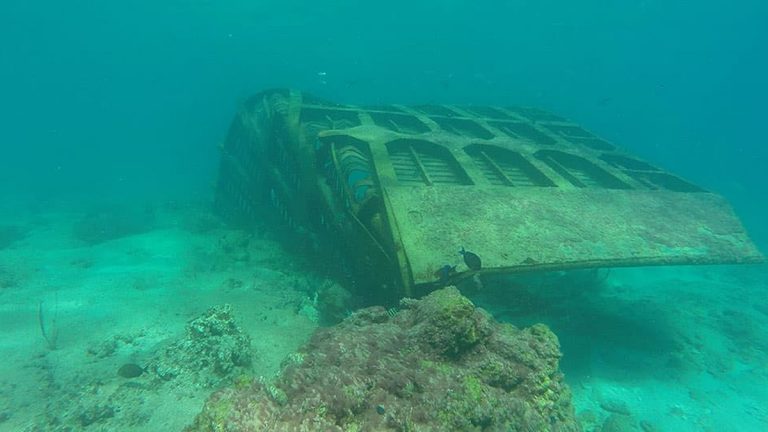
Lionfish occupy coral reefs, wrecks, seagrass edges and artificial structures. Observations extend well below ordinary recreational diving depths.
Deep populations complicate removal because divers can repeatedly clear a shallow site while fish remain beyond reach. Larvae and mobile adults reconnect depths.
Remotely operated vehicles help scientists map deep lionfish habitat. Specialized traps are being developed, but they must avoid catching native species and damaging bottom habitat.
NOAA Ocean Exploration has documented lionfish at 103 meters off Puerto Rico, showing that visible shallow populations are only part of the invasion.
Local removals can protect priority reefs
Diver removals reduce lionfish density at accessible sites. Repeated effort can protect nursery habitat or tourism reefs even though larvae later return.
Derbies organize harvest and public education. Commercial markets create an incentive for continued removal, provided handling and seafood testing requirements are met.
Managers monitor both lionfish and native prey to determine whether control produces ecological benefit. Counting removed fish alone does not reveal reef recovery.
Targeted control works best where effort can be sustained. A one-day event may create a short reduction without changing long-term density.
The National Invasive Species Information Center provides broader lionfish management resources and emphasizes coordination across jurisdictions.
Eating lionfish helps but cannot solve everything
Lionfish meat can support a fishery and transfer removal costs into a market. Restaurants and consumers can create demand for skilled harvesters.
Fishing pressure is concentrated near ports and diveable reefs. Remote and deep populations remain sources of recruits, limiting the geographic reach of a food market.
Seafood programs must consider ciguatera risk in regions where reef fish can accumulate the toxin. Safe consumption guidance depends on local monitoring rather than the species alone.
Market growth also requires stable processing and supply. An invasive-species fishery aims to reduce abundance, so success should not depend on maintaining a large population forever.
Atlantic ecosystems remain vulnerable
Lionfish add predation to reefs already affected by heat, disease, pollution and fishing. Their impact can interact with those stresses without replacing them as explanations for reef decline.
Eradication becomes unlikely after an established marine invader spreads across connected seas. Prevention is therefore more powerful than control for future aquarium species.
Owners should never release marine organisms. Surrender programs and responsible retailers provide alternatives when an aquarium fish can no longer be kept.
The threat from invasive lionfish comes from a combination of broad diet, frequent reproduction and difficult-to-reach habitat. Persistent local removal can defend valuable reefs, while regional coordination limits the chance that isolated gains disappear.
Early detection offers the strongest advantage
A marine invasion becomes harder to contain after adults reproduce across a broad connected region. Currents can carry larvae beyond the reef where their parents live, so visible fish represent only part of the population. Reporting a new sighting quickly gives managers a chance to confirm the species and remove it before repeated spawning.
Survey design affects what managers find. Divers can search complex shallow reefs in detail, while traps, cameras and remotely operated vehicles extend observations into deeper water. Repeating the same survey method over time helps distinguish a real population change from differences in effort or visibility.
Accurate identification also prevents needless removal of native species. Lionfish have conspicuous fanlike fins and venomous spines, but photographs and location records still improve confirmation. Public reporting programs work best when they give clear handling advice and route observations to trained regional staff.
The lesson extends beyond lionfish. Marine invasion prevention depends on responsible aquarium ownership, careful shipping practices and surveillance near likely introduction points. Once establishment occurs, managers can protect selected reefs through sustained removal, yet early action remains far less costly than controlling an invader across an ocean basin.
Regional data make local reports more useful. A confirmed record can be compared with current boundaries, water temperature and nearby habitat to estimate whether expansion is likely. Managers can alert divers, ports and protected areas along the probable route. Standardized records also show whether detections reflect a growing population or simply more observers. This coordinated surveillance does not guarantee eradication, but it shortens the interval between arrival and response. It preserves evidence about the invasion front and gives vulnerable reefs time to organize sustained removal before local densities rise sharply. Sharing depth, habitat and survey effort makes records comparable across programs. Those details help teams decide where another search is most likely to confirm an isolated sighting or locate a newly established group.
Related reading: animals that live on coral reefs and marine biogeography.