Water

RSS Feed

Water science news, explainers, and statistics covering freshwater, hydrology, lakes, rivers, groundwater, ice, and Earth’s connected water systems.

Contrasting_waters_in_a_brackish_estuary

Brackish vs. saline water: What is the difference?

Brackish water contains more dissolved salt than fresh water but less than typical seawater. Saline water is the broader term for water with enough dissolved salts to exceed a chosen freshwater threshold. In many groundwater classifications, brackish water is therefore one range within the saline category. The numbers depend on the field and purpose. The…

More

More in Water

Satellite_above_an_ocean_coastline

How do satellites measure ocean salinity?

Satellites measure sea-surface salinity indirectly by detecting faint microwave energy emitted by the ocean. The strength of that natural emission changes slightly with salt concentration. Radiometers record the signal, then retrieval algorithms correct for water temperature, surface roughness and other interference before converting it into a salinity estimate. The measurement covers only the ocean’s uppermost…

White_salt_deposits_beside_green_water

What is the average salinity of the ocean?

The average salinity of the open ocean is about 35, meaning roughly 35 grams of dissolved salts are present in one kilogram of seawater. This is often described as 35 parts per thousand or about 3.5 percent by mass. The value is a global reference, not a concentration found at every coast or depth. NOAA’s…

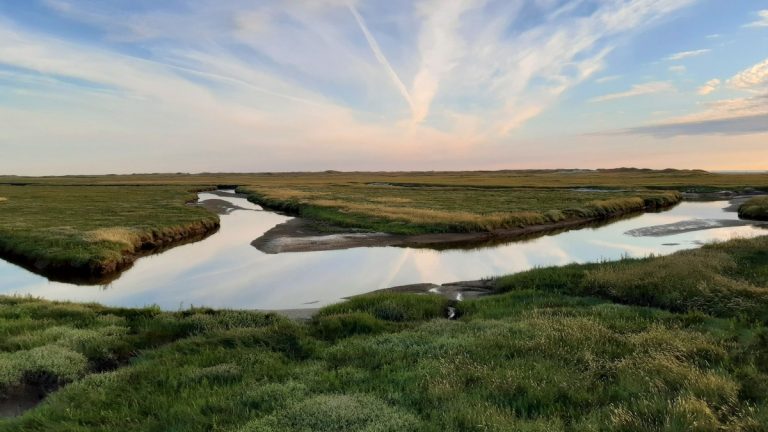
Freshwater_river_winding_through_wetland

Why are rivers not salty?

Rivers are usually fresh because rain continually supplies low-salinity water and carries dissolved minerals onward to lakes or the ocean. River water does contain salts, but most concentrations are far below the level people can taste. The ocean is much saltier because it retains many dissolved ions while water repeatedly leaves through evaporation. Fresh water…