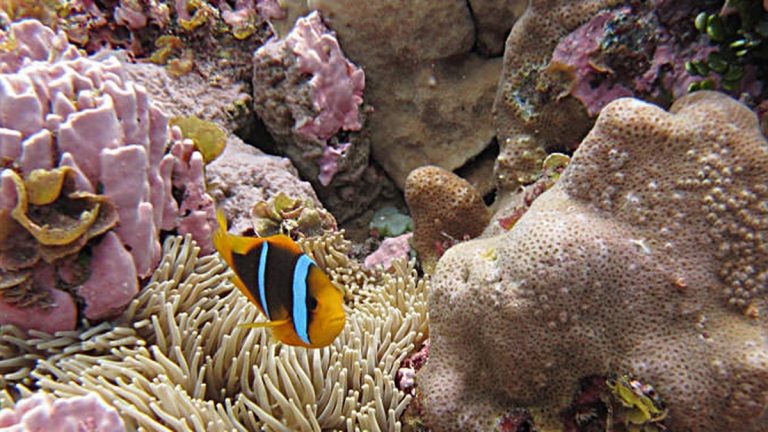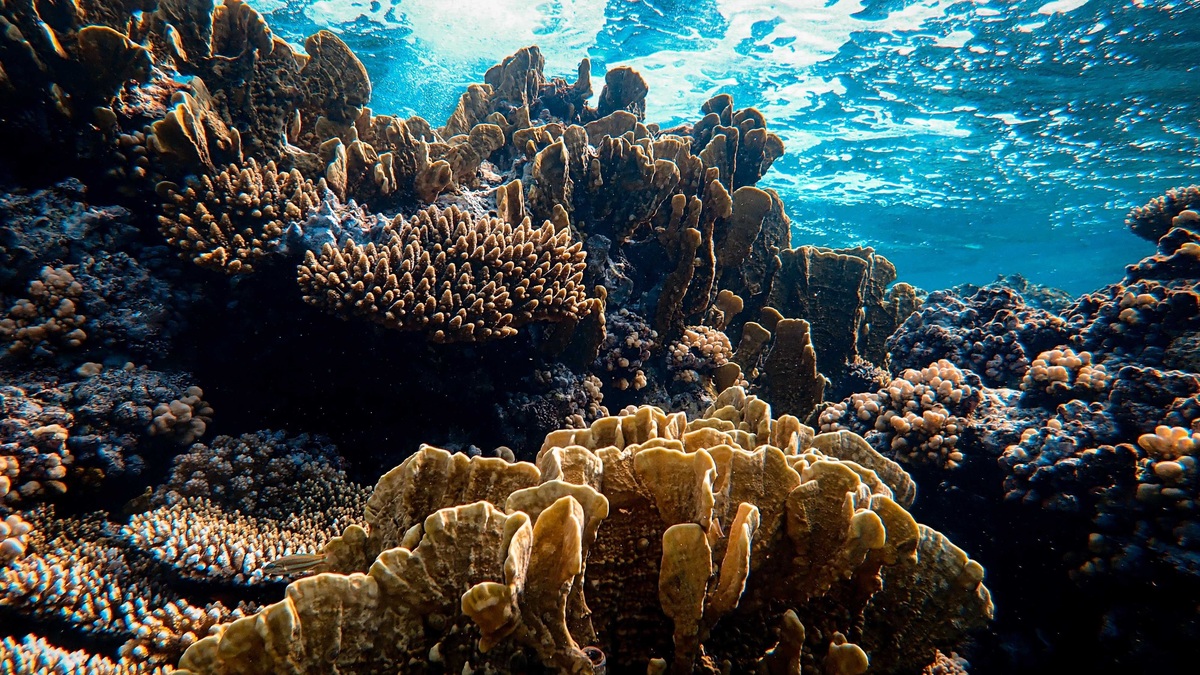
Climate change affects coral reefs through warmer water, changing ocean chemistry and shifts in the physical environment around them. Heat stress can strip corals of their symbiotic algae, while ocean acidification makes skeleton building harder. Rising seas, altered rainfall and powerful storms then influence the reef’s light, sediment and wave conditions.
These pressures interact rather than arriving one at a time. NOAA calls climate change the greatest global threat to coral reef ecosystems in its coral climate assessment. Local pollution or overfishing can leave a reef with less capacity to withstand the next marine heat wave.
Warmer water triggers coral bleaching
Many tropical corals live close to their upper temperature tolerance. When seawater stays unusually warm, photosynthesis within their symbiotic algae becomes disrupted. The coral loses algae from its tissue, revealing the white skeleton beneath and causing coral bleaching.
A bleached coral remains alive initially, but it has lost an important energy source. If heat subsides, symbionts can return and color may recover. Severe or prolonged exposure increases the chance of starvation, disease and tissue death.
NOAA Coral Reef Watch uses satellite temperatures to calculate accumulated heat stress and issue bleaching alerts. The accumulation is crucial because weeks of moderately high temperature can be more damaging than a short spike. Field surveys then reveal which species bleached or died.
As average ocean temperature rises, extreme warm periods begin from a higher baseline. Reefs may face bleaching again before surviving colonies rebuild energy or produce enough offspring to replace losses.
Repeated heat changes the reef community
Heat also affects reproduction without producing immediate mortality. Bleached colonies often have fewer energy reserves for eggs or sperm and larvae may face warm conditions during development. A reef can therefore lose future recruitment even where many adult colonies retain living tissue.
Species respond unevenly, so repeated events can reorganize a community. Loss of branching colonies reduces hiding places quickly, while survival of massive species may preserve some living cover. A change in coral shape can alter habitat even before total cover falls dramatically.
Fish communities can respond as shelter and food change. Species closely tied to live branching coral may decline first, while others continue using rubble or massive colonies. The ecological effect extends beyond the coral count.
Heat and acidity can also interact during recovery.
Ocean acidification slows reef construction
The ocean absorbs carbon dioxide from the atmosphere. Dissolved carbon dioxide changes seawater chemistry, increasing hydrogen ions and reducing the availability of carbonate ions. Reef-building corals use carbonate with calcium to make their calcium carbonate skeletons.
Lower carbonate availability can reduce coral calcification and make it more difficult to maintain existing skeleton. Responses vary among species and environments, but the whole reef faces a budget problem when construction falls behind biological and physical erosion.
Ocean acidification is measured as a fall in pH, while the change in carbonate chemistry is the mechanism most directly relevant to skeleton building. Local respiration, photosynthesis and freshwater input create short-term variation around the global trend. Experiments and field sensors help separate those influences.
The NOAA Ocean Acidification Program monitors reef chemistry and coral responses. Acidification does not produce the sudden white appearance of bleaching, so its effects can be less visible while gradually weakening growth.
Storms can remove living coral and structure
Tropical cyclones are natural disturbances in many reef regions. Waves can snap branching colonies, overturn massive pieces and move rubble across living surfaces. Healthy reefs often recover from occasional storms through regrowth and larval settlement.
Climate change can alter storm intensity, rainfall and tracks, although regional effects are complex. A severe storm striking soon after bleaching may damage colonies already short of energy. Repeated physical disturbance also reduces the three-dimensional habitat used by reef fish.
Reefs themselves dissipate wave energy, so structural loss feeds back into coastal exposure. Lower or smoother reef surfaces may allow larger waves to reach lagoons and shores, especially when combined with rising sea level.
Storm damage can also create loose rubble that shifts during later waves. Coral larvae need stable surfaces and fragments need time to reattach. Repeated storms may keep a site physically unstable even when temperature and water quality would otherwise permit growth.
Rainfall and runoff change coastal water quality
Shifts in rainfall affect the freshwater, sediment and pollution reaching nearshore reefs. Intense downpours can wash soil from construction sites or bare slopes into coastal water. Sediment blocks light and may settle on coral tissue.
Nutrients from fertilizer or sewage can favor algal growth and microorganisms in ecosystems adapted to low nutrient concentrations. The EPA threat review explains that sediment can interfere with coral feeding and reproduction, while excess nutrients can disturb the ecological balance.
Long dry periods can create different stresses by concentrating pollutants or raising coastal temperatures. Local watershed management cannot control global temperature, but it can reduce the extra burden arriving from land.
Sea-level rise changes light and wave conditions
Reef-building corals need enough light for their symbiotic algae, so depth influences where they thrive. Rising sea level increases water depth over a fixed reef surface. A healthy reef may add carbonate and grow upward, but that response depends on species, water clarity and the pace of change.
Greater depth can alter the point where waves break and the amount of energy reaching shore. Sediment may also move differently across reef flats and lagoons. Local land movement adds another factor because a coast may be rising or subsiding relative to the sea.
Coral growth cannot be treated as an automatic match for sea-level rise. Bleaching mortality and acidification can slow the biological construction needed to maintain reef elevation.
Water clarity determines how deeper conditions affect photosynthesis. A clear-water reef may support coral growth farther below the surface than a turbid reef. Sediment management near shore can therefore influence how much vertical habitat remains suitable as relative sea level changes.
Changing currents affect food and connectivity
Ocean circulation carries heat, plankton and coral larvae. Changes in current strength or direction may modify temperature exposure and the exchange of larvae among reefs. A well-connected reef can receive new settlers after damage, while isolation may slow recovery.
Currents also influence local cooling. Upwelling or strong flow can reduce heat at some sites, potentially creating temporary refuges. In other places, currents can carry unusually warm water across a reef or prolong exposure.
Scientists combine temperature records, larval models and genetic data to understand reef connectivity. Protecting reefs that supply larvae may help neighboring sites recover, although connectivity cannot compensate for widespread mortality across an entire region.
Local action supports resilience while emissions determine risk
Managers can improve reef condition by controlling polluted runoff, preventing destructive fishing and protecting herbivores that limit algal overgrowth. Restoration programs raise fragments or larvae for damaged sites. Such measures increase the chance that enough healthy colonies survive and reproduce.
NOAA defines a resilient coral reef as one that can resist a major stress or recover afterward. Resilience has limits when marine heat waves become too frequent. A reef cannot complete decades of structural recovery during a brief interval between severe events.
Reducing greenhouse gas emissions addresses both major global mechanisms by limiting additional warming and carbon dioxide uptake by the ocean. Local conservation remains necessary because every surviving colony and functioning herbivore improves recovery potential.
Climate change therefore alters more than coral color. It affects the animal’s energy partnership, the chemistry of skeleton construction and the physical setting that determines reef growth. The combined outcome depends on global emissions, local management and how much time reefs receive between disturbances.
Related reading: mesophotic coral ecosystems and artificial reefs.