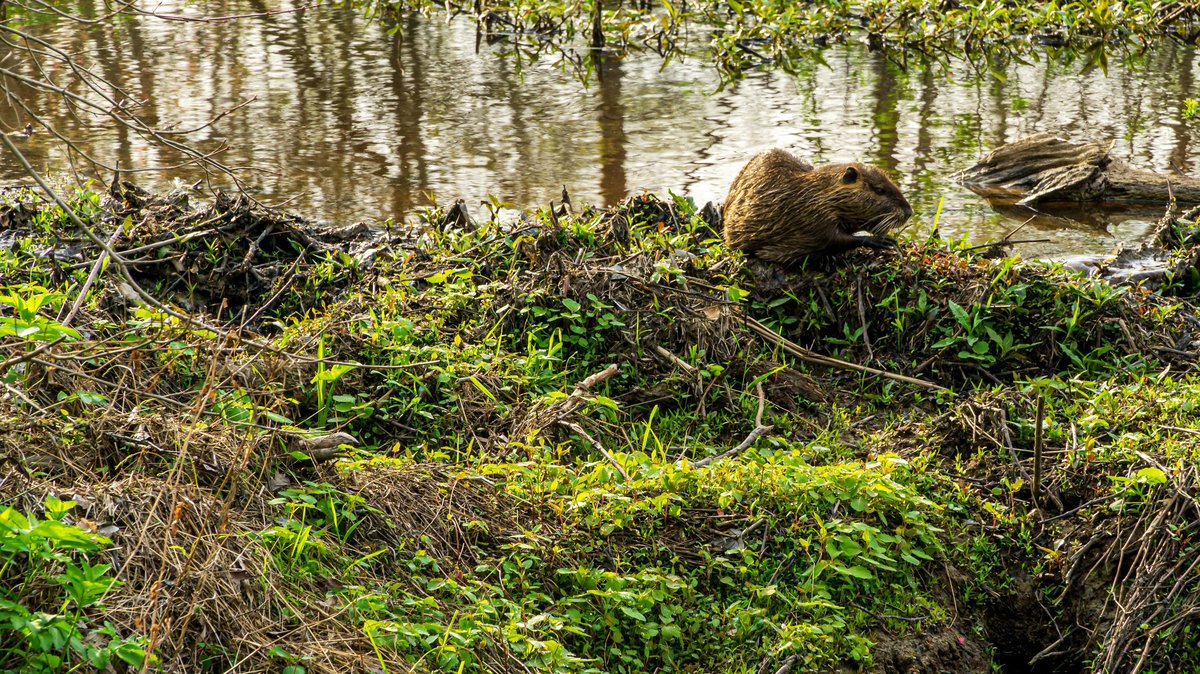
A study in Communications Earth & Environment found that beavers can turn a stream corridor into a persistent carbon sink, after researchers measured how carbon moved through a beaver-shaped wetland in northern Switzerland. Over one year, the site retained about 98 metric tons of carbon, roughly 108 U.S. tons. That was equal to about 26% of all carbon entering the system.
The work was led by researchers including Lukas Hallberg and Joshua R. Larsen at the University of Birmingham, with partners at Wageningen University & Research, the University of Bern and other institutions. Their study followed a half-mile stretch of a headwater stream in the Rhine basin, where European beavers have been active since 2010.
Beaver dams often look like messy piles of sticks, mud, stones and chewed branches. In this study, that mess changed the movement of water and carbon. By slowing flow and spreading water across the corridor, the dams helped trap carbon in sediments, dead wood, plants and underground water pathways.
The result gives a measured climate meaning to an animal behavior that has shaped rivers for millions of years. Beavers build for food, shelter and safety. Their construction also creates slower, wetter landscapes where carbon can accumulate.
Beaver Dams Turned a Swiss Stream Into a Carbon Sink
The researchers built a full carbon budget for the Swiss stream reach. That means they measured carbon coming into the system, carbon leaving it and carbon staying behind. The team tracked water movement, sampled stream chemistry, measured flow and used chambers to capture carbon dioxide and methane from the wetland surface.
In the paper’s abstract, the authors wrote, “Annually, the beaver wetland was a net carbon sink.” That short line carries a big result. Over the full year, the beaver wetland held onto more carbon than it released.
The measured annual sink was 98.3 ± 34.4 metric tons of carbon per year. In familiar U.S. units, that central estimate is about 108 U.S. tons. The finding came from one site, so it should be read as a carefully measured case study rather than a universal number for every beaver pond.
Still, the scale was striking. A small stream corridor, less than a mile long, stored a meaningful share of the carbon that entered it. The dams reshaped the river from a fast conveyor into a wetland system with places for carbon to settle, dissolve and remain.
The Carbon Was Trapped in Mud, Wood and Groundwater
Carbon in a stream arrives in several forms. Leaves fall in. Roots grow and decay. Soil particles wash from banks. Tiny organisms live and die. Some carbon moves as dissolved material in the water, while some travels as fragments of plants and sediment.
Beaver dams change what happens next. Fast water can carry organic material downstream before it has much time to settle. Slow water lets particles drop to the bottom, where they mix with mud and build new layers of sediment. Over time, those layers become a record of trapped carbon.
Dead wood also mattered. Beavers cut trees and branches, then drag that material into dams, lodges and ponds. Some wood breaks down at the surface. Some becomes buried or waterlogged. In wet, low-oxygen conditions, decomposition can slow, which gives carbon more time to remain in place.
The most surprising storage pathway was hidden below the surface. More than half of the retained carbon was linked to subsurface movement, especially the removal of dissolved inorganic carbon from water moving through underground routes. In simple terms, some carbon traveled in the water like dissolved minerals, then stayed within the groundwater system beneath and around the stream.
That underground storage helps explain why a beaver wetland can look modest from above while doing substantial work below. The visible pond is only part of the system. The saturated soils, buried sediments and groundwater pathways form a quieter carbon store.
Slow Water Changed the Whole Carbon Budget
Beavers are often called ecosystem engineers because they physically remodel habitat. In this Swiss corridor, that engineering began with dams. The dams raised water levels, slowed the current and helped create a wetland where the stream had more contact with soils and plants.
This matters because small upstream waterways, known as headwater streams, process large amounts of carbon. They collect water from surrounding hillslopes and forests. They receive leaves, soil carbon and dissolved carbon from the land. Their narrow channels can move material quickly during storms.
A beaver dam interrupts that speed. Water pools behind the structure, spreads sideways and seeps downward. Sediment drops out. Organic matter lingers. Microbes begin breaking some material down, while other material is buried or routed underground.
The study showed that this hydrological shift affected both storage and release. During summer, falling water levels exposed wet sediments to air. That exposure increased carbon dioxide emissions from the surface. Seasonal drying can therefore loosen some of the carbon that had been held in saturated ground.
Across the full annual cycle, the gains outweighed those losses at the measured site. The stream corridor remained a net sink over the year. That balance is the key point, because wetlands can both store carbon and emit greenhouse gases depending on season, water level, temperature and local chemistry.
Methane Played a Tiny Role
Wetlands often raise a climate question because waterlogged soils can release methane. Methane traps heat strongly in the atmosphere, so even small emissions matter when researchers weigh the climate effect of wet places.
At this temperate European site, methane emissions were a very small part of the total carbon budget. The study found that methane represented less than one-tenth of 1% of the carbon budget. That made it tiny compared with the carbon stored through sediment, biomass, dead wood and subsurface pathways.
The result is important for this specific site because it shows that methane did not erase the annual carbon sink measured by the team. The wetland released some greenhouse gases, especially carbon dioxide during exposed summer conditions. The overall ledger still showed net carbon retention.
That finding should stay tied to the setting. Methane can vary widely among wetlands. Temperature, water depth, plant communities, oxygen levels and sediment chemistry all influence how much methane is produced. A cold or temperate stream corridor can behave differently from a warm wetland with thick organic mud.
Why Beaver Wetlands Could Matter for Climate Plans
The study adds weight to the idea that animals can shape climate-relevant processes through everyday behavior. Beavers cut wood, build dams, maintain ponds and redirect water. Those actions can make river corridors wetter, slower and more complex.
For climate planning, the appeal is straightforward. A suitable stream corridor with beavers can gain carbon storage without concrete barriers or machinery. The animal does the construction. The landscape response can include sediment accumulation, more standing water, dead wood storage and better connection between streams and floodplains.
The researchers also connected the finding to longer-term storage. Sediment and dead wood can keep carbon in place for years or decades when dam networks remain stable. A beaver-modified corridor may therefore build a lasting store, especially in places where water stays high enough to preserve buried material.
There are limits. Beaver effects depend on valley shape, stream size, sediment supply, vegetation and the amount of room water has to spread. A narrow channel with steep banks may respond differently from a broad floodplain. A dam failure can also move stored sediment downstream.
That’s why nature-based climate plans need site-by-site evidence. Beavers can be allies where habitat, water management and local communities allow them to persist. Their benefits are strongest when river corridors have space to become wetter and messier.
The Comeback Brings Promise and Conflict
The European beaver has been returning across parts of Europe after centuries of hunting and local extinction. In Switzerland, beavers have recolonized many waterways. In Spain, the species has also reappeared and was added to the national special protection list in 2020.
That comeback can create ecological gains. Beaver wetlands may boost habitat diversity, hold water during dry periods, trap sediment and slow storm runoff. The Swiss carbon study adds another possible benefit, showing that suitable beaver-shaped corridors can retain substantial carbon over a year.
Human conflicts can appear quickly. Beaver dams may flood fields, roads, orchards, or drainage systems. Cut trees can worry landowners. River managers may need to balance flood risk, water supply, biodiversity goals and crop protection.
Good planning matters because beaver activity is often concentrated close to riverbanks. Buffer zones, protected riparian strips, flow devices, tree guards and careful site selection can reduce damage while preserving ecological function. Legal reintroduction and monitoring are essential where beavers are still expanding.
The Swiss study gives managers a clearer way to discuss tradeoffs. A beaver dam is a physical structure, a habitat feature and a carbon-cycle driver at the same time. In the right landscape, the small engineer with orange teeth can help a river hold onto carbon that might otherwise keep moving downstream.