A study in Polar Biology found that historical weapon fragments recovered from bowhead whales can help scientists estimate the animals’ remarkable lifespans. One fragment, found in a bowhead harvested near Barrow, Alaska, in 2007, pointed back to the late 1800s and suggested the whale had survived for more than a century after an earlier strike.
The discovery gave researchers a rare physical timestamp inside a living animal’s history. The recovered piece came from an explosive bomb lance, a weapon used by commercial whalers during the 19th century. Its design helped specialists narrow the manufacturing period to a short window, which made the whale’s age estimate unusually concrete.
For scientists who study bowhead whales, the find added another piece of evidence to a striking biological story. These Arctic giants are among the longest-lived mammals known. Some age estimates from other methods suggest certain individuals may live for more than 200 years.
A 19th-Century Weapon Hidden in Blubber
The 2007 bowhead was harvested during a subsistence hunt in Alaska. Such hunts remain an important part of food systems and cultural life for Alaska Native whaling communities. During processing, people found metal fragments embedded in the whale’s body.
That small piece of metal carried a large historical signal. It was identified as part of a bomb lance fragment, a type of explosive projectile once used in commercial whaling. These weapons were designed to detonate after impact and were part of the changing technology of the whaling industry.
Researchers connected the fragment to the era when whalers from places such as New Bedford, Massachusetts, operated in Arctic waters. The weapon had lodged in the whale long before the 2007 harvest. The animal survived that earlier encounter and continued growing in the cold northern seas.
Physical evidence like this rarely appears in age studies. Most animals leave scientists with indirect clues, such as growth layers, body size, or chemical changes in tissues. In this case, the whale carried a manufactured object whose design could be compared with historical records.
How the Fragment Dated the Whale
The key to the age estimate came from the weapon’s design. The Polar Biology study described the recovered historical weapon fragments as “likely manufactured between 1879 and 1885.” That narrow period gave researchers a starting point for thinking about the whale’s minimum age.
A young bowhead struck in the late 1800s could still have been alive in 2007 if the species has an extreme lifespan. The fragment therefore acted like a clock set by human technology. It did not reveal the whale’s birth year directly, but it helped constrain the animal’s life history.
Historical weapon dating depends on careful comparison. Specialists look at shape, construction, patents and known production periods. When those details line up, the object can be placed within a specific era. The bowhead fragment was especially useful because its model was linked to a limited manufacturing window.
From there, researchers could estimate how old the whale had to be. If the weapon struck the animal sometime after its manufacture and the whale lived until 2007, the individual was likely well over 100 years old. Reports from the time placed the estimate roughly between 115 and 130 years.
That range still carries uncertainty. The weapon may have been used years after it was made. The whale’s age at the moment of the strike is also unknown. Even so, the fragment provides unusually direct evidence that at least one bowhead whale lived across more than a century of Arctic history.
Bowhead Whales Can Live for Centuries
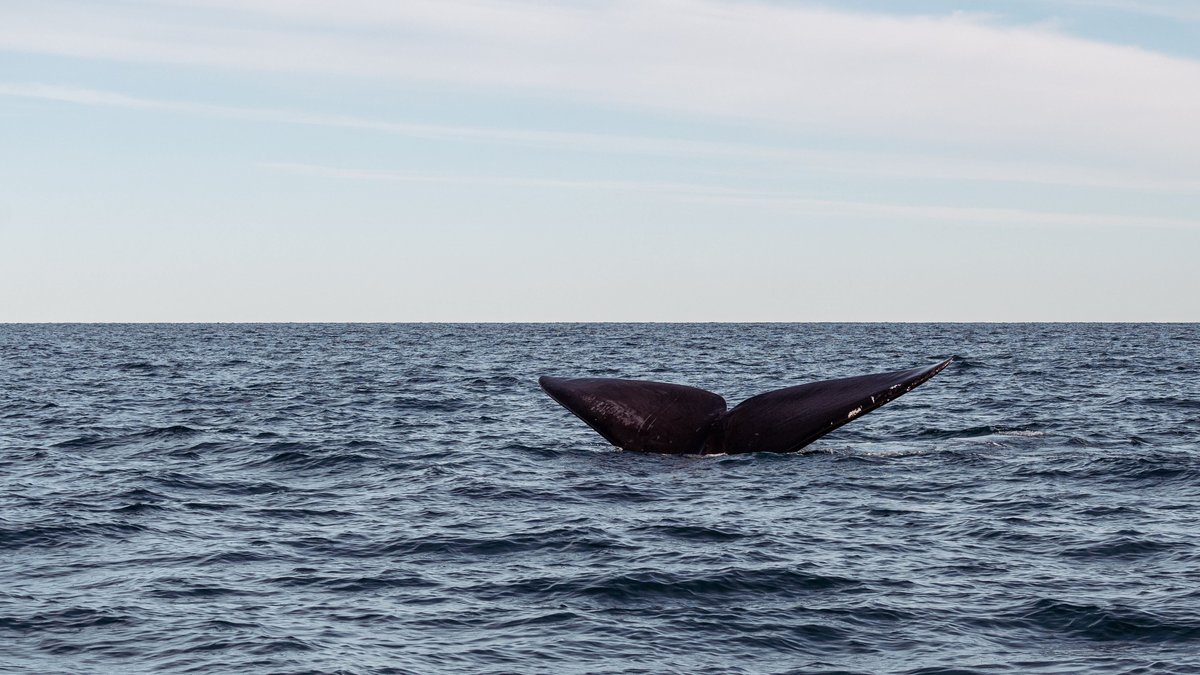
Bowhead whales are built for Arctic life. They move through icy waters, feed on tiny marine animals and grow enormous bodies insulated by thick blubber. Their massive heads help them navigate ice-covered habitat and their slow pace of life has drawn growing attention from biologists.
Their longevity makes them especially interesting. Many mammals live only a few decades. Bowheads can far exceed that scale, based on age estimates from eye tissue and unusual finds such as old weapon fragments. That places the species among the most extraordinary mammals on Earth.
Long life changes the way scientists think about these whales. An individual born in the 1800s could have experienced commercial whaling, industrial expansion, changing sea ice and modern ocean noise within a single lifetime. One whale’s body can therefore hold clues from several human generations.
The 2007 Alaska whale also supports a broader pattern. Historical harpoon tips and bomb lance fragments have turned up in bowheads before. Together, those finds align with chemical age estimates that suggest many individuals can live far beyond 100 years.
Scientists are also interested in the biology behind this lifespan. Long-lived animals must manage cell damage, tissue repair, disease risk and reproduction across decades. Bowheads offer a natural example of mammalian aging stretched across an unusually long timeline.
A Survivor From the Commercial Whaling Era
Commercial whaling once placed severe pressure on bowhead populations. The species was valued for oil, baleen and other materials. Arctic whaling expanded as ships pushed into northern waters during the 19th century, bringing new tools and intense hunting pressure.
The recovered fragment links one whale directly to that history. The animal likely encountered a whaling crew during an earlier era of hunting technology. It escaped with a metal remnant buried in its tissue and lived for many more decades.
That survival story carries scientific value because it joins biology with human history. The fragment records the presence of 19th-century whaling in Arctic waters. The whale’s continued life records the resilience of an individual animal that endured a serious wound.
Bowhead populations suffered major declines during the commercial whaling era. Later protections and management helped support recovery in some populations. Subsistence hunts today operate under regulated systems that differ sharply from the industrial hunts that once drove severe depletion.
The discovery also shows why collaborations with Alaska Native whaling communities matter. Subsistence harvests can provide food while also creating opportunities for careful biological sampling. In this case, the processing of a harvested whale revealed evidence that would have remained hidden at sea.
Why Whale Eyes Help Measure Age
Scientists usually need other tools to estimate the age of a whale. One major method studies chemical changes in the eye lens. The lens forms early and preserves biological material that changes in predictable ways over time.
This method focuses on amino acid racemization. Amino acids can shift between two mirror-image forms after tissues form. By measuring that shift in the eye lens, researchers can estimate how long the tissue has existed. The technique has been used to study aging in several long-lived marine species.
For bowheads, eye-lens chemistry has produced remarkable results. Some estimates suggest individuals can reach ages near or above 200 years. These numbers are difficult to verify through observation alone, since no modern research program has followed a bowhead from birth to extreme old age.
That is why the historical weapon fragments matter. They provide an independent line of evidence. When a dated object remains inside a whale for more than a century, it supports the idea that bowheads can live across time spans that are extraordinary for mammals.
Each method has limits. Eye chemistry depends on assumptions about temperature, tissue formation and chemical rates. Weapon fragments depend on manufacturing dates, use dates and the age of the whale when it was struck. When different clues point in the same direction, confidence grows.
The 2007 discovery remains powerful because it is so tangible. A small piece of metal from the 19th century helped reveal the life of an Arctic whale that survived into the 21st century. For researchers, it turned a hidden wound into evidence of one of nature’s longest mammalian lifespans.