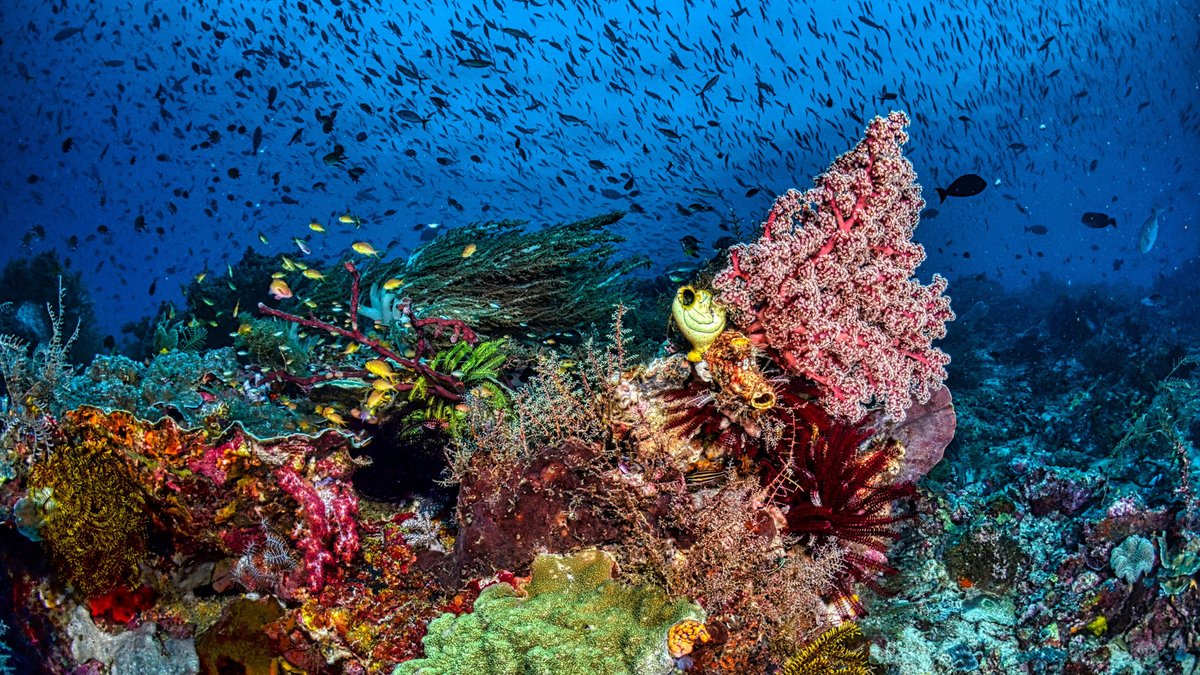
A study in Current Biology has found that artificial light spilling into coastal waters can disrupt sleep in coral reef fish, change their nighttime behavior and leave biological signs linked to brain health. The research, led by scientists at Bar-Ilan University, shows how the glow from cities, ports, roads and hotels can reach below the ocean surface and reshape life after dark.
The team focused on a common reef species, the blue-green damselfish, which feeds above coral during the day and shelters inside branching coral at night. Under natural darkness, these fish settle into a clear sleep-like state. Under artificial light, that pattern changes quickly. The fish move more, feed at unusual hours, become more aggressive and sleep less.
The findings add a new layer to the growing science of coastal light pollution. Many reef animals rely on daily cycles of light and darkness to time feeding, rest, spawning and predator avoidance. When the night stays bright, those rhythms can shift in ways that affect individual animals and the reef communities around them.
Artificial light changed reef fish behavior
Researchers led by Oren Levy and Lior Appelbaum examined how ecologically realistic levels of artificial light at night affect fish that live directly within coral habitats. Their work combined controlled laboratory experiments with reef-based observations in the Gulf of Aqaba/Eilat in Israel.
The fish responded strongly. Under normal nighttime conditions, they remained close to shelter and reduced activity. When exposed to artificial light, they expanded their range and behaved as if the night had become an active period. They fed when they would usually rest. They also interacted more aggressively with other fish.
“Artificial light at night is rapidly expanding across coastal environments worldwide,” said Prof. Levy of Bar-Ilan University’s Faculty of Life Sciences and the H. Steinitz Marine Biology Laboratory in Eilat.
That expansion matters because coastal light can travel across the water surface and penetrate shallow marine habitats. Coral reefs often sit near tourism centers, ports, urban waterfronts and roads. Even modest illumination can alter the cues that fish use to separate day from night.
“We found that even relatively low levels of illumination can disrupt natural sleep patterns,” Levy said. In this study, those disrupted patterns appeared after only a few nights of exposure.
Damselfish lost their quiet nights
The blue-green damselfish, also known as Chromis viridis, offered the researchers a clear window into reef sleep. During the day, these small fish hover above branching corals to feed. At night, they retreat into coral structure, where they become inactive and less responsive.
To study this behavior, the team used infrared video, machine-learning tracking, laboratory experiments and in-situ reef studies. These tools allowed the researchers to follow fish movements without flooding the reef with visible light during natural dark periods.
The study confirmed that the fish show clear sleep-like states. They become still, adopt resting postures and remain within familiar nighttime territories. They also show reduced responsiveness to stimulation, a key sign that their nighttime inactivity reflects more than simple hiding.
Artificial light altered that routine. Fish exposed to nighttime illumination left their usual shelter zones more often and became active across a wider space. Their sleep became shorter and more fragmented. The reef, which normally quiets down for them after sunset, became a place of movement and social conflict.
This behavioral change could carry ecological consequences. Damselfish help shape reef communities through feeding, nutrient movement and interactions with coral habitats. When their daily schedule shifts, the effects may extend beyond the individual fish.
The brain showed signs of stress
The research also moved from behavior into brain biology. The scientists examined neurons in a brain region associated with sleep-related functions. Fish exposed to nighttime light showed elevated markers associated with DNA damage compared with fish kept under natural dark conditions.
Those findings connect sleep disruption with neuronal genomic stability, the ability of brain cells to maintain the integrity of their genetic material. The study frames artificial light as a possible source of biological stress in wild marine animals, especially when exposure continues over time.
“Sleep is a critical period for biological repair,” Appelbaum said. His point helps explain why shortened or fragmented rest could matter at the cellular level. Sleep gives nervous systems time to perform maintenance tasks that are harder to complete during active periods.
The study reported changes in DNA damage markers, which are biological signals associated with stress in cells. The result points to a link between light-driven sleep disruption and neuronal health. The research remains careful about cause and effect, since markers show association and biological response.
The effects also persisted during a five-month field experiment conducted directly on a reef. That persistence suggests chronic nighttime illumination can keep pressure on fish across ecologically meaningful timescales. For reef animals living near lit coastlines, bright nights can become a repeated condition.
Coastal lighting is reaching protected waters
Artificial light has become a common feature of coastal life. According to the research summary, about 22 percent of the world’s coastal regions are affected by artificial light at night. The problem also reaches roughly 35 percent of marine protected areas, which are intended to reduce human pressure on ocean ecosystems.
In the Gulf of Aqaba/Eilat, where the study was conducted, nighttime light levels near developed areas can reach up to 60 times the brightness of natural starlight. That scale changes the sensory environment for animals adapted to a much darker night.
Light pollution is especially important on coral reefs because these ecosystems depend on timing. Many reef organisms synchronize activity with sunrise, sunset, moonlight, tides and seasonal cycles. Corals, fish, algae, invertebrates and predators all respond to patterns of light and darkness.
Levy’s laboratory has previously studied how artificial light affects coral physiology. That earlier work showed effects on the relationship between corals and their algae, as well as interference with coral spawning synchronization. The new study extends concern to the fish living inside those same habitats.
“Coral reefs depend on tightly connected biological interactions,” Levy said. When artificial light changes both coral and fish behavior, the effects can spread through feeding networks, shelter use, competition and the daily rhythm of reef life.
Small lighting changes could protect reefs
The researchers argue that better coastal lighting could reduce harm without requiring cities and ports to go dark. Practical steps include lowering unnecessary nighttime illumination, shielding lights and directing beams away from shorelines and water.
Another approach involves smart lighting technologies, which can dim or switch off lights when full brightness is unnecessary. Coastal planners can also consider wavelengths, since some colors of light appear more disruptive to marine animals than others. Choosing less harmful lighting can become a low-cost conservation tool.
For coral reef regions, this could be especially valuable. Reefs already face stress from warming, pollution, habitat damage and changing ocean chemistry. Light pollution adds another pressure, yet it may be one of the more manageable ones in developed coastal areas.
The next questions are practical and urgent. Scientists still need to know whether fish recover when dark nights return, how long recovery takes and which species are most sensitive. They also need to test how different light colors and intensities affect reef animals across life stages.
The Bar-Ilan University study shows that the night itself is part of reef habitat. Protecting darkness may help protect sleep, brain health and the delicate timing that keeps coral reef communities working.