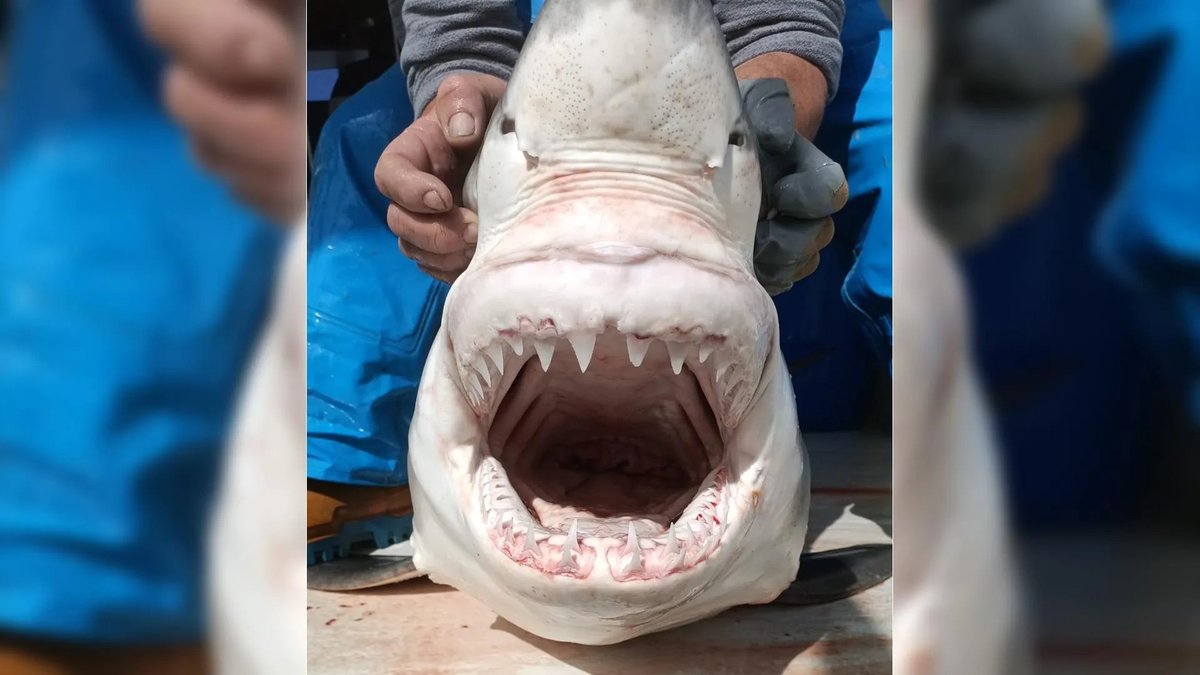
A 2026 study in Acta Ichthyologica et Piscatoria has turned one accidental catch into a renewed scientific search for one of the Mediterranean Sea’s most elusive predators. Researchers used the capture of a juvenile great white shark off Spain to revisit records stretching from 1862 to 2023, building a long view of a population that still appears in scattered traces.
The shark was caught by local fishermen on April 20, 2023, off Spain’s eastern Mediterranean coast. It measured about 210 centimeters long and weighed roughly 80 to 90 kilograms. For a species that can grow far larger, the animal’s young age gave the find extra weight.
Great white sharks are famous across the world’s oceans, yet Mediterranean sightings are uncommon enough to make each confirmed record scientifically valuable. The new review suggests that great white sharks continue to occur in Spanish Mediterranean waters, where they are seen so rarely that researchers describe the population as a kind of “ghost.”
A rare juvenile caught off Spain
The 2023 catch gave researchers a physical record from a region where great white sharks are seldom documented. The animal was identified as Carcharodon carcharias, the species commonly known as the great white shark. Its size and weight placed it among juvenile individuals.
That detail matters because young animals can reveal more than presence. A juvenile may point to nearby movement patterns, suitable habitat, or possible reproductive activity somewhere in the wider region. The study treats the finding cautiously, since a single young shark cannot define a breeding area by itself.
Even so, the capture gave scientists a rare chance to connect a modern observation with a much older archive. Great white sharks are highly mobile predators, so their appearance near Spain could reflect long-distance movement through the Mediterranean. It could also fit into a more persistent regional pattern.
The team’s approach was straightforward in concept. They placed the 2023 shark within a broader record of captures, sightings and indirect evidence. That context transformed one unusual event into a data point inside a 160-year biological puzzle.
The clues hidden in 160 years of records
The researchers reviewed reports from 1862 through 2023, a span that reaches back to the earliest documented records in the study. Such historical reviews are especially useful for animals that are difficult to survey directly. A rare species can remain present for decades while leaving only occasional signs.
For the Mediterranean great white, those signs include direct observations and indirect evidence. The study notes that records can involve sightings, captures and predation clues such as bite evidence on marine animals. Each category carries different levels of certainty, so careful interpretation is essential.
Across the long timeline, the reports show a sporadic pattern. The shark appears, disappears from view, then appears again. That rhythm explains the “ghost” label. The population remains difficult to see, track and measure, while the accumulated record keeps showing that the species has been part of the region’s marine life.
Historical records also help scientists avoid overreading any one encounter. A single catch can seem isolated when viewed alone. Within a larger archive, it becomes part of a pattern that can guide future monitoring.
The study’s long scope is valuable because modern marine surveys cover only a small slice of time. For long-lived and wide-ranging predators, older observations can add a missing dimension. They show where animals have been found across generations of fishing, coastal reporting and scientific recordkeeping.
Why one young shark matters
For lead researcher Dr. José Carlos Báez, the juvenile’s age is a central part of the story. “Determining the presence of juvenile individuals is of particular importance,” he said. A young shark raises questions that an adult sighting may leave unanswered.
Juveniles can hint at where a species is reproducing or where young animals spend early life. In the Mediterranean, that question is especially important because confirmed great white records are sparse. Researchers have discussed possible nursery areas in parts of the basin, yet evidence remains limited.
Báez framed the 2023 case as a reason to investigate further. “The occurrence of juvenile specimens raises the question whether active reproduction may be occurring in the region,” he said. That statement keeps the focus on possibility and follow-up evidence.
Scientists would need additional juvenile records, movement data and ecological evidence to evaluate that possibility. A breeding population leaves patterns over time. Repeated records of young sharks, especially across seasons and locations, would give researchers a stronger basis for identifying important habitat.
The juvenile shark also underscores the importance of collaboration with fishers. Accidental catches can provide rare information when handled carefully and reported quickly. For elusive marine animals, local knowledge often becomes an early signal that guides formal research.
The Mediterranean’s elusive apex predator
Great white sharks sit near the top of marine food webs. As apex predators, they can influence the behavior and distribution of other animals. Their role extends beyond hunting, since large migratory animals also move energy across broad ocean regions.
“These large marine animals have a fundamental role in marine ecosystems,” Báez said. That role is especially important in a semi-enclosed sea like the Mediterranean, where pressures from fishing, shipping, habitat change and warming waters can reshape marine communities.
The great white shark is listed as Vulnerable on the IUCN Red List, with populations considered to be declining globally. That status gives every verified Mediterranean record added conservation value. Knowing where the species still appears can help researchers identify habitats and risks that deserve closer attention.
Public fear has long shaped the way people think about great white sharks. The Mediterranean record offers a more scientific frame. These animals are rare in the region and their presence points to the complexity of local ecosystems rather than a simple story of danger.
Báez also emphasized their role after death. “Even in death, their descent to the seafloor provides a critical pulse of nourishment for deep-sea communities,” he said. A large shark carcass can feed organisms far below the surface, linking open-water predators to deep-sea life.
What scientists need to track next
The study points toward long-term observation as the next essential step. A “ghost” population can be understood only through repeated records collected across years. That means confirmed sightings, reliable reports, tissue sampling when available and better coordination among researchers and fishers.
Satellite tracking could add a powerful modern layer. Tags can reveal where sharks travel, how long they remain in certain areas and whether they follow seasonal routes. For a highly migratory species, movement data would help separate brief passage from repeated habitat use.
Genetic work can also clarify the Mediterranean story. If samples are available, researchers can compare individuals from Spanish waters with great white sharks from other regions. Such comparisons may reveal whether Mediterranean sharks are closely connected to Atlantic populations or whether they show signs of regional distinctiveness.
Another priority is mapping the conditions around confirmed records. Depth, temperature, prey availability and nearby submarine features may all influence where sharks appear. The 2023 juvenile was caught in a region where deep waters occur relatively close to shore, a setting that may help explain why large marine predators pass through.
For now, the 2023 shark gives scientists a rare anchor point. One young animal has reopened a long-running question about the Mediterranean great white shark. The answer will depend on careful monitoring, shared records and the patience needed to study a predator that mostly lives beyond human view.