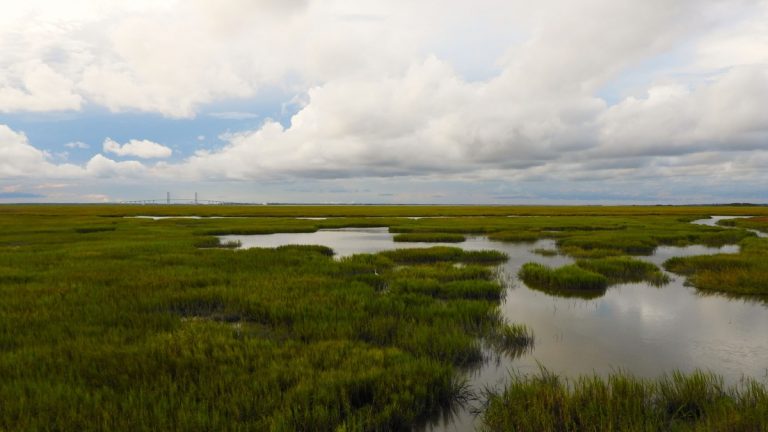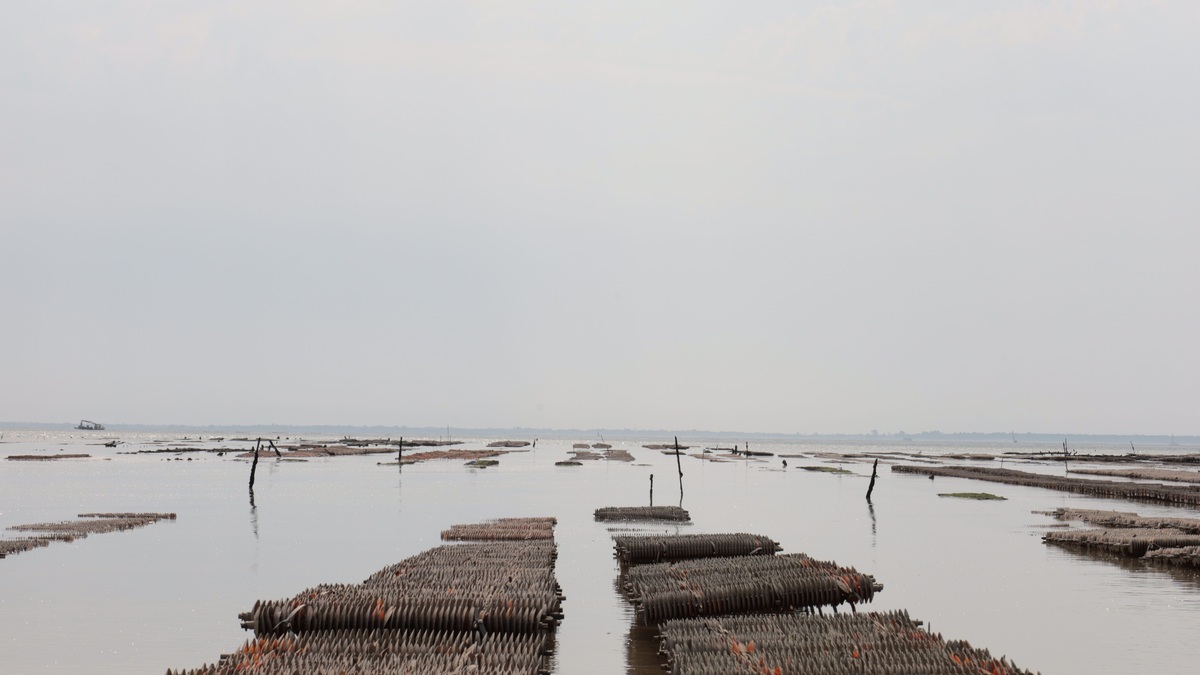
Marine aquaculture is the breeding, rearing and harvesting of animals or plants that live in saltwater. Farms may operate in coastal bays, estuaries, offshore waters, or land-based tanks supplied with seawater. They raise seafood such as oysters and salmon while cultivating seaweed. Some operations produce juveniles for restoration and help rebuild depleted populations.
NOAA’s aquaculture definition distinguishes marine farming from freshwater systems. The word covers many production methods rather than one kind of enclosure. An oyster grown on a suspended line, kelp attached to a rope and fish raised in a recirculating tank all qualify when the cultured species is marine.
What marine farms grow
Shellfish aquaculture is a major part of U.S. marine farming. Farmers raise oysters, clams and mussels from tiny hatchery-produced seed until they reach market size. Depending on species and location, shellfish may grow directly on the seabed, in bottom cages, in floating bags, or on suspended ropes. Water carries their natural food past them.
Finfish farms raise species such as salmon in net pens or in tanks on land. Hatcheries control spawning and care for eggs and young fish before moving them to grow-out systems. Regular management covers feed and oxygen conditions together with temperature, health and stocking density. Containment design must fit local waves, currents, predators and storm exposure.
Seaweed farming usually begins with juvenile algae attached to lines. Sunlight and dissolved nutrients support growth without agricultural soil. Kelp and other crops can become food ingredients, animal-feed inputs, fertilizers, or industrial materials. Markets and processing capacity influence which species make commercial sense in a particular region.
NOAA Fisheries’ industry overview notes that marine aquaculture can also support commercial fisheries and habitat work. Hatchery programs may release young animals for stock enhancement, while restoration projects grow shellfish to rebuild reefs or recover protected species. A restoration nursery uses culture techniques even when harvest is not its goal.
How an aquaculture farm operates
Production starts with choosing a species and site that suit each other. Salinity, temperature, depth, currents, bottom type and exposure determine whether animals can grow and equipment can remain secure. Farmers also need legal access, shore facilities, reliable seed or broodstock and a route to market. A productive site can still be unsuitable if it conflicts with navigation or sensitive habitat.
A marine hatchery provides a controlled start. Staff condition adult broodstock, collect eggs or larvae and manage water quality through vulnerable early stages. Shellfish larvae eventually attach to a surface and become seed. Young finfish move through nursery tanks before transfer. Biosecurity and recordkeeping help managers detect disease and trace each production group.
Grow-out methods differ sharply. Bivalves filter suspended particles from ambient water, while farmed finfish receive formulated feed. Seaweed absorbs dissolved nutrients. Workers inspect nets, lines, anchors, floats and cages, then grade or move stock as it grows. Harvest timing balances biological condition, food safety rules, weather and buyer demand.
Land-based recirculating aquaculture systems repeatedly treat and reuse water. Pumps, filters, biofilters and oxygen equipment give operators tighter control and create a concentrated waste stream that can be managed. The tradeoff is greater infrastructure and energy demand. Open-water systems use natural water exchange but face stronger environmental interaction.
Benefits depend on species and design
Farmed seafood adds production without asking wild fisheries to supply every additional meal. A predictable harvest can support year-round processing and waterfront jobs. Hatcheries also supply seed for shellfish growers and juveniles for selected restoration programs. Benefits are strongest when suitable sites and healthy stock are paired with secure markets and consistent oversight.
Shellfish and seaweed do not require manufactured feed during grow-out. Bivalve filter feeding captures suspended particles, while algae take up dissolved nitrogen and phosphorus as they grow. Harvest removes some of those nutrients from the water. Local effects vary with scale and circulation, so nutrient removal should be measured rather than assumed to solve a bay-wide pollution problem.
Farm structures can create surfaces and shelter used by wild organisms. Oyster restoration can build three-dimensional reef habitat, although a commercial farm and a restoration reef have different objectives and management. Farm benefits must be weighed alongside access, visual concerns, wildlife interactions and the condition of the surrounding ecosystem.
The label “farmed” alone says little about environmental performance. Species, feed, containment, siting, stocking density and regulation all influence outcomes. Comparing systems on specific evidence is more useful than assigning one verdict to the entire sector. A mussel line, an offshore fish cage and a land-based tank have distinct inputs and risks.
Environmental risks and safeguards
Finfish waste and uneaten feed add organic material beneath open-water cages. In poorly flushed water or at excessive density, decomposition can reduce oxygen and change bottom communities. Site surveys, current measurements, stocking limits, feed management and seabed monitoring help keep deposition within permitted thresholds. Moving or resting sites may be required in some systems.
Disease can spread within any dense animal population. Farms reduce risk through healthy seed, vaccination where available, sanitation, fallowing, surveillance and rapid response. Water moves between a marine cage and the surrounding sea, so managers consider both farmed and wild populations. NOAA Fisheries summarizes U.S. safeguards in its environmental review.
Escaped fish may compete, interbreed, or carry pathogens, depending on species and location. Strong cages, maintained nets, predator controls and inventory checks lower escape risk. Raising native species can reduce some ecological concerns but does not remove the need for containment. Storm planning is essential because a single equipment failure can release many animals.
Other issues include marine-mammal entanglement, bird interactions, chemical use and conflicts with fishing or boating. Permit reviews can set gear, monitoring and location requirements. Effective regulation is divided among agencies because farms touch navigation, water quality, food safety, fisheries and coastal land use. EPA’s aquaculture discharge guidance explains when a U.S. facility may require permit coverage for a point-source discharge. Requirements vary by jurisdiction and project.
No safeguard works alone. Environmental monitoring can compare measurements with a pre-farm baseline, while adaptive permit conditions allow stocking or operations to change if thresholds are crossed. Emergency plans cover storms and disease as well as equipment failure. Publishing results helps regulators and nearby users judge whether predicted effects match conditions around the farm.
How sustainable farms are evaluated
Sustainability joins environmental and economic performance with a social dimension. A farm that protects water quality but cannot survive financially will not provide a durable food source. A profitable operation can still fail public expectations if it blocks valued access or harms habitat. Assessment needs measurable performance supported by transparent monitoring and a process for affected communities to participate.
Useful indicators include survival and feed conversion for finfish, benthic conditions beneath cages, escape records, medicine use and wildlife interactions. Shellfish programs may track pathogen closures and nutrient removal. Seaweed farms monitor crop health and gear effects. Baseline data collected before installation make later changes easier to interpret.
Consumers comparing products can look for the species, country of origin, production method and credible certification where available. Government inspection addresses legal and food-safety requirements; voluntary standards may cover additional practices. No single label answers every question, so traceability and clear farm information improve meaningful comparison.
Marine aquaculture is best viewed as a collection of farming tools applied in saltwater environments. Its results depend on the biology of the crop and the discipline of the operation. With sound siting and monitoring, it can supply food and support restoration. Poor placement or weak management can transfer costs to the surrounding ocean.
Related reading: pelagic and benthic zones and abiotic factors in the ocean.