Researchers affiliated with the Geological Institute of the Kola Scientific Centre have revisited the engineering and scientific legacy of the Kola Superdeep Borehole, a Soviet drilling project that pushed 12,262 meters into Earth’s crust and exposed a world far stranger than many geologists expected.
The borehole, known as SG-3, began as part of a Cold War race pointed straight down. While rockets were carrying people beyond the atmosphere, Soviet scientists were trying to reach deeper into the planet than any drill had gone before. The project started on May 24, 1970, on Russia’s Arctic Kola Peninsula, close to the border with Norway.
By the late 1980s, the hole had become the deepest vertical borehole on Earth. At its record depth of 12,262 meters, the shaft was only about 23 centimeters wide. Yet it carried instruments, core samples, drilling mud and scientific expectations into rock that had been buried for billions of years.
The attempt ended with a lesson that still echoes through deep-Earth science. Temperature rose faster than predicted, rock behaved in unfamiliar ways and the lower reaches of the crust proved harder to explore than engineers had hoped.
The Soviet Race Into the Crust
The Kola project grew out of the same era that produced lunar missions, orbital laboratories and enormous national science programs. The United States had launched Project Mohole in 1958, aiming to drill through thin oceanic crust and reach the upper mantle beneath the seafloor.
Soviet planners chose a different path. They selected the continental shield of the Kola Peninsula, where ancient rocks lay exposed near the surface. The site gave geologists access to Precambrian shield rocks estimated at roughly 2.7 billion years old.
That decision shaped the entire mission. Oceanic crust is thinner, which made the American mantle target attractive. Continental crust is much thicker, but it offered a long vertical archive of ancient Earth history. Each meter of core could reveal changes in mineral structure, temperature, fluids and stress.
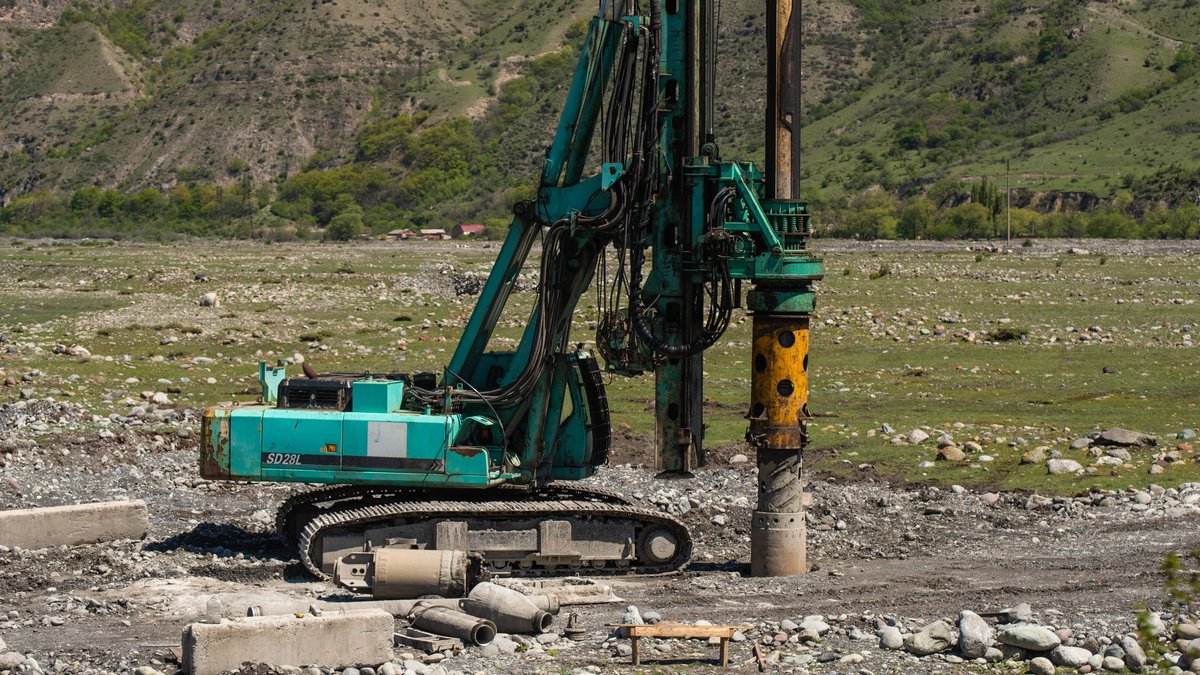
Early drilling used the Uralmash-4E, a modified oil-drilling rig. In 1974, the project moved to the purpose-built Uralmash-15000, named for the ambitious target of 15,000 meters. The system used a turbine drill bit powered by pressurized drilling mud moving down the pipe.
This approach helped reduce the mechanical strain of rotating the entire drill string from the surface. Even so, each added kilometer raised the difficulty. Tools had to survive heat, pressure, fractured rock and the simple problem of keeping a narrow borehole open over an extraordinary distance.
Why Kola Stopped at 12,262 Meters
The decisive obstacle appeared at the bottom of the hole. Soviet geophysicists had expected temperatures near 100 degrees Celsius at extreme depth. Measurements showed conditions near 180 degrees Celsius, or 356 degrees Fahrenheit.
Heat changed the rules. Drilling equipment wore down faster. Bits could deform or break. Rock at the bottom began to behave less like the hard crystalline material encountered higher up and more like a slowly moving mass under pressure.
At those depths, the borehole was surrounded by immense weight. When the drill bit withdrew, hot rock could creep into the open space. This plastic behavior squeezed the hole and made forward progress painfully slow.
The team kept working after reaching the record depth, but the hole never extended far beyond that mark. Active drilling ended in 1992, after the Soviet Union had dissolved and the funding landscape changed sharply. The scientific work continued for a time through analysis of the recovered core and logging data.
The Kola project showed that deep drilling depends on far more than horsepower. A drill must contend with temperature, pressure, fluids, chemistry and the behavior of minerals under stress. At SG-3, Earth itself became the most powerful engineering constraint.
What the Borehole Revealed
One of the most important findings involved the structure of the continental crust. Geophysicists had long interpreted certain seismic signals as evidence for a transition from granite-rich rock to basalt-rich rock at depth. This boundary was often associated with the Conrad discontinuity.
Kola’s core samples complicated that picture. The expected sharp transition did not appear where many models placed it. Instead, the rocks remained largely granite-like much deeper than anticipated.
The seismic change seems to have reflected physical structure rather than a simple shift in chemical composition. Deep rock can become fractured, saturated with fluids and altered by pressure. Those changes affect how seismic waves travel through the crust.
That discovery gave researchers a more cautious way to read Earth from the surface. Seismic waves remain one of the best tools for probing deep rock, but Kola showed that wave speeds can reflect cracks, fluids and texture as well as rock type.
Core samples also carried information about metamorphism, mineral transformations and heat flow. The borehole created a rare bridge between geophysical measurements and actual rock from depth. For deep-Earth science, that bridge was immensely valuable.
Ancient Water, Gas and Microfossils
The borehole also produced surprises that sounded almost impossible when first reported. Researchers found water at depths where many had expected the crust to be dry. The water appears to have been locked within minerals and released through deep geological processes.
Drilling mud returning from the hole was also rich in hydrogen gas. Reports described the fluid as bubbling with unexpected levels of hydrogen. Helium, nitrogen and carbon dioxide were also identified in the returning fluids.
These gases mattered because they showed that deep crustal chemistry can be active and complex. Under high temperature and pressure, water can react with minerals. Those reactions can release gases and reshape the chemical environment far below the surface.
Another striking result came from ancient biological remains. At about 6.7 kilometers down, scientists reported microscopic fossils of single-celled marine organisms preserved in old rock. These organisms lived when the material was near the surface, long before burial carried it deep into the crust.
The fossils helped underscore how geological time can move surface worlds into deep Earth archives. Rock that once belonged to an ancient marine environment can later sit kilometers below the Arctic ground. Kola gave scientists physical samples from that journey.
The Sealed Arctic Record
Today, the Kola Superdeep Borehole is usually pictured as a rusting metal cap in a remote industrial ruin. That modest surface view hides one of the most audacious scientific shafts ever attempted.
The record can be confusing because some modern oil and gas wells have greater measured lengths. Those wells curve and travel horizontally through reservoirs. SG-3 remains famous for vertical depth, which is the distance straight down into Earth.
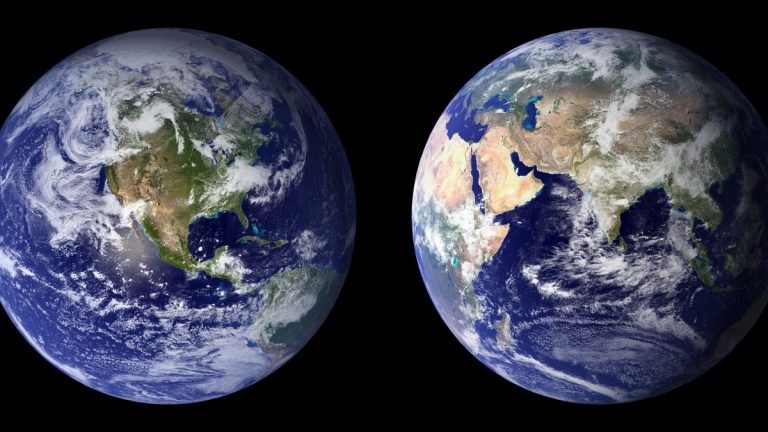
The borehole reached only a tiny fraction of the distance to Earth’s center. Even at 12.262 kilometers, it penetrated roughly 0.2 percent of the planet’s radius. That scale explains why deep drilling remains one of geology’s hardest frontiers.
Spacecraft have traveled to other planets and beyond the heliosphere. A narrow hole in the Kola Peninsula reminds scientists that Earth’s interior is still difficult to reach directly. Most knowledge of the deep planet comes from seismic waves, laboratory experiments, meteorites and models.
The sealed shaft still carries a scientific message. Beneath familiar ground lies a hot, pressurized, chemically active crust filled with fractured rock, trapped fluids and records of ancient worlds. The Kola Superdeep Borehole reached farther into that hidden realm than any vertical drill before it, then stopped where Earth’s heat took control.