A study in Nature Communications found that Arctic river deltas hold a vast frozen reservoir of organic carbon and nitrogen. The international team estimates that these low-lying landscapes contain about 57.5 gigatonnes of carbon, equal to roughly 63.4 billion U.S. tons, along with about 4.2 billion tons of nitrogen. That hidden store sits in permafrost soils at the edge of the Arctic Ocean.
The result points to an overlooked pressure point in the climate system. River deltas occupy a small share of the northern permafrost region, yet the study suggests they contain about 5% of the carbon stored in permafrost soils. As the Arctic warms, that frozen material faces rising pressure from thawing ground, warmer river water, retreating sea ice and stronger coastal erosion.
Led by Matthias Fuchs and co-authors including Guido Grosse, the study pulls together soil measurements from across the circumpolar north. It gives researchers a sharper baseline for a place where land, rivers, ice and ocean meet. In a warming world, those meeting points can change fast.
A Vast Frozen Carbon Store
Arctic permafrost works like a deep freezer for ancient plant remains. When plants die in cold and wet ground, their roots, stems and leaves can become buried before microbes fully break them down. Over many centuries, that slow storage builds thick layers of organic-rich soil.
In river deltas, this process can be especially powerful. Rivers carry sediment from inland landscapes and spread it across flat coastal plains. Each flood can add new material. Over time, those layers trap organic matter and help preserve it in frozen ground.
The new inventory shows how concentrated that storage can be. The deltas examined in the study cover about 39,000 square miles, a modest area by Arctic standards. Yet their frozen soils hold a carbon stockpile large enough to matter for global climate calculations.
Scientists often describe carbon in gigatonnes. One gigatonne equals one billion metric tonnes. The study’s estimate of 57.5 gigatonnes of carbon converts to about 63.4 billion U.S. tons, which explains the striking number behind the headline.
Why Arctic River Deltas Matter
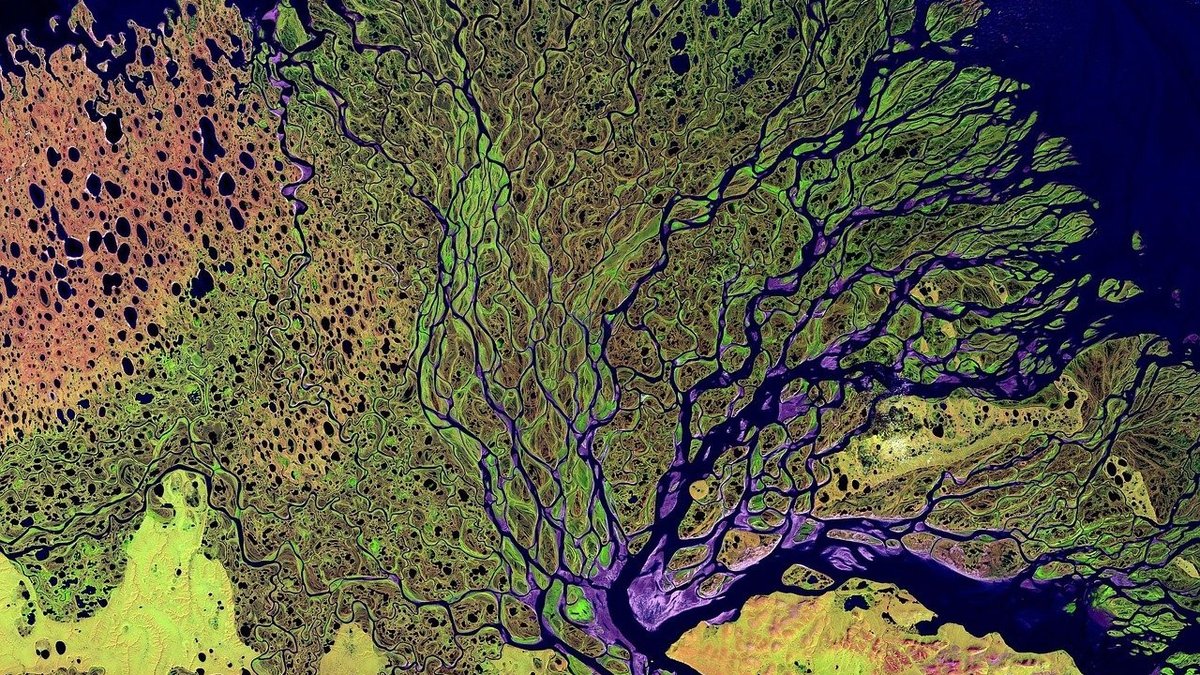
River deltas are some of the Arctic’s busiest landscapes. Freshwater moves through branching channels. Ocean water pushes inland during storms. Sediment settles, ice forms, banks collapse and new ground appears along shifting channels.
The Nature Communications paper describes these places as “Arctic deltas are highly dynamic environments at the land-ocean interface.” That phrase captures why they deserve close attention. They sit where several climate-driven changes can arrive at once.
Arctic river deltas also connect inland permafrost with coastal waters. When soil thaws and erodes, organic matter can move into streams, lagoons and the Arctic Ocean. Some of it may remain buried. Some may be carried offshore. Some may be consumed by microbes along the way.
This land-to-sea setting makes deltas different from upland tundra or inland wetlands. River heat, tides, storms, sea-level rise and coastal erosion can all shape what happens to frozen soil carbon. Those forces can work together in complicated ways.
What the Researchers Measured
The research team built a broad inventory from more than 1,600 soil samples across 17 Arctic river deltas. The work included major systems such as the Lena River Delta in Siberia and the Mackenzie River Delta in Canada. It also expanded attention beyond the most familiar large deltas.
According to the study abstract, the inventory was “compiled from over 1600 soil samples spanning 17 river deltas.” That larger sample base helps reduce the blind spots that can appear when regional estimates depend heavily on a few well-studied sites.
The team measured and compiled information about soil organic carbon and nitrogen in permafrost delta deposits. Those measurements were used to estimate how much carbon and nitrogen are stored across Arctic delta landscapes.
The study reports a major nitrogen pool as well as a carbon pool. That matters because nitrogen can influence plant growth, microbial activity and nutrient flows from land into rivers and coastal waters. In thawing permafrost, chemistry and biology often shift together.
The result is a clearer map of a carbon-rich environment. It gives modelers and field scientists a better starting point for asking what happens next as warming continues.
How Thaw Turns Soil Into Emissions
Frozen carbon affects climate through what happens after thaw. When permafrost warms enough to soften, dead plant material becomes easier for microbes to access. Those microbes digest organic matter and release gases as part of their metabolism.
Under oxygen-rich conditions, microbial activity can produce carbon dioxide. In wetter and oxygen-poor places, it can produce methane. Both gases trap heat in the atmosphere, although methane has a stronger warming effect over shorter time periods.
Permafrost thaw also changes the physical structure of the ground. Ice-rich soil can slump as ice melts. Channels can widen. Coastlines can retreat. These changes expose deeper material and can move old carbon into water.
Deltas add extra pathways. River channels can cut into frozen banks. Storm surges can flood low ground. Seasonal warmth can deepen the active layer, the surface layer that thaws each summer and freezes again in winter. Each pathway can alter how long organic matter stays buried.
The study provides a stock estimate rather than a direct forecast of future emissions. That distinction matters. A large carbon reservoir sets the scale of what could become available, while future emissions depend on thaw depth, water conditions, erosion, microbial activity and the pace of Arctic warming.
Nitrogen Adds a Second Climate Signal
Nitrogen sits beside carbon in the new inventory because it helps control how ecosystems respond to change. In many cold northern soils, nitrogen availability can limit plant and microbial growth. When thaw releases nitrogen, it can reshape local biology.
The study estimates about 4.2 billion tons of nitrogen stored in Arctic delta permafrost soils. That is a large nutrient pool for landscapes that are already sensitive to small changes in temperature, moisture and sediment movement.
Freshly available nitrogen can stimulate plant growth in some places. More plant growth can take up carbon dioxide from the air. At the same time, nitrogen can fuel microbial processes that change greenhouse gas production in soils and wetlands.
Some nitrogen may also wash into rivers, lagoons and coastal waters. That movement could affect food webs and water chemistry near the Arctic coast. The full outcome will depend on local conditions, including salinity, drainage, vegetation and how quickly frozen ground breaks down.
By measuring both carbon and nitrogen, the researchers give climate scientists a more complete picture. The Arctic delta story involves stored organic matter, nutrients, water, ice and microbes acting together.
Why Old Arctic Estimates Missed This
Older maps of permafrost carbon had limited information from Arctic deltas. Many estimates leaned on broader soil databases or on a handful of better-sampled regions. Remote areas, smaller deltas and difficult field sites often had thinner coverage.
The new study addresses that gap by collecting published and partly unpublished measurements into one inventory. That approach strengthens the estimate for a landscape type that can be hard to sample. Arctic deltas are remote, wet, cold and often accessible only during short field seasons.
The numbers show why the gap mattered. The deltas account for about 1% of the global permafrost surface, according to the study framing, yet they hold about 5% of permafrost soil carbon. That means their carbon density is unusually high.
On a planetary scale, the contrast is also striking. These deltas cover only a tiny fraction of Earth’s land area. Even so, their soils appear to contain a meaningful share of global soil carbon.
For climate models, missing a concentrated reservoir can blur the picture. A better inventory helps researchers place carbon where it actually sits, which improves the starting conditions for simulations of future thaw.
What Happens as the Arctic Warms
The Arctic is warming faster than the global average and delta landscapes are exposed to several forms of stress. Warmer air can deepen seasonal thaw. Warmer rivers can deliver heat through channels and floodplains. Retreating sea ice can leave coasts more open to wave attack.
Sea-level rise adds another pressure. Low delta plains can be flooded more often, especially during storms. Saltwater intrusion can change soil chemistry and plant communities. In some places, coastal ground can also subside, giving water easier access to frozen deposits.
Coastal erosion may be one of the most visible effects. When waves and river currents cut into frozen banks, organic-rich soil can collapse and enter the water. From there, the material can be buried again, transported offshore, or broken down by microbes.
Future change will vary from delta to delta. The Lena, Mackenzie, Yukon, Kolyma and smaller Arctic systems each have different sediment supply, ice content, tides, river flow and coastal exposure. Those local differences shape how carbon moves.
The main concern is timing. Carbon that accumulated slowly over thousands of years can become exposed over decades as warming accelerates. That shift creates a feedback risk, since greenhouse gases released from thawing permafrost can add more heat to the climate system.
A New Baseline for Climate Models
Climate models need accurate starting points. If a major carbon pool is underestimated or poorly located, projections can miss important pathways. The Nature Communications study gives scientists a stronger baseline for Arctic delta soils.
That baseline can help improve estimates of the permafrost carbon feedback. This feedback occurs when warming thaws frozen ground, microbial activity releases greenhouse gases and those gases add to warming. The process is gradual, uneven and strongly shaped by local water conditions.
The inventory also points to where fieldwork is needed next. Smaller deltas and coastal transition zones deserve more attention. So do places where river heat, thawing permafrost and marine flooding interact.
Researchers will also need to track how much carbon stays buried compared with how much enters rivers, lagoons and the atmosphere. That requires field measurements, remote sensing, laboratory experiments and model development. Each tool captures a different part of the system.
For the public, the finding offers a clear message about hidden climate risks. Some of Earth’s most important carbon stores lie beneath frozen ground in places few people ever see. As the Arctic changes, those buried stores are becoming part of the climate conversation.