A study in Nature Communications found that river turbines could help remote northern communities cut diesel use, even where long winters and frozen channels make renewable energy planning difficult. The study, led by researchers affiliated with the University of Ottawa and partner institutions, identified hundreds of Arctic and sub-Arctic communities where flowing rivers may support local clean power.
The finding matters because many remote Arctic communities still rely on fuel that must be hauled across long distances by ship, aircraft, or winter road. A delayed delivery can become an energy risk. A price spike can hit homes, public services and local businesses. In places where large regional grids are impractical, a nearby river can become a practical energy asset.
The technology at the center of the research is hydrokinetic energy. A turbine sits in moving water and draws power from the current. The study suggests that freezing temperatures alone do little to determine whether the idea can work. River shape, flow speed and distance from a community carry more weight.
The diesel problem in the North
Across much of the North American Arctic, electricity still comes from diesel generators. These systems are familiar and dependable when fuel arrives on time. They also tie communities to long supply chains that are vulnerable to storms, sea ice, seasonal roads and high transport costs.
For many northern settlements, diesel is more than an energy source. It shapes budgets. Fuel purchases and power subsidies can take money that might otherwise support housing, food programs, health services and infrastructure. The burden grows in places where every liter must travel thousands of miles before it reaches a tank farm.
There is also an environmental cost. Burning diesel releases greenhouse gases and soot. In Arctic regions, dark soot can settle on snow and ice, where it absorbs more sunlight and can contribute to faster melting. Local air quality can also suffer around generators and fuel storage areas.
Those pressures have made renewable energy attractive for decades. Wind and solar can help, yet each has limits in the far North. Solar production drops sharply during the darkest months. Wind resources vary from site to site. Rivers offer another option, especially for communities built near reliable currents.
Power from moving water
Hydrokinetic systems use the motion of water that is already flowing downstream. In the words of the study abstract, “Hydrokinetic energy (HKE), which generates power from flowing water without dams, offers a lower-impact renewable energy alternative to conventional hydropower.”
That distinction is important in northern river systems. Conventional hydropower often requires large dams, reservoirs, roads and major construction. Those projects can flood land, alter fish habitat, change sediment movement and affect places with deep cultural and ecological importance.
A river turbine has a smaller footprint. It can be placed in a fast section of channel, connected to a local microgrid and removed when ice conditions become unsafe. The device still needs careful planning. It occupies space in a living river and communities need to weigh effects on fish, boating, ice movement and traditional land use.
The basic physics are straightforward. Faster water carries more energy. A narrow channel can speed the current. A steep drop or bedrock constriction can concentrate flow. Those features can turn a short reach of river into a valuable power site.
This is why the research team focused on local river conditions rather than climate alone. A cold place can still have a strong summer current. A warmer place can have a slow river that offers little usable power. The best sites depend on the water’s behavior in detail.
A turbine test near Iqaluit
The team grounded its wider Arctic analysis in a detailed case study near Iqaluit, the capital of Nunavut. They studied the Iqaluit Kuunga River, also known as the Sylvia Grinnell River, a cold river close enough to the community to be relevant for local energy planning.
Lead author Katelyn Kirby, a civil engineering doctoral researcher and colleagues examined the river using field measurements and mapping tools. Their work included a sonar-equipped robotic boat that helped map the riverbed and measure flow under different conditions.
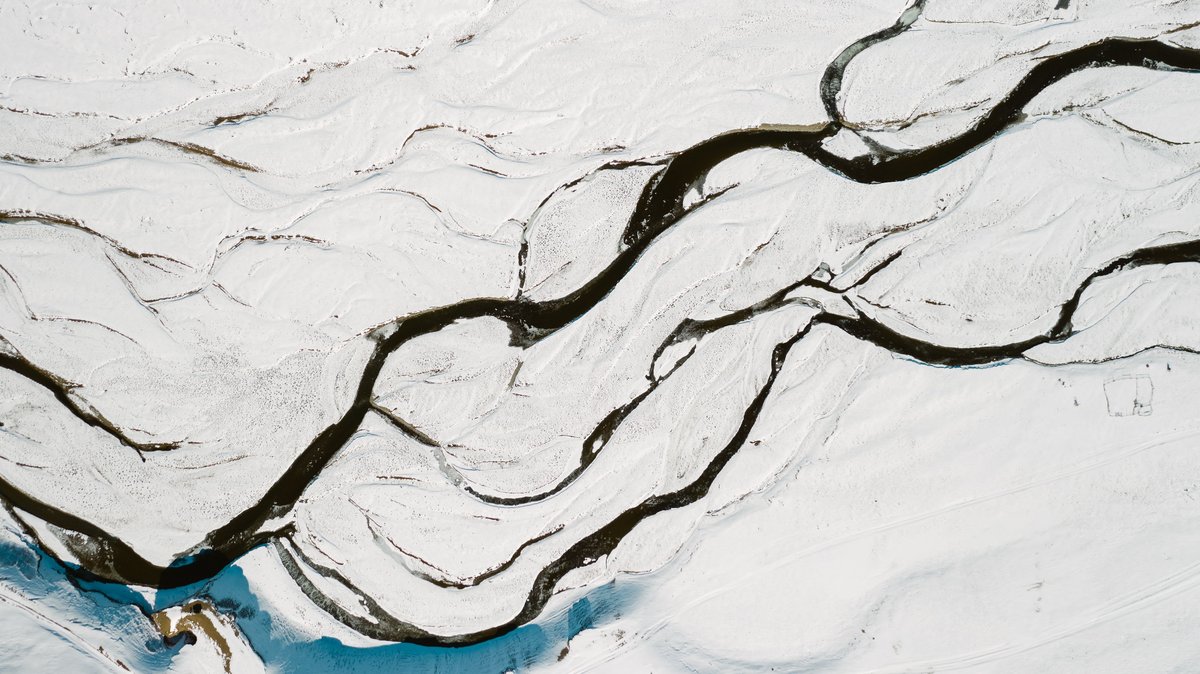
The strongest site appeared downstream of a narrow section of the channel. There, the river speeds up and scours a deeper pool. That kind of shape matters because it can keep currents strong enough for a turbine during open-water conditions.
Even during late-summer low water, the river showed enough energy potential to be meaningful for a small community-scale system. The research described this as a seasonal resource, since the turbine would need to come out before harsh winter ice conditions.
That seasonal rhythm fits the practical reality of many northern rivers. Equipment can be deployed during open water and removed in fall. Batteries or hybrid systems can help smooth short-term changes in production. Diesel may still remain part of the grid during early deployments, while renewable power reduces the amount burned.
Cold did not decide the outcome
One of the study’s most striking results came from comparing communities across a wide temperature range. The researchers found no clear relationship between average cold and the amount of diesel that hydrokinetic power could potentially offset.
That result changes the first question planners might ask. Instead of treating extreme cold as the main filter, the study points toward river hydraulics. Flow speed, channel narrowing, water depth and distance to the community all shape feasibility.
The Iqaluit case helped illustrate that point. The area is among the colder inhabited regions considered in the analysis, yet its nearby river still showed useful power potential during the open-water season. A harsh climate did not erase the energy in the current.
Still, the study remains an early-stage assessment for many locations. A map can flag promising communities, but each site needs direct measurements. River depth, seasonal flow, ice behavior, fish movement and local access can all change the final decision.
Community consent also matters. Energy projects in the Arctic sit within lived landscapes, where rivers support fishing, travel, cultural practices, wildlife and local identity. A technically attractive site still needs local discussion and careful review.
325 Arctic communities stood out
The global portion of the analysis identified 325 Arctic communities with conditions that could make hydrokinetic energy suitable. These communities span eight Arctic and sub-Arctic countries, based on the study’s assessment of river resources and proximity.
Canada was a major focus because many northern communities remain diesel-dependent and sit near flowing water. The researchers also flagged sites across Russia, Iceland, Norway, Finland and other northern regions. Russia had the largest count of possible sites, while several Nordic regions showed strong power potential per river.
The study’s estimates describe theoretical and practical screening potential under open-water conditions. That wording is important. A community listed as suitable still needs field campaigns, engineering design, environmental assessment and conversations with residents before installation.
The researchers also considered diesel offset. A site becomes more attractive when a river can produce enough power to noticeably reduce generator use. A fast river far from town may be expensive to connect. A smaller river near the power plant may be more realistic even if its total energy is lower.
By assembling a wider map, the study gives planners a starting point. Instead of searching one river at a time, governments and communities can prioritize places where river conditions, distance and diesel reliance overlap.
A smaller energy path for remote grids
The most realistic future for many northern settlements is a set of community microgrids. These systems can combine diesel, batteries, solar panels, wind turbines and river turbines in different mixes. Each community can adapt the mix to its geography and needs.
Hydrokinetic power could be especially useful during the open-water months. In some places, that may align with higher activity, construction, travel and community demand. Batteries can store short bursts of excess power, while controls can reduce generator output when the river turbine is producing steadily.
The technology also offers a gentler path than large hydropower. Free-standing turbines leave the river flowing through its channel. They avoid reservoirs and can be removed seasonally. Their environmental effects still need monitoring, especially where fish passage and ice dynamics are central concerns.
Policy and financing may become as important as engineering. Remote projects often face high study costs, small customer bases, limited construction windows and complex permitting. In Nunavut, changes allowing more independent power production could make local renewable projects easier to pursue.
The study gives northern energy planners a clearer way to begin. A cold river can still carry usable power. A small turbine can still lower diesel demand. For communities far from large grids, moving water may become one of the most practical clean energy tools available.