NASA Earth Observatory has revealed a striking ocean signal in the equatorial Pacific, where the Sentinel-6 Michael Freilich satellite detected a vast band of higher sea level tied to the developing El Niño. The warm-water feature, known as a Kelvin wave, stretched hundreds of miles and showed how the Pacific can quietly reorganize before weather patterns shift across continents.
The image was captured on June 8, 2026, as the new El Niño gathered strength. In the satellite view, red areas marked ocean surfaces that stood higher than usual. Blue areas showed lower-than-average sea levels. Along parts of the equator, the surface was more than 6 inches, or 15 centimeters, above normal.
That rise matters because warm water expands. As the upper ocean heats, it takes up more space and lifts the sea surface slightly. From orbit, Sentinel-6 Michael Freilich can measure those subtle changes and help scientists track heat moving through the ocean before it appears in weather headlines.
A warm-water wave hundreds of miles wide
The feature seen by Sentinel-6 is called a Kelvin wave, a broad pulse of warm water that travels eastward along the equator. These waves can span enormous distances while raising sea surface height by only a few inches. Their scale makes them important, even when their surface signature looks small from space.
In this case, the wave was linked to the early phase of El Niño, the warm phase of a recurring climate pattern in the tropical Pacific. During El Niño, warm water that often builds in the western Pacific shifts toward the central and eastern Pacific. That movement changes the heat balance between ocean and atmosphere.
Satellite altimetry gives scientists a direct way to watch that movement. Warmer water sits higher because it expands and the raised surface becomes a map of hidden heat. The June 8 measurements showed that a large amount of warm water had already moved eastward across the equator.
Earlier in 2026, NASA had observed other Kelvin waves that hinted at the pattern to come. One appeared near Micronesia in January and faded by mid-February. Another emerged in March and elevated sea levels near Peru by mid-May. Together, those signals built a picture of an ocean shifting toward El Niño conditions.
How Sentinel-6 reads the ocean surface
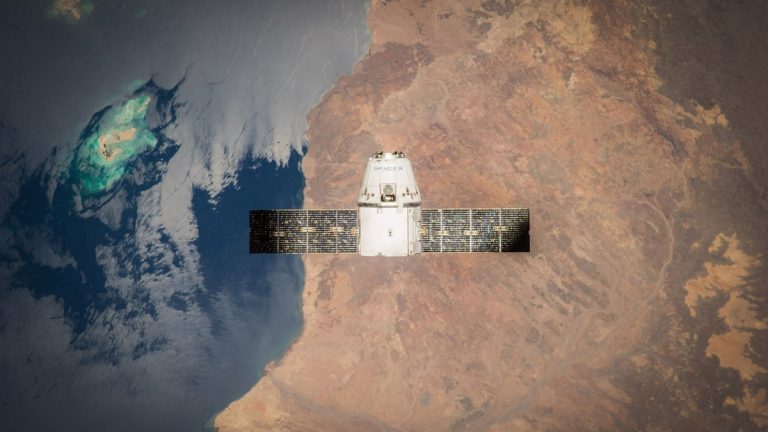
Sentinel-6 measures sea surface height with radar altimetry. The satellite sends microwave pulses toward Earth, then times how long the signals take to bounce back from the ocean. Tiny changes in return time reveal tiny changes in height.
That may sound simple, but the precision is extraordinary. The mission can detect sea level changes down to fractions of an inch over broad ocean regions. It revisits the same ocean tracks about every 10 days, giving scientists repeated views of how the surface rises and falls.
The mission is international. Sentinel-6 Michael Freilich launched in 2020 and supports long-running sea level monitoring from space. NASA, European partners and operational weather organizations use its measurements to study climate, ocean circulation and short-term ocean changes.
For El Niño, sea surface height is especially useful because it complements sea surface temperature. A temperature map shows where the skin of the ocean is warm. A height map reveals where a deeper layer of warm water has expanded. Together, those views help scientists judge how much heat the Pacific is storing and where that heat is going.
Why Kelvin waves can warn of El Niño
Kelvin waves often form when the normal wind pattern weakens along the equator. In the tropical Pacific, steady trade winds usually push surface water westward. When those winds ease or briefly reverse, warm water can surge eastward in a broad pulse.
That eastward pulse changes the ocean from below as well as at the surface. Warm surface water deepens in the central and eastern Pacific. Cooler water from below has a harder time reaching the surface. The eastern Pacific then warms further, reinforcing conditions that favor El Niño.
This is why sea surface height can act like an early warning signal. A raised band along the equator can show that heat is traveling beneath the surface before rainfall patterns fully respond. Scientists watch these changes because the atmosphere and ocean are tightly linked in the tropics.
Still, each event has its own path. Severine Fournier, a sea level researcher at NASA’s Jet Propulsion Laboratory, has emphasized that “Every El Niño is different.” The waves help reveal momentum in the system, while continued observations help determine how strong the event may become.
Echoes of the powerful 1997 event
The June 8 satellite observations drew attention because conditions in the western Pacific resembled the same time of year in 1997. That year became associated with an exceptionally strong El Niño, one that disrupted rainfall and temperature patterns around the world.
Comparisons with 1997 give scientists a useful reference point. They show how today’s ocean structure lines up with a well-studied event. They also help forecasters ask whether the current ocean has enough stored heat and wind support to keep strengthening.
Fournier described the early signal with caution and urgency. For now, she said, “it looks like it’s going to be a big one.” She also stressed that “we still need more observations,” because El Niño strength depends on how the ocean and atmosphere evolve over weeks and months.
The 2026 event had shown fewer Kelvin waves than 1997 by the same point, according to NASA’s assessment. Even so, the large June signal suggested that the tropical Pacific was still ramping up. Continued satellite passes will show whether the warm-water buildup expands, weakens, or shifts.
Weather risks as the Pacific shifts
Pacific Ocean warming during El Niño can alter atmospheric circulation across large parts of the globe. Rainfall often increases in parts of the southwestern United States, Colombia, Peru and Ecuador. The western Pacific can face drier conditions as warm water and storm activity shift eastward.
Those changes happen because the tropical Pacific helps steer rising air, clouds and rainfall. When the warmest water moves east, the strongest zones of thunderstorm activity can move with it. That rearrangement sends ripples through the jet stream and influences regional weather far from the equator.
El Niño can also boost global average temperature during its peak. Warm ocean water releases heat into the atmosphere, adding to the background warming trend. The previous El Niño from 2023 to 2024 contributed to unusually high global temperatures and scientists are watching the new event closely for similar effects.
Satellite observations cannot remove uncertainty from seasonal forecasts, but they give researchers a sharper view of the ocean engine beneath them. The June 8 Sentinel-6 image captured one of the clearest signs yet that warm water was moving across the Pacific in force.
For communities, the value comes from lead time. Better tracking of ocean heat, Kelvin waves and sea surface height can improve preparation for flooding, drought, coastal hazards and heat extremes. As the Pacific continues to shift, each new satellite pass adds another piece to the evolving El Niño picture.