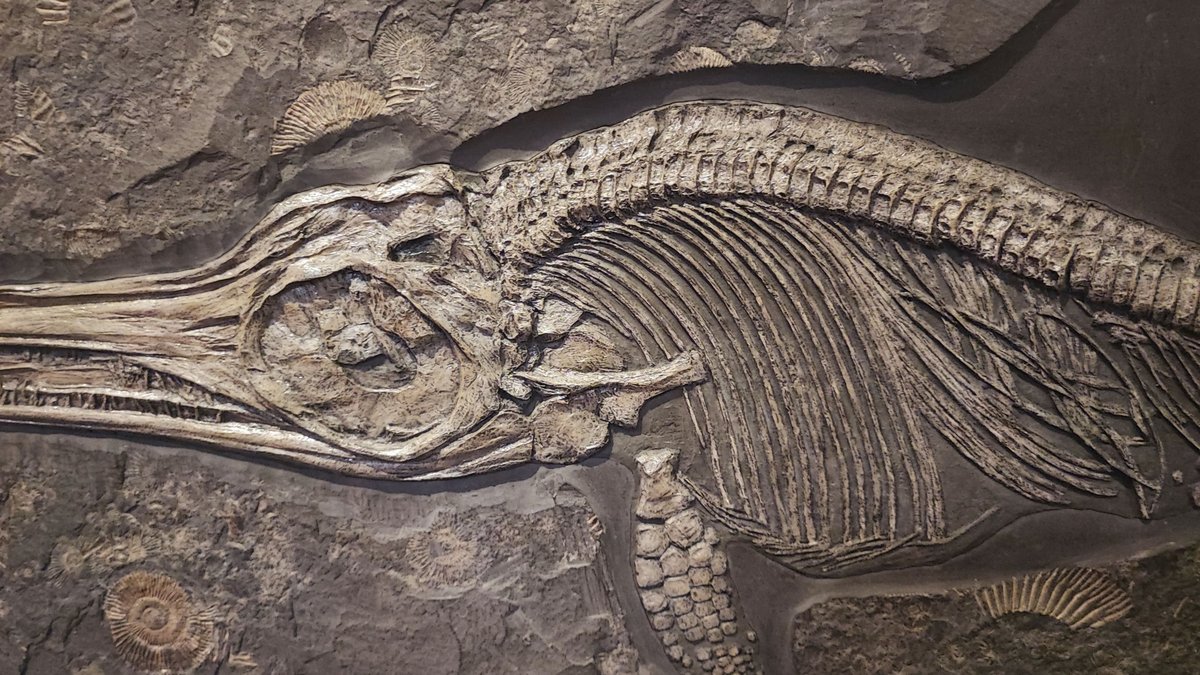
A study in Proceedings of the Geologists’ Association describes a 10-meter marine reptile skeleton from Rutland Water Nature Reserve as the largest ichthyosaur skeleton ever found in the UK. The fossil, nicknamed the Rutland Sea Dragon, was discovered in Jurassic clay after routine conservation work exposed bones on a drained lagoon island.
The find gives researchers a rare near-complete view of a giant ocean predator that swam over what is now central England about 180 million years ago. The skeleton is almost fully articulated, meaning many bones remained close to their life position. For a fossil animal of this size, that level of preservation is extraordinary.
Ichthyosaurs were sleek marine reptiles that thrived while dinosaurs ruled the land. They breathed air, hunted fish and squid and evolved bodies shaped for speed in open water. The Rutland specimen shows how much of Britain’s prehistoric past still lies hidden beneath familiar landscapes.
A fossil giant beneath Rutland Water
Joe Davis of the Leicestershire and Rutland Wildlife Trust first noticed the exposed bones during work at Rutland Water in 2021. The shapes in the mud looked like pieces of a large skeleton. Davis had experience with modern whale and dolphin remains, which helped him recognize that the clay was holding something unusual.
Specialists soon confirmed that the remains belonged to a giant ichthyosaur skeleton. The study abstract states, “An almost complete ichthyosaur skeleton 10 m long was discovered in January 2021 at the Rutland Water Nature Reserve.” That short description barely captures the scale of the animal. Its skull alone was roughly two meters long and weighed close to a tonne when lifted with surrounding clay and protective casing.
The fossil came from the Whitby Mudstone Formation, a rock unit that records part of the Early Jurassic marine world. At the time this animal lived, Rutland was covered by a warm, shallow sea. Mud settled over the sea floor and later hardened around bones, shells and other traces of ancient life.
Earlier reservoir construction in the 1970s had uncovered smaller and less complete ichthyosaur remains nearby. The 2021 skeleton dwarfed those finds. Its size and completeness quickly made it one of the most important marine reptile discoveries ever reported from Britain.
Why the sea dragon shocked paleontologists
One number explains much of the excitement: 10 meters. That length puts the Rutland animal in the range of a large bus. For a British fossil reptile, the combination of size and completeness is exceptional.
The skeleton also preserves much more than isolated bones. Researchers recorded a long series of vertebrae, ribs, limb elements and the massive skull. Large vertebrate fossils often survive as scattered pieces because currents, scavengers, decay and later erosion can pull skeletons apart. Here, the body stayed together well enough to tell a more complete story.
The animal has been identified as a large-bodied Temnodontosaurus, an ichthyosaur known for powerful jaws and a robust body. Researchers have treated the more specific assignment to Temnodontosaurus trigonodon cautiously because final preparation and study are still needed. If that identification is confirmed, the fossil would extend the known British record of that species.
That caution matters. Paleontologists often need to clean, stabilize and compare bones in detail before making a final species call. Heavy field jackets protect fossils during removal, but they also hide details until preparation begins. The Rutland skeleton’s scientific value will grow as more of the bone surface becomes available for study.
A Jurassic predator from a vanished sea
Ichthyosaurs appeared roughly 250 million years ago and survived for more than 150 million years. Their bodies became highly adapted for marine life. Many had long snouts, large eyes, streamlined trunks and limbs shaped into paddles.
Although they looked somewhat like dolphins, ichthyosaurs were reptiles with a separate evolutionary history. Their ancestors moved from land back into the sea and their descendants became expert ocean hunters. They still needed air, so they would have surfaced to breathe during life.
The Rutland animal lived during the Early Jurassic, near the Toarcian Stage. Microfossils from the surrounding clay help narrow its age to roughly 181.5 to 182.5 million years ago. These tiny fossils are useful time markers because many microscopic species evolved quickly and spread widely through ancient seas.
Large ichthyosaurs likely hunted fish, squid-like animals and other marine prey. Related fossils with stomach contents show that ichthyosaurs were active predators. A giant form such as the Rutland Sea Dragon would have been one of the dominant animals in its ecosystem.
The surrounding fossils help fill out that world. Ammonites, belemnites, nautiloids and other marine remains show that the area supported a busy Jurassic food web. The mud that trapped the sea dragon also preserved clues to the waters it once patrolled.
How the two-ton fossil was lifted from the clay
Removing the skeleton required patience and careful engineering. The excavation team worked through sticky Jurassic clay while recording the fossil’s position and condition. Each exposed section had to be protected before it could be moved.
Dr. Dean Lomax led the excavation with specialist palaeontological conservator Nigel Larkin and marine reptile expert Dr. Mark Evans. The wider team included researchers and volunteers from several museums, universities and partner organizations. Their task was simple to describe and difficult to execute: get a fragile giant out of the ground without destroying it.
The team used plaster field jackets, wooden supports and careful splitting of the fossil into manageable blocks. The skull block weighed just under a tonne with its clay and casing. The body section added about another tonne and a half. Together, the specimen exceeded two tonnes.
Field jackets are a standard fossil rescue tool. They create a hard shell around bone and sediment, which keeps fragile material stable during transport. For a huge skeleton in waterlogged clay, that protection becomes essential. A single mistake can crack bone that has survived since the Jurassic.
Once lifted, the specimen was moved to a research and conservation setting. Preparation is a slow process. Conservators must remove clay, expose bone, strengthen weak areas and document each part of the skeleton as it emerges.
What the site reveals about ancient Britain
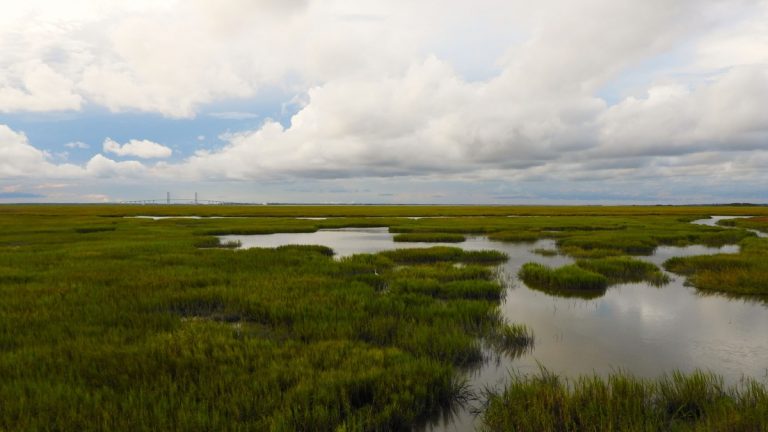
Rutland Water is a modern reservoir, yet the rocks beneath it belong to a much older coastline and sea floor. The sea dragon shows that central England was once part of a marine environment rich enough to support large predators.
The follow-up work at the site found more fossils, including marine invertebrates and vertebrae from other ichthyosaur individuals. Researchers also reported material from a thalattosuchian crocodylomorph, an ancient marine relative of crocodiles. That mix suggests the Rutland area preserved more than one dramatic fossil event.
The site’s value comes from context as well as size. A giant skeleton is spectacular, but the nearby fossils help researchers reconstruct the broader habitat. Ammonites and other invertebrates can help refine the age of the rocks. Microfossils add another layer of precision through biostratigraphic analysis.
Britain has a long ichthyosaur history. Mary Anning’s discoveries at Lyme Regis helped bring these reptiles to scientific attention in the early 1800s. Since then, thousands of ichthyosaur fossils have been found in Britain and beyond. The Rutland Sea Dragon now adds a new landmark to that record.
The discovery also shows why protected landscapes can matter for science. Conservation work created the conditions that exposed the fossil. Once noticed, cooperation among the wildlife trust, Anglian Water, Rutland County Council, scientists and museums allowed the skeleton to be studied rather than lost to erosion.
The long road to display
The Rutland Sea Dragon’s next chapter depends on preparation and conservation. The skeleton remains a major technical project because the bones are large, fragile and partly enclosed in field jackets. Full preparation could take years.
Researchers and local partners have discussed plans to keep the fossil connected to Rutland. That goal would let the specimen be displayed near the place where it lay for around 180 million years. A permanent display would also help visitors understand how a reservoir landscape revealed a prehistoric sea.
Before that can happen, the skeleton needs careful cleaning, stabilization and study. The final species identification may depend on details that are still hidden. The skull, teeth, vertebrae and limb bones could all help refine how this animal fits within the wider story of British paleontology.
Even in its current state, the fossil has already changed the scale of Britain’s marine reptile record. It is a rare meeting of size, preservation and place. A giant predator surfaced from clay because someone noticed a few strange shapes in the mud.
For scientists, the find offers data on anatomy, excavation methods, Jurassic environments and fossil preservation. For everyone else, it offers a vivid reminder that deep time can sit quietly beneath ordinary ground, waiting for the right moment to reappear.